Gasoline’s rebound pushed U.S. inflation higher in August, but the Federal Reserve still got an important piece of good news: underlying price pressure continued to ease.
US Core PCE Rose 3.9% in August

The core personal consumption expenditures price index, the Fed’s preferred gauge stripped of food and energy, rose 3.9% from a year earlier in August, the smallest annual increase in two years. That kept the central bank on a slower disinflation path even as the broader PCE index climbed 0.4% on the month and 3.5% over the year, underscoring how volatile fuel costs can still disturb the headline numbers without derailing the broader trend.
Sentiment IndicatorsⓘProprietary · adalytica.com · October 7, 2026
This is a snapshot — live sentiment, awareness and momentum for 130+ markets update continuously in the dashboard.Open AlphaPulse
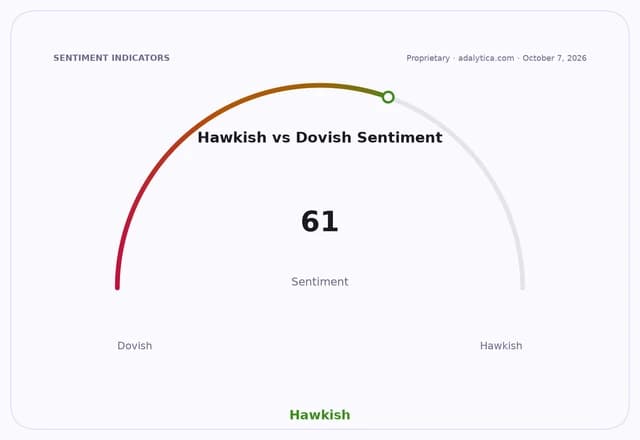
For policymakers, that split matters. The Fed has been looking for evidence that inflation is moving sustainably back toward its 2% target before considering any change in policy. A lower core reading strengthens the case that tighter monetary policy is working, while the monthly jump in overall inflation shows why officials remain cautious about declaring victory. Energy prices tend to feed into consumer sentiment quickly and can affect inflation expectations, but they are less useful than core measures in judging persistent demand-driven price pressure.
The latest data also fits a market narrative that has been pulling in two directions. Higher gas prices are still capable of making inflation look sticky at the headline level, especially if oil and refined-fuel costs stay elevated. At the same time, the cooling in core inflation suggests goods and services pricing is moderating enough to keep alive hopes that the Fed can avoid more aggressive tightening. Adalytica’s Federal Reserve forward guidance sentiment gauge was reading at an extreme level heading into the release, reflecting how closely investors are parsing each inflation print for clues on the policy path.
Energy markets remain a swing factor. Natural gas prices have been near a one-week high on firmer demand forecasts, while crude benchmarks and energy equity funds have been trading with the same volatility that has amplified inflation concerns in recent months. If fuel costs keep rising, they could slow the pace of improvement in headline inflation and keep pressure on consumers’ disposable income. But if core inflation continues to drift lower, bond markets are more likely to focus on the disinflation trend than on one month of energy-driven noise.
For investors, the message is mixed but still constructive. The August report supports the view that the Fed’s policy stance is biting into the economy without yet forcing a sharp deterioration in the underlying inflation trend. That is favorable for duration assets if the cooling persists, though energy-sensitive sectors may remain volatile as gasoline and gas prices swing with supply and demand. The next few inflation reports will determine whether August was a temporary wobble from energy or part of a broader move toward lower price pressures.
| Entity | Gains | Losses |
|---|---|---|
| Federal Reserve | ▲Progress toward 2% target | ▼Pressure to stay hawkish |
| Consumers | ▲Slower core inflation | ▼Higher gasoline bills |
| Bond investors | ▲Better chance of eventual easing | ▼Risk if energy keeps inflation sticky |
| Energy producers | ▲Firmer fuel prices | ▼Inflation relief narrative |