The U.S. dollar was mixed early Friday as traders positioned for a September employment report that could sharpen bets on the Federal Reserve’s next move and reshape the gap between U.S. and overseas interest rates.
U.S. Dollar Mixed Ahead of September Jobs Report

The backdrop is a labor market that is still growing, but losing momentum. Economists expect the unemployment rate to edge down to 4.02% from 4.1% in August, while the Fed’s policy rate is forecast at 3.726% for October and the 10-year Treasury yield is seen at 5.321%, a combination that keeps U.S. assets relatively attractive but also raises the bar for further dollar gains if growth data soften. In the previous month, the U.S. economy added just 29,000 jobs, while the unemployment rate held around 4.2%, underscoring a slowdown that has already pushed investors to reassess how long restrictive policy can stay in place.
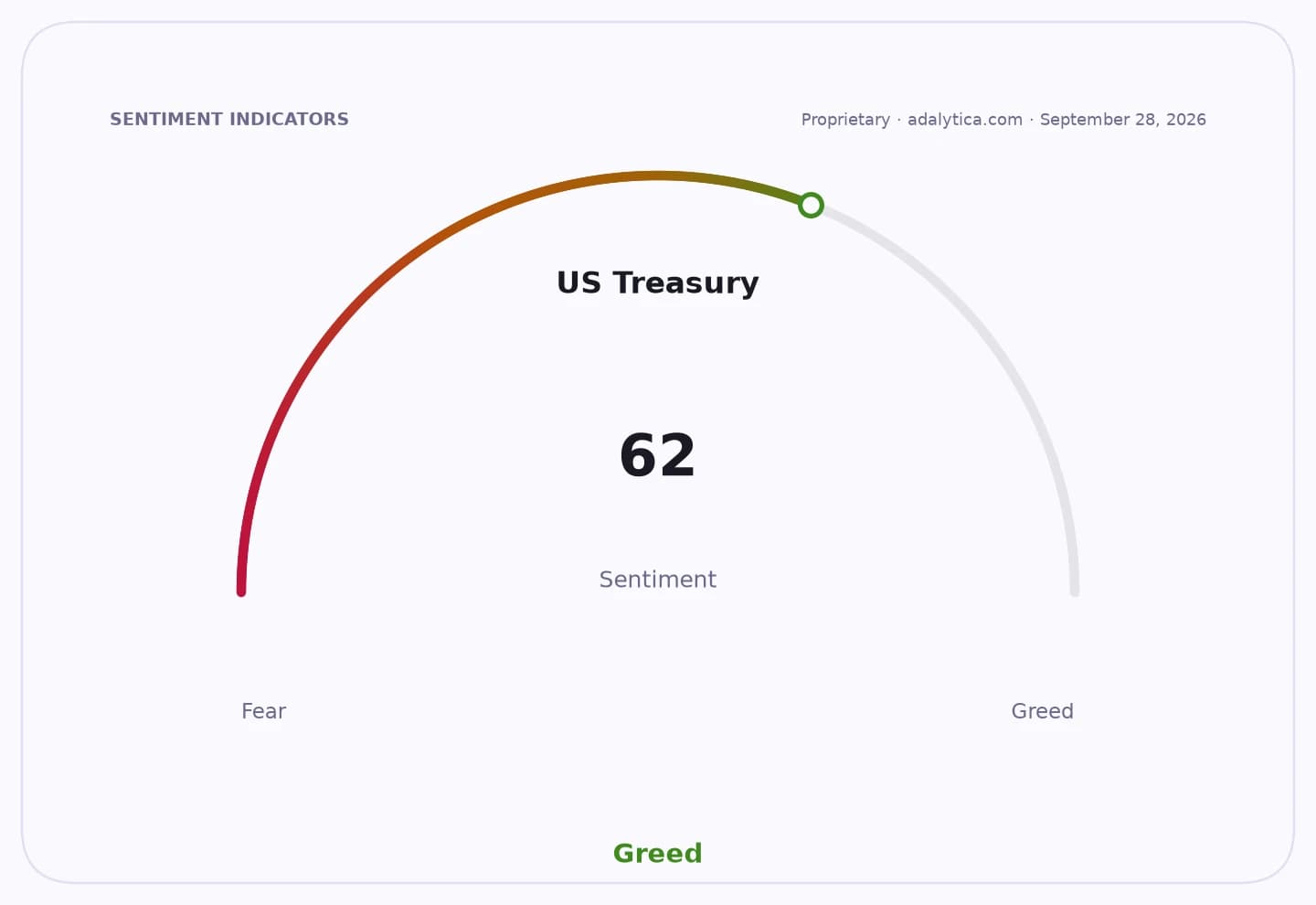
Sentiment IndicatorsⓘProprietary · adalytica.com · October 2, 2026
This is a snapshot — live sentiment, awareness and momentum for 130+ markets update continuously in the dashboard.Open AlphaPulse
That matters because the dollar’s direction is increasingly tied to whether the Federal Reserve can keep rates high enough to defend inflation without tipping the labor market into a sharper downturn. A softer jobs print would likely strengthen the case for rate cuts later in the year, narrowing rate differentials that have supported the currency through much of the tightening cycle. A stronger report, by contrast, would reinforce the view that the U.S. can tolerate elevated borrowing costs for longer, a setup that tends to favor the dollar and pressure rate-sensitive assets.
For investors, the immediate implications run through Treasuries, equities and the foreign-exchange market. Adalytica’s US Dollar Trade Signals show sentiment at 8, labeled “Extreme Fear,” with awareness also at “Extreme Fear,” while TLT’s trade signals show strong attention and negative recent momentum. That combination suggests markets are braced for volatility around the release and are already positioning for a read-through to bond yields. The S&P 500’s signals remain more resilient, but a weaker labor report could still support equities if it lowers the odds of further policy tightening, even as it raises concerns about earnings and growth.
US Dollar — 30-day sentimentadalytica.com
Explore this data interactively — full history, time series and cross-market comparisons.Open AlphaPulse

The narrative is straightforward: the labor market is no longer the source of broad-based surprise it was earlier in the cycle, and the dollar is now trading more as a referendum on whether U.S. growth is slowing enough to force the Fed’s hand. If jobs growth undershoots again and unemployment creeps higher, the market may start pricing a faster turn toward easing. If the report beats expectations, the dollar could regain footing quickly, especially against currencies backed by lower or more dovish central banks.
| Entity | Gains | Losses |
|---|---|---|
| US dollar bulls | ▲Higher-for-longer rate bets | ▼Softer jobs growth |
| Treasury bond investors | ▲Rate-cut expectations | ▼Rising yields from hot data |
| Equity investors | ▲Easier policy if jobs weaken | ▼Growth fears if labor cracks |
| Federal Reserve doves | ▲More evidence for easing | ▼Pressure to keep policy tight |