Bitcoin is pressing against a key $87,400 resistance level as traders wait for U.S. payrolls data that could reshape expectations for Federal Reserve policy and, by extension, the appetite for risk assets.
Bitcoin Tests $87,400 Before U.S. Payrolls
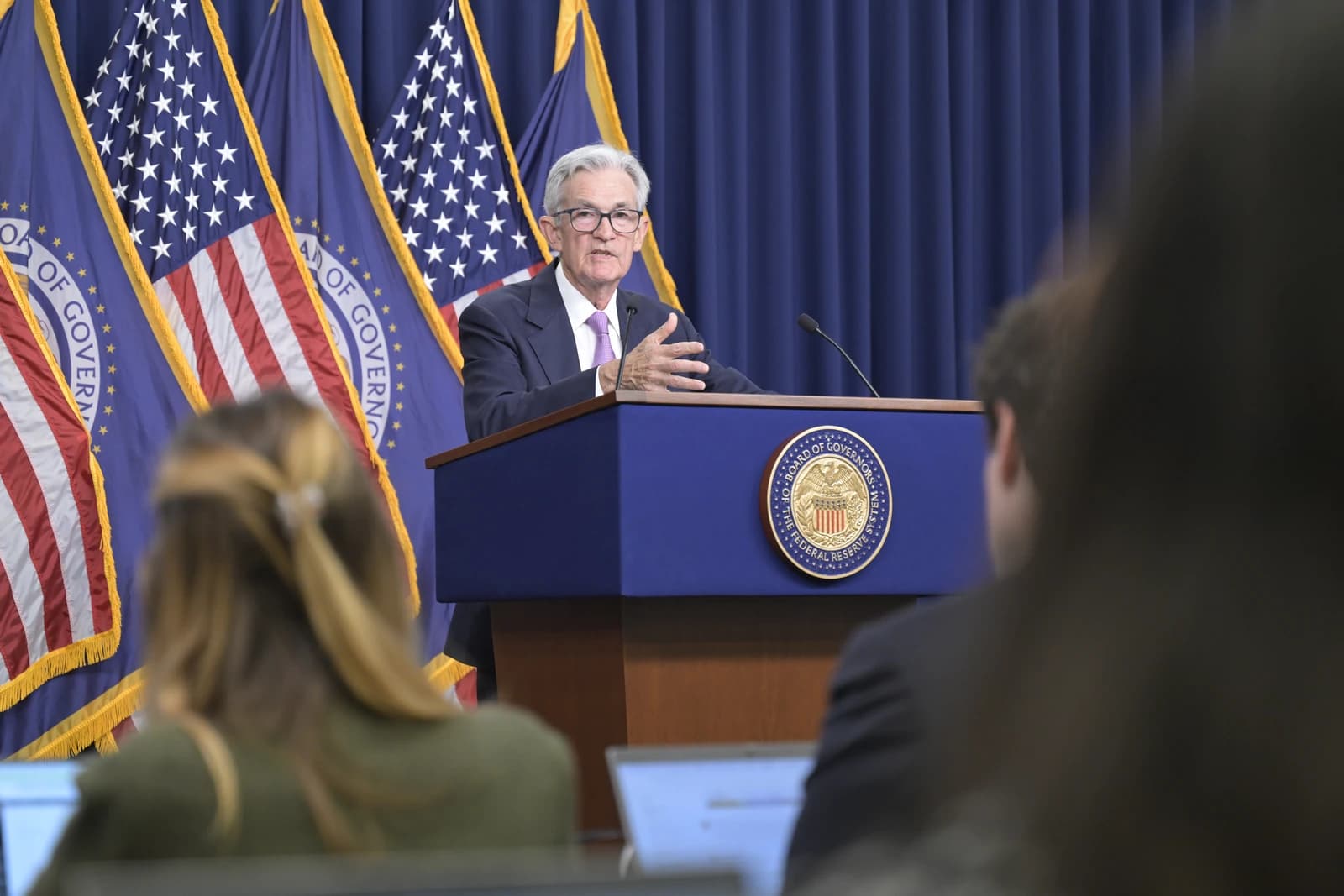
That matters because Bitcoin is no longer trading in a vacuum. The token has climbed for a second straight session to about $86,475, helped by a pullback in Treasury yields and growing conviction that the Fed will keep rates unchanged at its Oct. 28 meeting. CME FedWatch currently prices roughly a 72% chance of no change, and a softer-than-expected September jobs report could reinforce that view. A stronger print would do the opposite, potentially lifting yields and the dollar and making it harder for Bitcoin to keep extending higher.
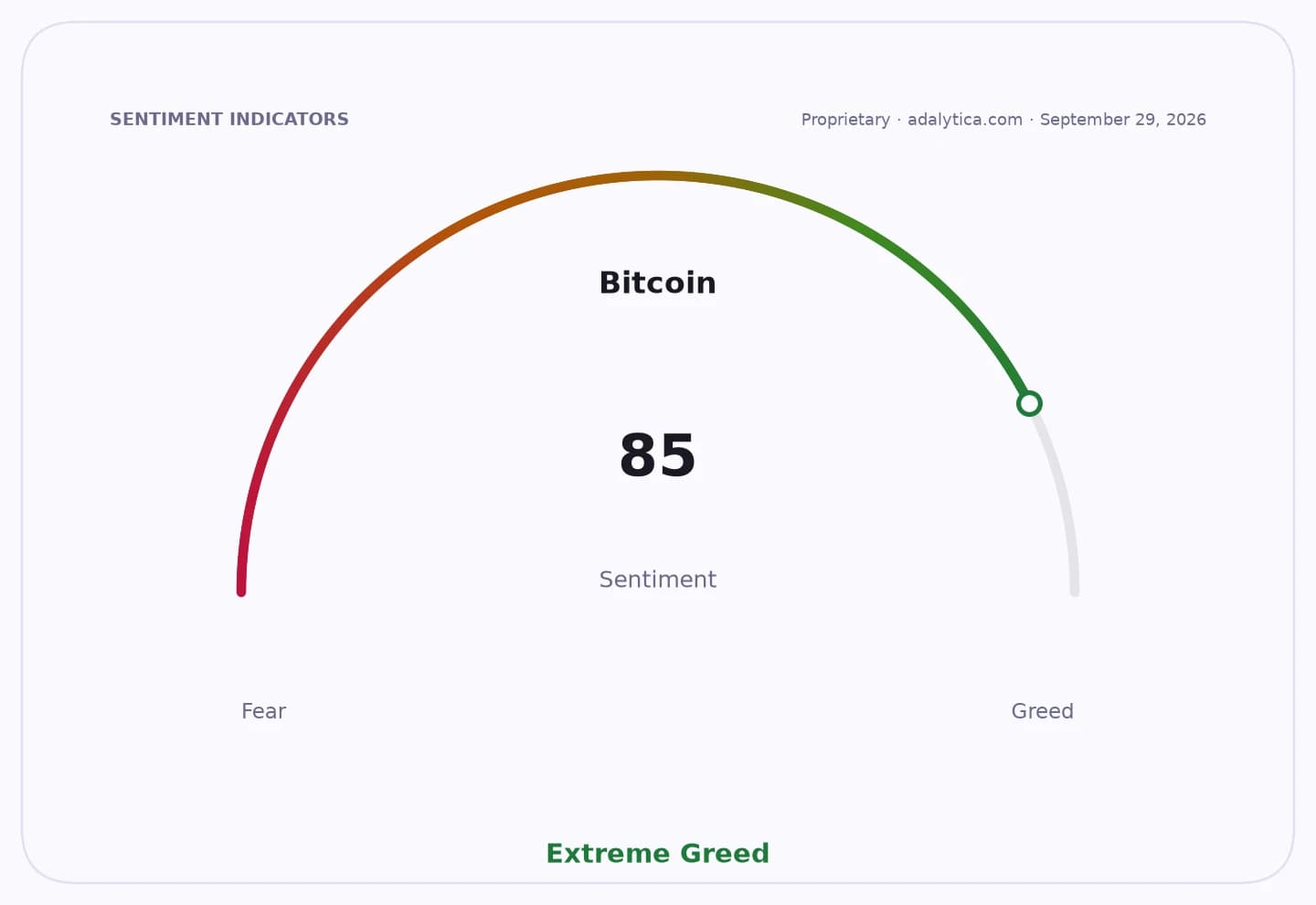
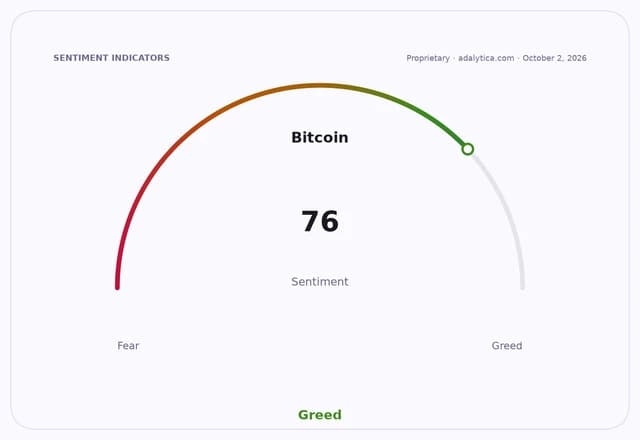
Sentiment IndicatorsⓘProprietary · adalytica.com · October 2, 2026
This is a snapshot — live sentiment, awareness and momentum for 130+ markets update continuously in the dashboard.Open AlphaPulse
For investors, this is the classic macro-to-crypto transmission that has come to define Bitcoin’s bigger moves. Lower yields reduce the opportunity cost of holding non-yielding assets, while a less aggressive Fed tends to support liquidity-sensitive corners of the market. At the same time, geopolitical tension in the Middle East has kept oil and broader risk sentiment on edge, reminding traders that Bitcoin’s path is being shaped by both monetary policy and global headlines.
The technical setup reinforces the importance of the next few sessions. Bitcoin is trading well above its 50-day and 200-day moving averages, a sign the broader trend remains constructive, but the $87,400 mark is the first real test. A break there would put $90,200 in view, with the next medium-term target around $98,000. Failure to clear it could send the coin back toward support near $85,200 to $84,000, and then $82,500.
Sentiment is also working in Bitcoin’s favor, even if not enough to eliminate volatility. Adalytica’s Bitcoin Fear & Greed Index shows “Greed” at 76, while the U.S. dollar gauge sits in “Extreme Fear,” a combination that usually helps hard assets and risk-sensitive trades. Still, investors should not confuse supportive sentiment with a straight line higher. Bitcoin’s 14-day RSI is elevated, which suggests momentum is strong but also that the market is no longer cheap on a short-term basis.
There is a bigger long-term story here as well. The SEC’s proposed new crypto custody rules point to a market that is still becoming more institutional, not less. That matters for investors who think in years, not days: the more Bitcoin is folded into mainstream financial plumbing, the more its price will tend to respond to macro conditions like rates, liquidity and growth data.
So the next jobs report is less about one month of payrolls than about whether Bitcoin can keep converting a softer Fed outlook into a durable breakout. If the labor market comes in weak enough to keep rate-cut hopes alive, the $87,400 test could turn into a launch point. If not, Bitcoin may need to spend more time building a base before its next move higher. Long-term investors can keep it on the watchlist, but patience still matters.
| Entity | Gains | Losses |
|---|---|---|
| Bitcoin holders | ▲Easier Fed outlook | ▼Higher-yield backdrop |
| Crypto exchanges and brokers | ▲More trading volume | ▼Volatility-driven pullbacks |
| Treasury bulls | ▲Softer yields if jobs disappoint | ▼Yield rebound if jobs beat |
| U.S. dollar | ▲Weaker dollar sentiment | ▼Stronger dollar on hot data |