The U.S. labor market is no longer adding much heat to inflation, and that is exactly the kind of news that should matter to investors.
U.S. Wage Growth Slows to 3% in September

Wage growth slowed again in September, with average hourly earnings up just 3% from a year earlier, the weakest pace since 2019. That leaves labor costs looking far more manageable for employers than they were during the post-pandemic surge, when rapid pay gains helped keep services inflation sticky and forced the Federal Reserve into a sharp tightening cycle.
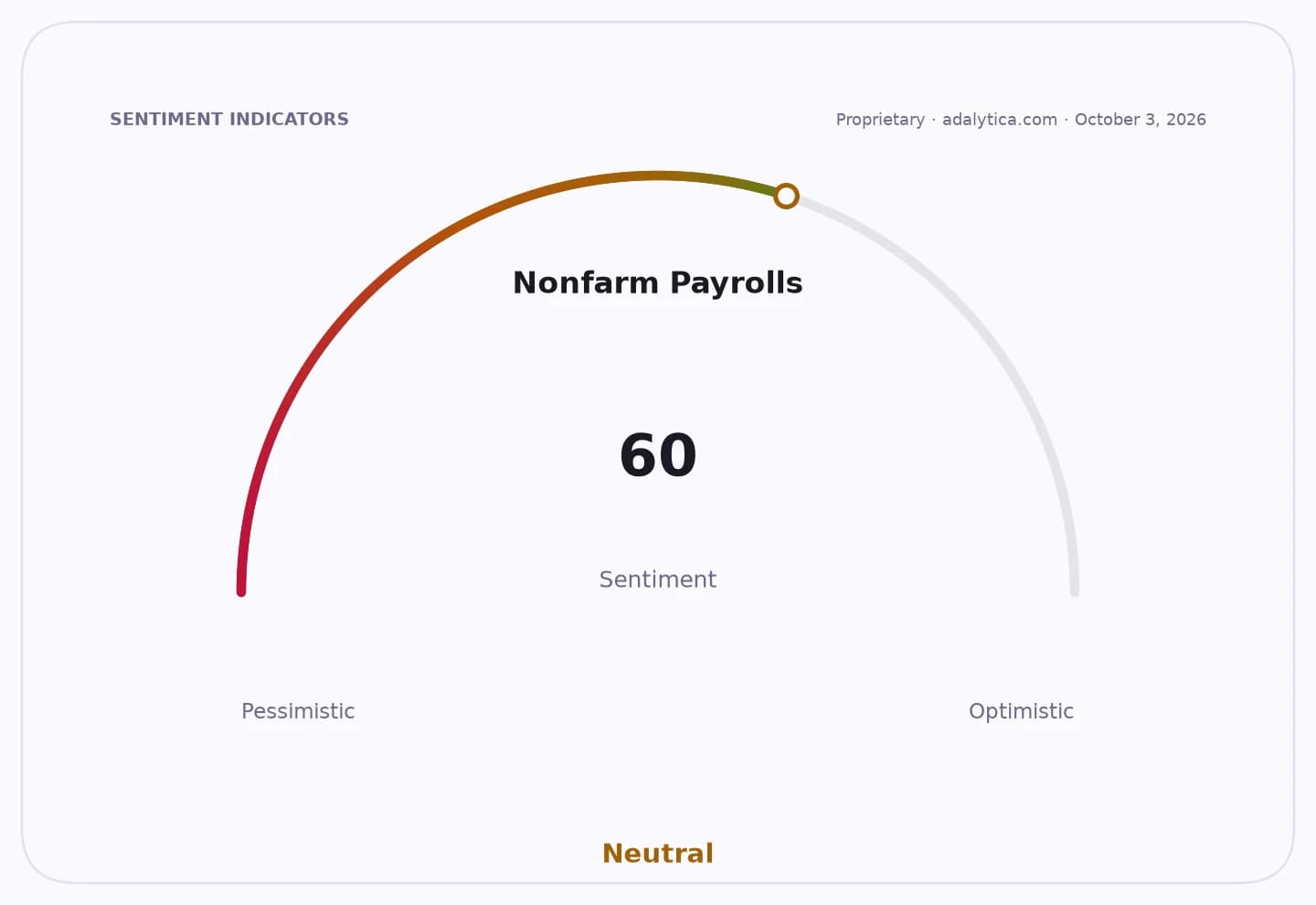
Sentiment IndicatorsⓘProprietary · adalytica.com · October 2, 2026
This is a snapshot — live sentiment, awareness and momentum for 130+ markets update continuously in the dashboard.Open AlphaPulse
For households, the story is more complicated. A 3% wage gain is better than nothing, but it still does not leave much room when prices are rising quickly. That is why this report matters: it points to an economy that is cooling enough to reduce inflation pressure, but not yet strong enough to deliver real relief to workers. The cleanest path to healthier paychecks is not a fresh wage spike that could reignite inflation, but a slower inflation rate that lets earnings stretch farther.
That broader inflation picture is improving, at least on the labor side. The data show hourly pay rising far more slowly than during the recent inflation shock, suggesting companies are not facing the kind of wage spiral that can feed itself through higher prices, then higher wages, then higher prices again. For the Federal Reserve, that is important evidence that one of the biggest inflation risks is receding. For markets, it supports the case that policy rates can eventually move lower without the central bank having to worry as much about a wage-driven reacceleration.
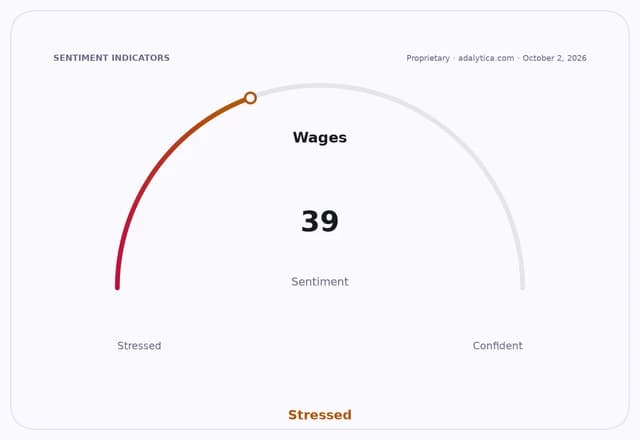
The implication for investors is straightforward: if wage pressure stays contained, profit margins across consumer, industrial and service companies should get a little breathing room, and bond markets can continue to price a more benign inflation path. Adalytica’s proprietary gauge of confidence in the Fed’s 2% inflation target sits at 82, while its wage inflation sentiment is notably more subdued, reinforcing the market’s sense that wage-led inflation is not the main threat right now.
That does not mean the economy is out of the woods. A labor market that is too weak eventually hurts spending, and spending is what drives corporate revenue. But for long-term investors, slower wage growth is usually a better problem than runaway wages: it gives the Fed more flexibility, eases pressure on margins, and increases the odds that inflation keeps drifting back toward target.
If you invest with a multiyear horizon, this is the kind of development that favors patience over panic. The next few employment reports will matter, but the bigger message is already clear: U.S. labor costs are cooling, and that lowers the odds that inflation becomes entrenched again. That is worth watching, and it is constructive for diversified investors willing to hold through the noise.
| Entity | Gains | Losses |
|---|---|---|
| Federal Reserve | ▲More room to ease policy | ▼Less urgency to fight wage inflation |
| Consumers | ▲Better chance of lower inflation | ▼Slower pay growth |
| Employers | ▲Softer labor-cost pressure | ▼Less pricing power from strong demand |
| Bond investors | ▲Lower inflation risk | ▼Less need for higher yields |