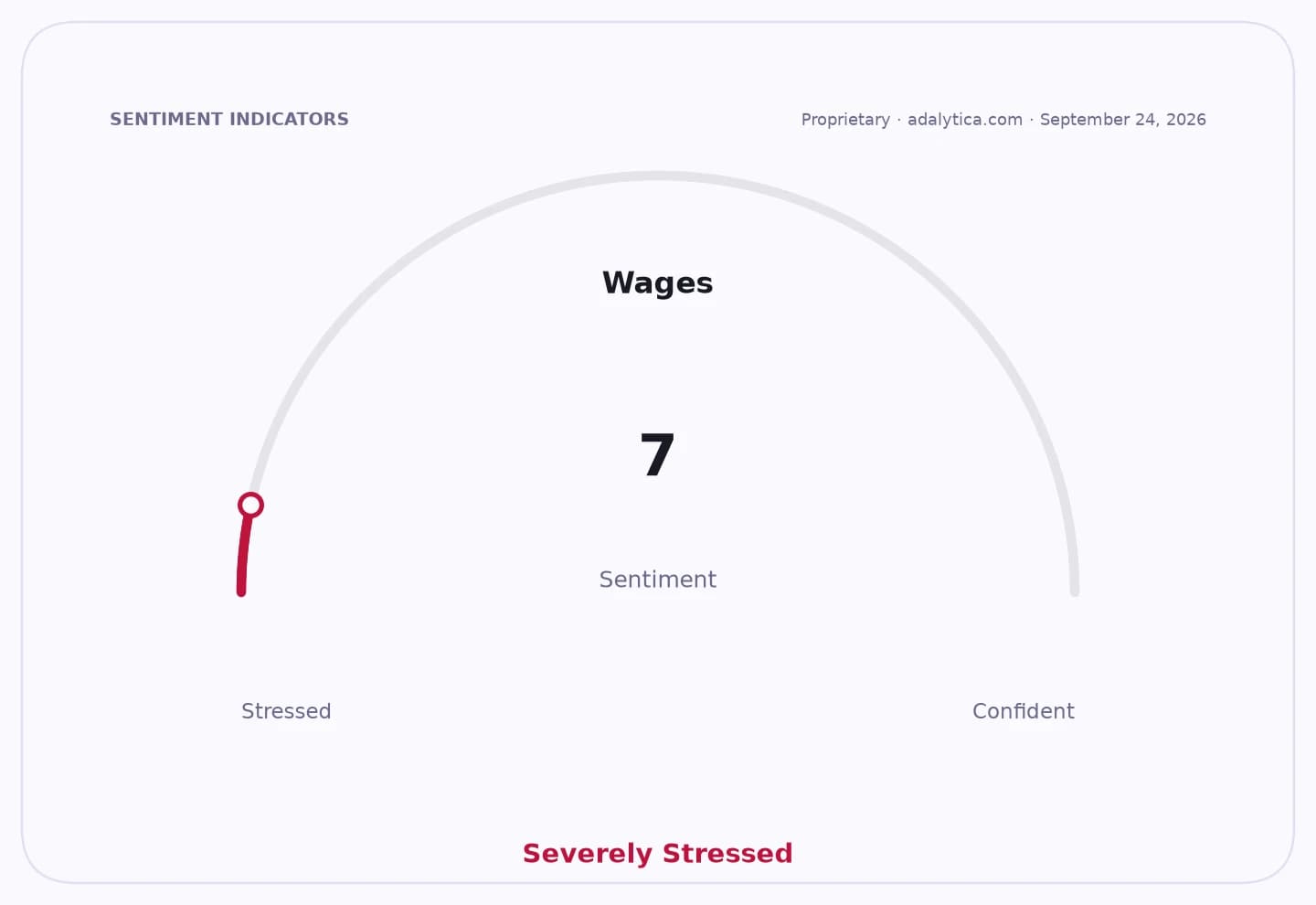
U.S. average hourly earnings rose 0.3% in August, matching forecasts and extending a steady run of pay gains that keeps the labor market firm enough to worry Federal Reserve officials about lingering wage pressure.
U.S. wages rise 0.3% in August, matching forecasts

The monthly increase followed a 0.2% rise in July and leaves wage growth on a moderate but still resilient path. On an annual basis, average hourly wages have continued to advance at a pace that suggests employers are still paying up to hold onto workers, even as hiring cools from earlier in the cycle.
Sentiment IndicatorsⓘProprietary · adalytica.com · September 4, 2026
This is a snapshot — live sentiment, awareness and momentum for 130+ markets update continuously in the dashboard.Open AlphaPulse
That matters because wages remain one of the clearest channels through which labor strength can feed inflation. For the Fed, a payrolls report that combines solid wage gains with unemployment holding at 4.1% argues against any quick shift toward aggressive rate cuts, especially with policymakers focused on whether inflation is moving sustainably back to target.
The report also showed nonfarm payrolls edging up by 159,075 in August after 158,913 in July, underscoring an economy that is slowing only gradually rather than rolling over. Traders will likely read that as a sign the labor market is cooling in an orderly way, not cracking, which keeps Treasury yields and rate expectations sensitive to each fresh employment print.
For investors, the combination of steady wage growth and stable jobless claims supports household spending, but it also keeps pressure on rate-sensitive assets that benefit from a faster easing cycle. Equity markets may prefer the softer landing story, yet bond bulls need more evidence that pay gains are easing before pricing in a cleaner path to cuts.
The next major test is the broader August jobs report and any follow-through in inflation data, which will help determine whether the Fed sees enough cooling in wages to move more quickly later this year.
| Entity | Gains | Losses |
|---|---|---|
| Workers | ▲Higher paychecks | ▼None immediate |
| Fed doves | ▲Evidence of gradual cooling | ▼Faster-cut case weakens |
| Bond bulls | ▲Slower labor growth if it continues | ▼Wage pressure keeps yields elevated |
| Consumer stocks | ▲Household income support | ▼Higher rates can cap valuations |