Inflation is still running hot enough to matter for retirees, bond investors and anyone building a long-term stock portfolio, even if it is nowhere near the 2022 spike.
Inflation stays hot for Social Security and markets

The biggest takeaway from September’s report is not just that consumer prices climbed 3.7% from a year earlier, but that the Bureau of Labor Statistics’ CPI-W measure — the index that determines Social Security’s annual cost-of-living adjustment — rose 3.9%. That pushes the projected 2027 Social Security COLA to about 3.6%, or roughly $75 a month for the average retired worker. For millions of households living on fixed incomes, that is real money. For investors, it is a reminder that inflation is still sticky enough to keep interest rates elevated and to reward companies with pricing power.
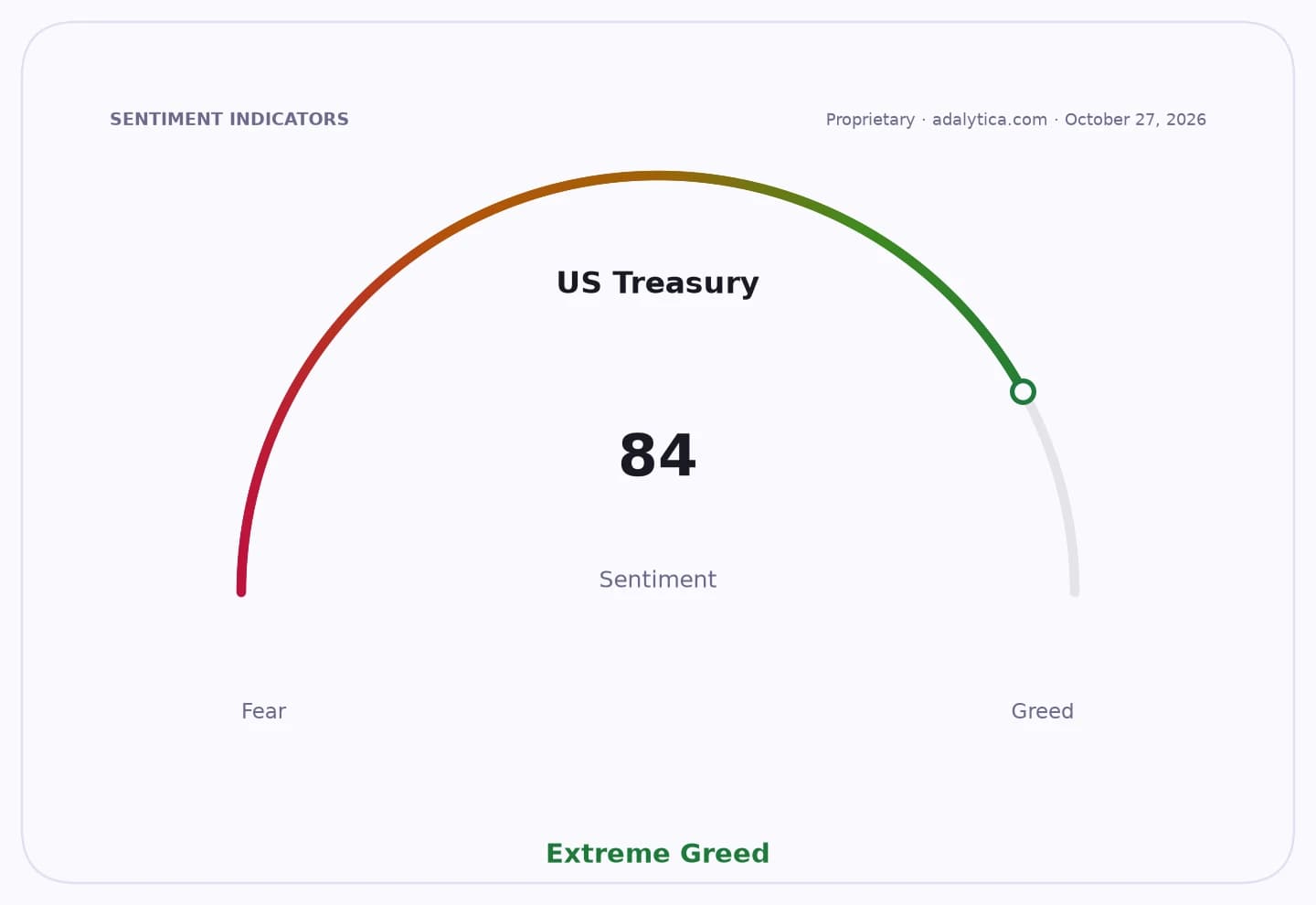
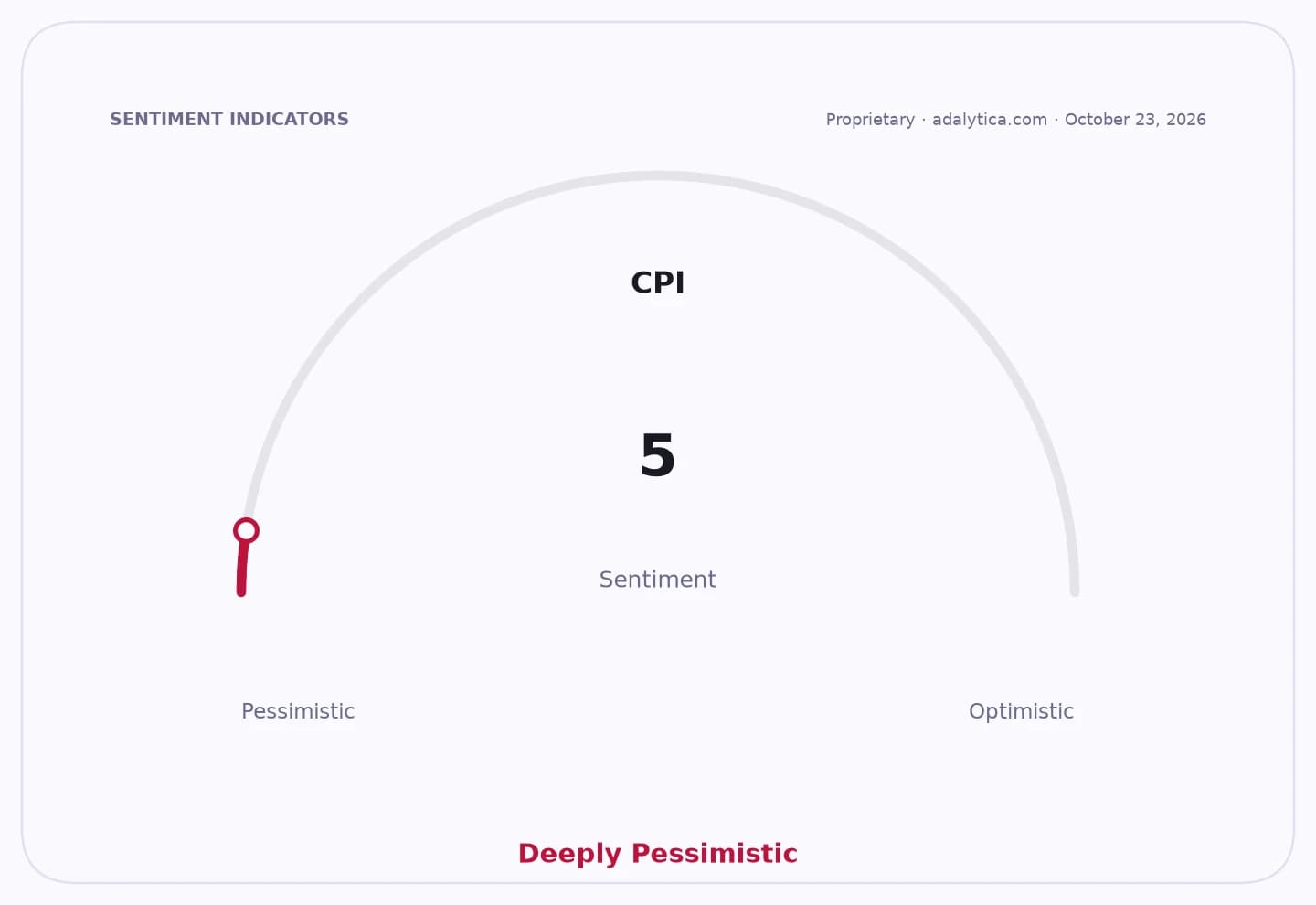
Sentiment IndicatorsⓘProprietary · adalytica.com · October 27, 2026
This is a snapshot — live sentiment, awareness and momentum for 130+ markets update continuously in the dashboard.Open AlphaPulse

That matters economically because inflation is not just an abstract statistic. When the cost of food, fuel and services rises faster than wages, consumers have less room to spend elsewhere, and central banks have less room to ease policy. The 10-year Treasury yield has already been pushing higher, trading around 5.13% on Oct. 21 before easing modestly in the following sessions. Higher yields raise borrowing costs across the economy, from mortgages to corporate debt, and they tend to compress valuations for long-duration assets such as growth stocks and REITs.
For Social Security recipients, the COLA is designed to preserve purchasing power, but it also illustrates a broader problem: the government’s inflation formula is lagging the lived experience of many households. A 3.6% adjustment helps, but if medical care, utilities and groceries keep climbing, retirees may still feel squeezed. That is why inflation continues to shape political debate as well as market positioning.
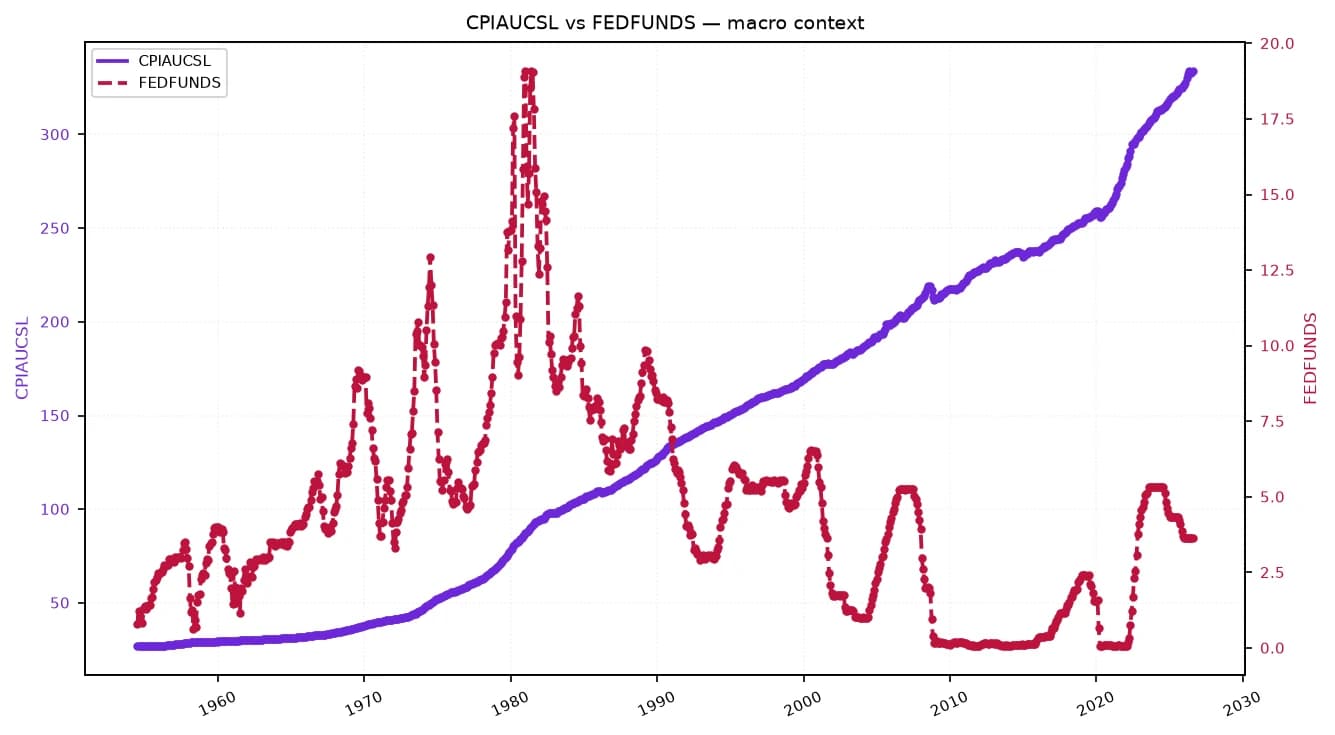
CPIAUCSL vs CPILFESL — macro contextadalytica.com
Explore this data interactively — full history, time series and cross-market comparisons.Open AlphaPulse
For investors, the practical lesson is not to panic, but to own businesses that can adapt. Big, profitable companies with strong brands and pricing power have historically handled inflation better than firms that cannot pass on higher costs. That is one reason broad index funds like the Vanguard S&P 500 ETF remain a sensible default for many investors. The SPY ETF is still trading above its 200-day moving average, a sign the broader market retains an upward long-term trend even after recent swings. The 50-day moving average is also close to current levels, suggesting a market that is consolidating rather than breaking down.
Still, inflation does favor some corners of the market over others. Short-term bonds can be less vulnerable to rising rates than longer-dated bonds, which helps explain why Treasury ETF TLT has drawn intense attention even as its price has hovered around $81. Gold, via GLD, has also remained part of the inflation conversation, though the ETF’s recent weakness shows that hedges do not move in straight lines. Energy stocks, financials and select real estate names can also benefit when inflation stays elevated and nominal prices keep rising.
The Adalytica sentiment snapshot on CPI shows “Extreme Fear,” which is exactly the kind of mood that often appears when investors worry inflation will stay stubborn longer than expected. But long-term investors should resist the urge to overreact to one report. Inflation at 3.9% for urban wage earners is uncomfortable, not catastrophic. The real issue is persistence: if prices keep rising above the pace policymakers prefer, rate cuts stay off the table and portfolio returns will need to come more from earnings growth than multiple expansion.
That is why the best response is usually boring and effective: stay diversified, keep buying quality stocks, and avoid making big bets on where inflation will be next month. Over a three- to 10-year horizon, companies that can raise prices, protect margins and grow free cash flow are the ones most likely to compound wealth. For most investors, that means holding a core index fund, keeping some exposure to inflation-resistant sectors, and treating volatility as a chance to build positions gradually.
| Entity | Gains | Losses |
|---|---|---|
| Social Security recipients | ▲Bigger COLA in 2027 | ▼Still lagging prices |
| Pricing-power stocks | ▲Better margin defense | ▼Low-margin businesses |
| Bond investors | ▲Short-duration protection | ▼Long-duration valuations |
| Consumers | ▲Cost-of-living adjustment | ▼Higher day-to-day expenses |