Social Security beneficiaries are on track for a 3.6% cost-of-living increase, a rare adjustment that would roughly keep pace with inflation after years in which retirees often felt their checks lagged behind living costs.
Social Security COLA Seen Near 3.6%

The projected raise matters because Social Security is the main income source for tens of millions of Americans, and its annual COLA is one of the most direct ways inflation filters into household cash flow. A 3.6% increase would imply a monthly benefit boost of roughly $72 for a retiree receiving $2,000, offering some relief as prices have cooled from the post-pandemic surge that eroded purchasing power.
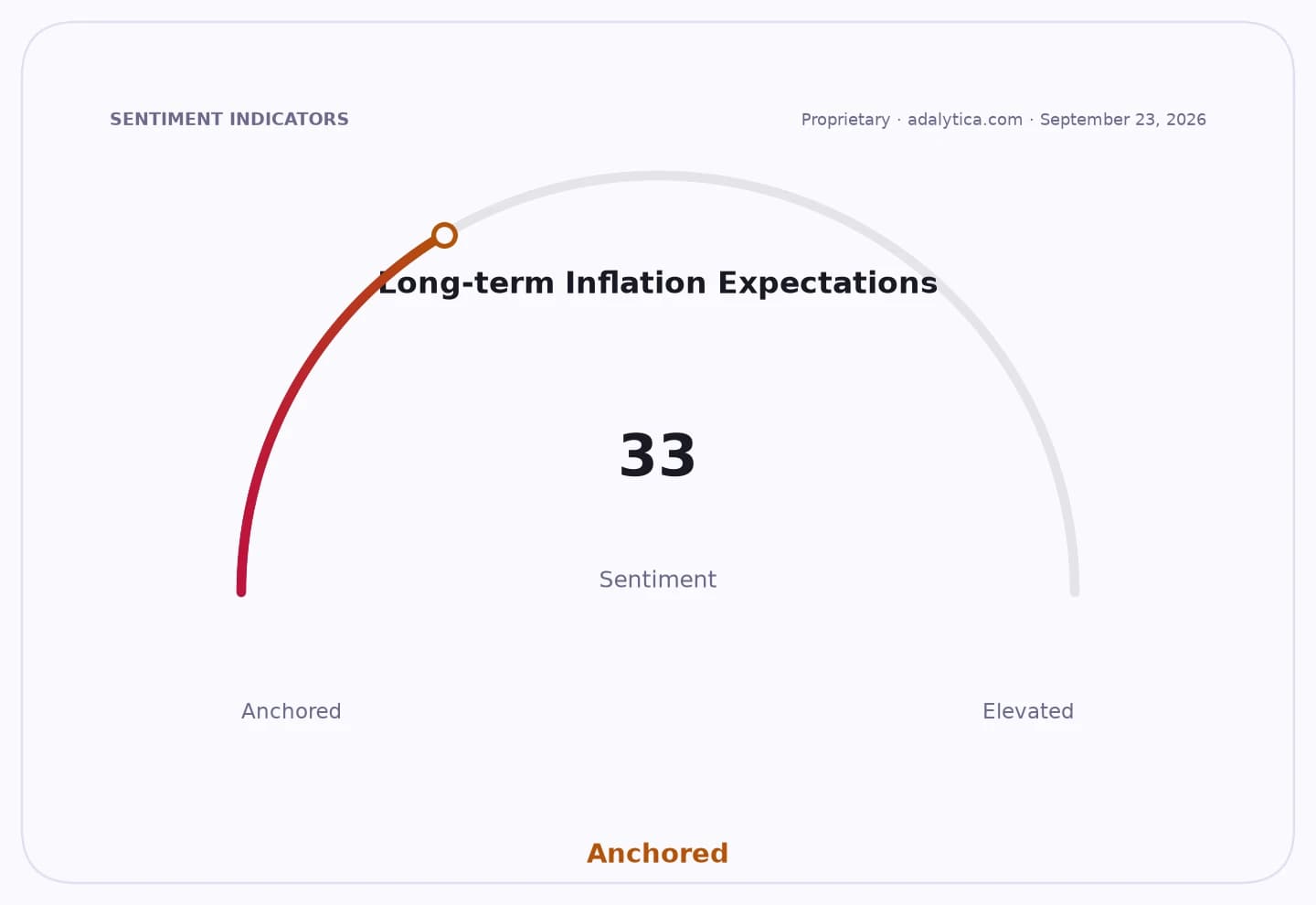
Sentiment IndicatorsⓘProprietary · adalytica.com · October 22, 2026
This is a snapshot — live sentiment, awareness and momentum for 130+ markets update continuously in the dashboard.Open AlphaPulse
The outlook is anchored in the Consumer Price Index, which has risen to 336.298 in September from 333.979 in May, while the core CPI excluding food and energy climbed to 338.896 from 336.121 over the same period. The monthly gains have been modest, with September CPI up 0.65% and core prices up 0.33%, suggesting inflation is no longer accelerating at the pace that forced larger increases earlier in the cycle.
That is a marked change from the inflation shock that drove several years of outsized COLAs and helped push the Fed into a rapid tightening cycle. The latest forecast implies October CPI will edge down 0.14% while core prices rise 0.12%, reinforcing the idea that the Social Security adjustment is finally converging with underlying inflation rather than trailing it badly.
CPIAUCSL vs CPILFESL — macro contextadalytica.com
Explore this data interactively — full history, time series and cross-market comparisons.Open AlphaPulse
For retirees, that is a small but meaningful shift in purchasing power. For policymakers, it is evidence that the Social Security inflation formula is catching a softer inflation environment, even as confidence in the Federal Reserve’s 2% target remains fragile. Adalytica’s CPI sentiment gauge shows “Extreme Fear,” while sentiment around the Fed’s inflation target is also subdued, reflecting lingering market concern that price pressures are not fully defeated.
Investors should read the COLA as another signal that inflation is easing without disappearing. That is constructive for rate-sensitive assets if it feeds into slower price growth and less pressure on the Fed, but it also underlines that inflation remains sticky enough to keep policy expectations, bond yields and consumer spending under scrutiny.
The key question now is whether this moderation endures into the next round of data. If it does, Social Security recipients get a rare year in which their increase looks aligned with inflation rather than behind it, while markets gain one more reason to believe the post-shock inflation cycle is moving into a more stable phase.
| Entity | Gains | Losses |
|---|---|---|
| Social Security recipients | ▲Higher monthly checks | ▼Less erosion of buying power |
| Retirees on fixed income | ▲Relief from rising costs | ▼Still face sticky essentials |
| Federal Reserve | ▲Evidence inflation is cooling | ▼Less room to claim victory |
| Bond bulls | ▲Softer inflation outlook | ▼Rate-cut timing still uncertain |