Americans are still feeling inflation where it hurts most — in the monthly bills that define household budgets — even as the overall pace of price growth has cooled from the peaks of the past few years.
US inflation stays high in essentials
The latest Consumer Price Index data show inflation rose 3.7% in September, with some essentials climbing far faster. Gasoline prices have surged almost 40% since January 2025, electricity is up 10%, and grocery costs are still higher too, with food at home rising 3.5% during President Donald Trump’s second term. For consumers, that means the cost of living is being driven less by broad inflation theory and more by very real, very uneven pressure on transportation, utilities and food.
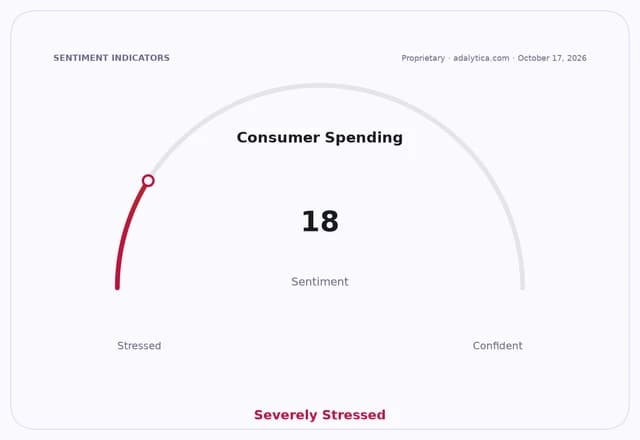
Sentiment IndicatorsⓘProprietary · adalytica.com · October 17, 2026
This is a snapshot — live sentiment, awareness and momentum for 130+ markets update continuously in the dashboard.Open AlphaPulse
That matters because inflation is never experienced evenly. Households that drive more, use more electricity or spend a larger share of income on groceries feel the squeeze first and hardest. Even a modest headline inflation rate can leave families worse off if the categories they buy every week are rising much faster than the average. The data team’s interactive tool is useful because it translates the CPI into something people actually recognize: what a monthly budget looks like after a year of price changes.
The market implications are straightforward. Persistent price pressure in essentials can keep consumer sentiment fragile, and that tends to weigh on discretionary spending. Adalytica’s Consumer Spending Sentiment gauge is in fear territory, while consumer confidence on recession risk remains only neutral, suggesting households are still wary even if the economy is not in outright panic. Retail spending sentiment, meanwhile, is showing extreme greed, a reminder that some consumers are still spending aggressively even as others pull back.
CPIAUCSL vs CPILFESL — macro contextadalytica.com
Explore this data interactively — full history, time series and cross-market comparisons.Open AlphaPulse
For investors, this is less about one month’s inflation print and more about the shape of demand over the next several quarters. Companies tied to groceries, fuel, electricity and other necessities may see steadier revenue, while businesses selling optional goods and services could face more uneven demand if households keep redirecting income toward essentials. The companies with pricing power and the lowest-cost operations usually hold up best in that kind of environment.
The bigger lesson for long-term investors is simple: inflation may fade from the headlines, but it keeps working through the economy one budget line at a time. If energy costs remain elevated and food prices stay sticky, consumer behavior will stay cautious, and that can shape everything from retail sales to profit margins. For investors, that makes inflation not just a macro statistic, but a reason to stay diversified, patient and focused on businesses that can compound through changing price cycles.
| Entity | Gains | Losses |
|---|---|---|
| Energy producers | ▲higher fuel prices | ▼households and drivers |
| Utilities | ▲ability to pass through costs | ▼power-intensive consumers |
| Grocery and staples firms | ▲resilient demand | ▼discretionary retailers |
| Consumers | ▲wage gains, if any | ▼buying power and savings |