Net interest payments on the U.S. federal debt rose to $1.25 trillion in 2025, a level that now consumes 18.5% of federal revenue and underscores how borrowing costs are squeezing Washington’s fiscal room just as the national debt nears $40 trillion.
U.S. Debt Interest Reaches $1.25 Trillion in 2025

The figure, based on an analysis by DoubleLine, is more than the entire U.S. defence budget for 2026 and marks the first time the interest burden has overtaken the previous peak of 18.4% set in 1991. For investors, it is another warning that higher-for-longer rates are not just a market story but a budget problem, with interest expense increasingly competing with spending on defence, entitlements and other federal priorities.
Sentiment IndicatorsⓘProprietary · adalytica.com · September 8, 2026
This is a snapshot — live sentiment, awareness and momentum for 130+ markets update continuously in the dashboard.Open AlphaPulse
The strain has built quickly. Interest costs as a share of revenue have roughly tripled since 2015, according to the Kobeissi Letter, which cites Congressional Budget Office projections. Under those assumptions, the ratio could climb to 25% by 2036, a trajectory that would leave even less fiscal capacity to absorb slower growth, recession or another leg higher in Treasury yields.
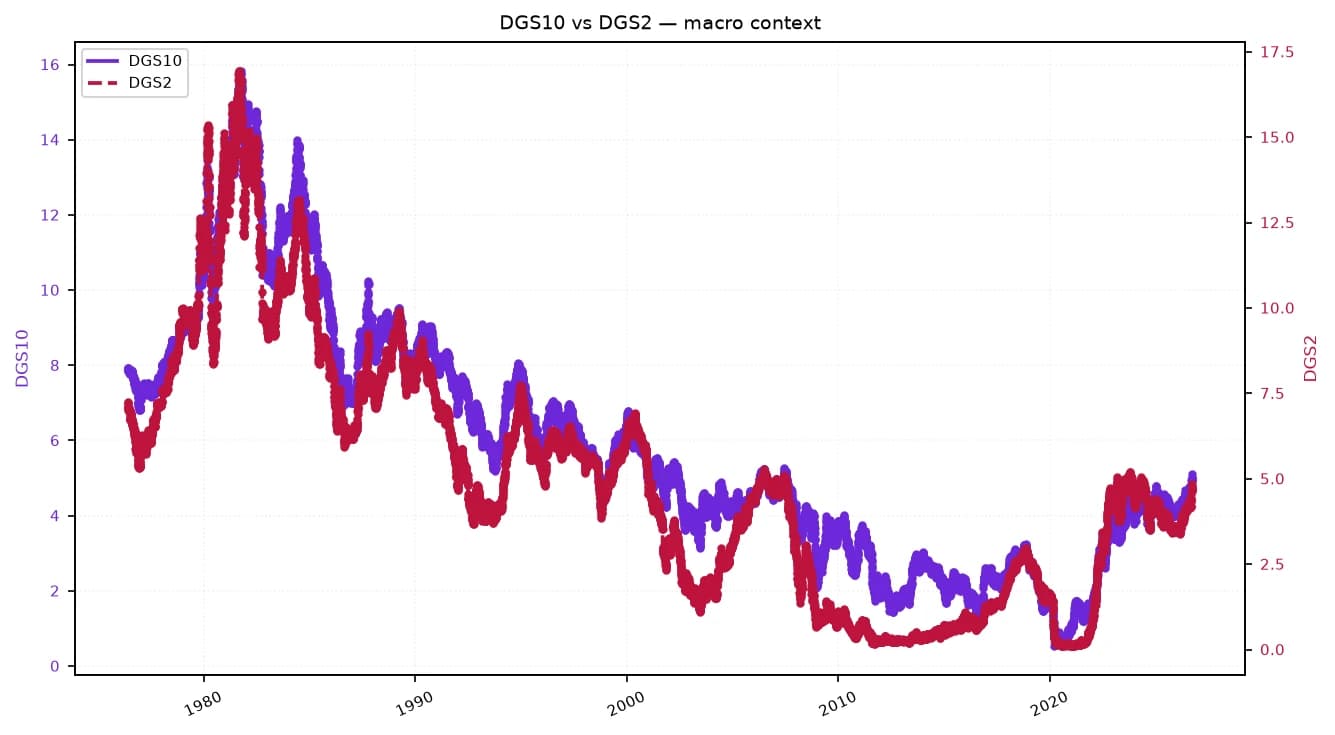
That matters because the U.S. is not facing the 1991 backdrop. Public debt was about 44% of GDP then; it is now above 100% of GDP and more than $32 trillion in absolute terms, while long-dated Treasury yields, though below early-1990s levels, are being applied to a much larger debt stock. A sustained rate plateau around current levels would keep rolling funding costs elevated and widen deficits further.
Markets are already tuned to the consequences. Treasury bonds have been under pressure as investors weigh heavy issuance against sticky inflation and a still-restrictive Federal Reserve stance, while equity traders are watching whether higher government borrowing crowds out risk appetite. Adalytica’s U.S. Treasury bond trade signals show greed sentiment at 85, while the S&P 500 trade-signal snapshot shows extreme fear, reflecting the split between bond-market conviction and equity-market caution.
For policymakers, the next test is whether fiscal choices can slow the climb in interest expense without forcing sharper tax increases or spending cuts. For investors, the key risk is that debt-service costs become a structural feature of U.S. macro rather than a cyclical burden, keeping pressure on Treasuries, the dollar and rate-sensitive sectors if borrowing needs keep rising.
| Entity | Gains | Losses |
|---|---|---|
| Treasury bondholders | ▲Higher yields on new issuance | ▼Price losses on existing bonds |
| U.S. government | ▲Short-term financing access | ▼Fiscal flexibility and budget room |
| Defence and other discretionary spending | ▲None | ▼Crowding out from interest costs |
| Taxpayers | ▲None | ▼Higher future tax burden / services pressure |