The dollar edged higher and the Swiss franc softened on Tuesday as traders positioned for the July personal consumption expenditures inflation report, the Federal Reserve’s preferred price gauge and the next major test of whether US rate cuts remain on track.
US Dollar Rises Before July PCE Inflation Report

The move matters because PCE is one of the last data points before markets reprice the policy path into September and beyond. A hotter-than-expected print would likely keep Treasury yields elevated, support the greenback and pressure haven currencies such as the franc. A softer reading would do the opposite, reinforcing bets that the Fed can begin easing without reigniting inflation.
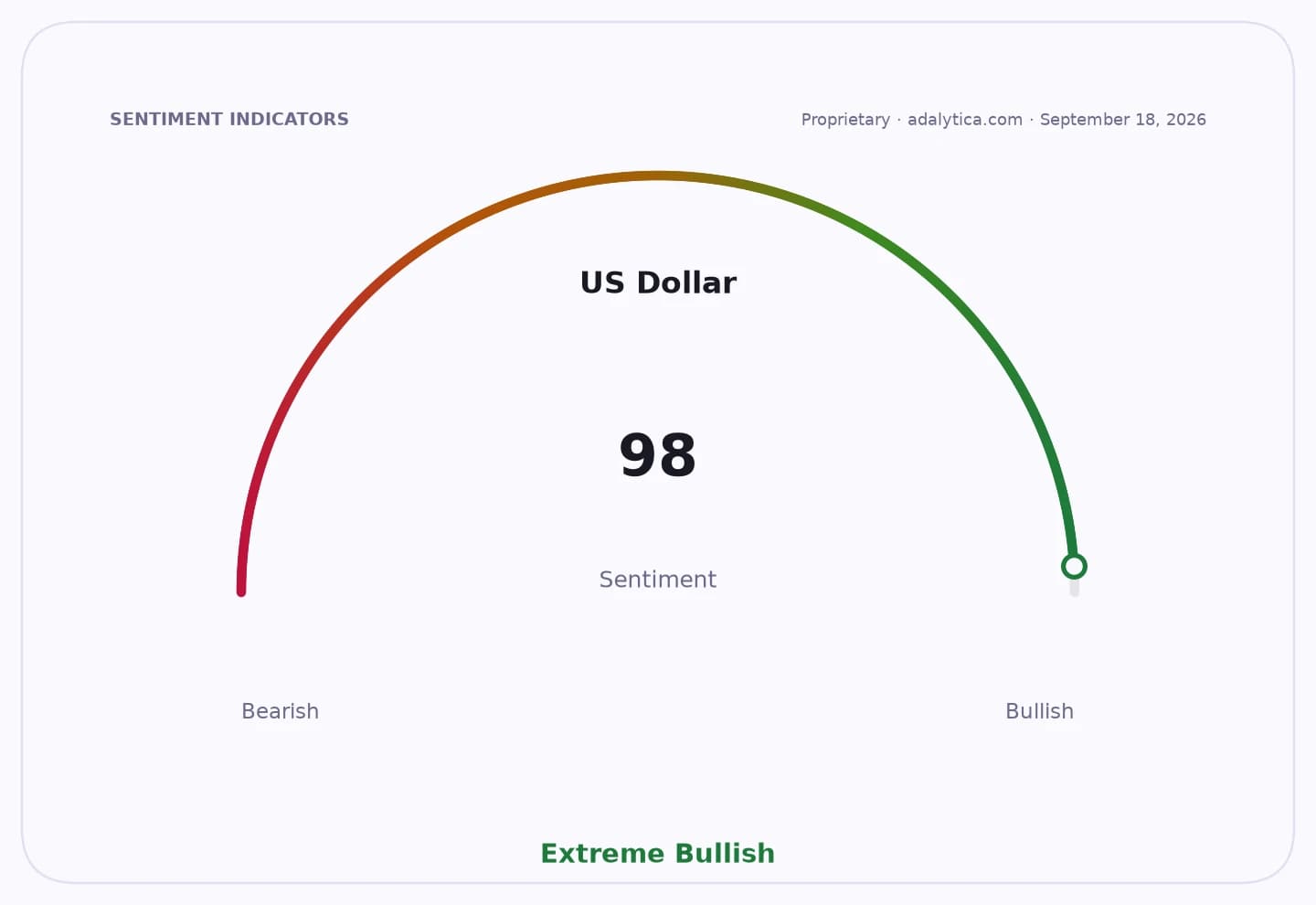
Sentiment IndicatorsⓘProprietary · adalytica.com · August 26, 2026
This is a snapshot — live sentiment, awareness and momentum for 130+ markets update continuously in the dashboard.Open AlphaPulse

That tension was visible across dollar proxies. The Invesco DB US Dollar Index Bullish Fund, or UUP, held near $27.94, close to its recent range and above its 200-day moving average of about $27.59, while the CurrencyShares Swiss Franc Trust, or FXF, traded at $109.95, only marginally above its 50-day average and still below its 200-day trend. The technical backdrop suggests neither currency market is breaking decisively higher or lower, but both are waiting for the inflation data to set direction.
US rates were also firmer ahead of the release, with the 10-year Treasury yield around 4.72%, near recent highs. Higher yields usually underpin the dollar by improving the relative return on US assets, while weighing on defensive currencies that often benefit when growth and inflation expectations are fading. That linkage is especially important for the franc, which has recently been treated as a low-yield refuge rather than a carry currency.
Adalytica’s US dollar trade signals showed sentiment at 3, described as “Extreme Fear,” even as awareness sat at 100, or “Extreme Greed,” underscoring how crowded the debate has become around the greenback’s next move. In practice, that usually leaves the currency vulnerable to an upside surprise in inflation, but also exposed if the data confirm a cooling economy and revive rate-cut expectations.
For investors, the key issue is not just the direction of the dollar on the day, but whether the PCE report shifts the balance between US growth resilience and policy easing. A stronger print would likely extend support for the dollar, pressure import-sensitive sectors and keep global financial conditions tighter. A benign number would ease Treasury yields, weaken the dollar and give room for risk assets and non-US currencies to recover.
The coming session is likely to hinge on whether the inflation data validates the recent stability in equities and Treasury markets or reopens the debate over how quickly the Fed can move. Until then, the franc’s weakness versus the recovering dollar reflects a market still unwilling to take a clear view before the numbers land.
| Entity | Gains | Losses |
|---|---|---|
| US dollar | ▲Firmer yields | ▼Haven currencies |
| Swiss franc | ▲— | ▼Safe-haven demand |
| Treasury bears | ▲Higher-rate backdrop | ▼Bond prices |
| Dollar bulls | ▲Hot PCE surprise | ▼Rate-cut trades |