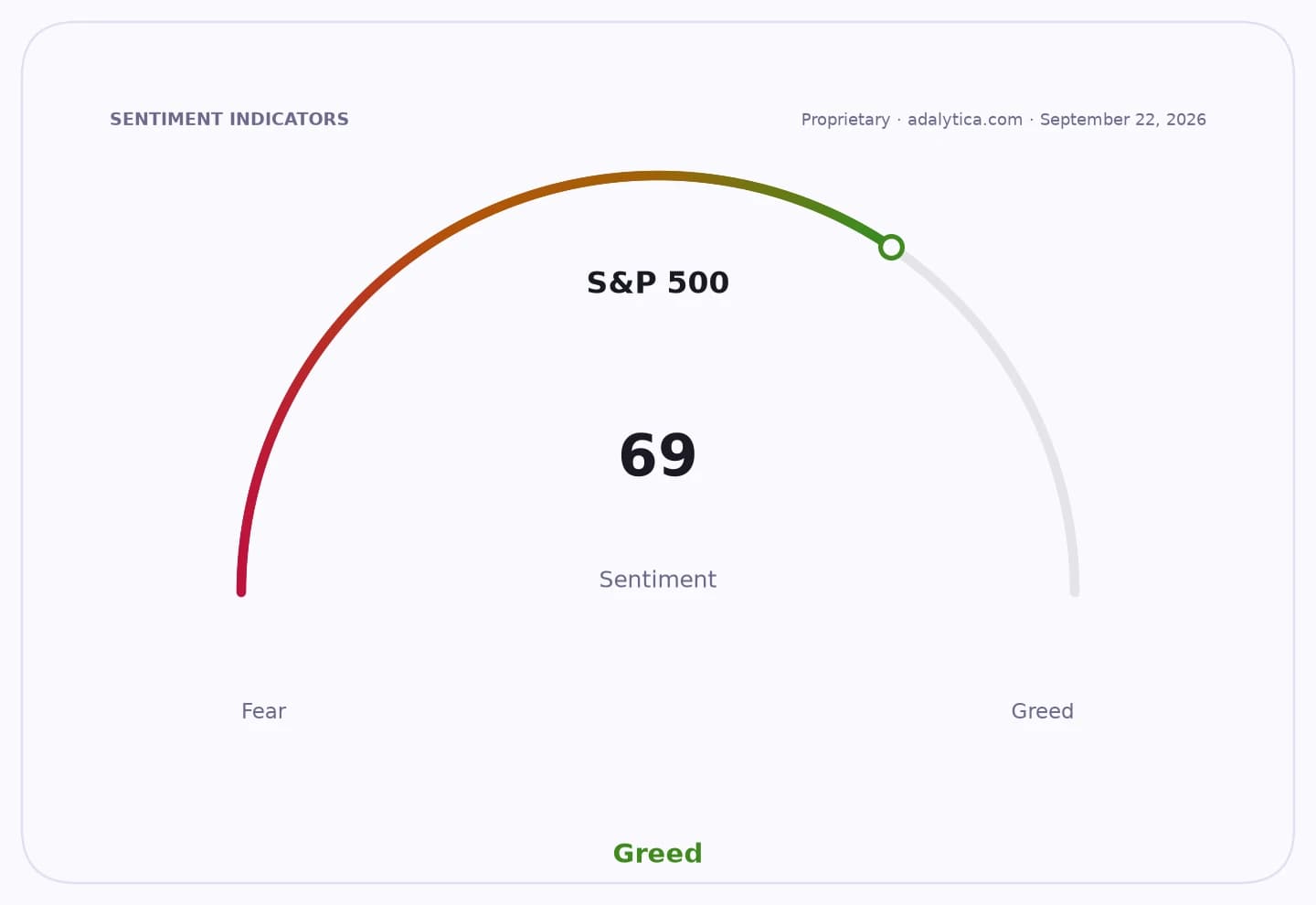
U.S. equities are near record highs and options markets are barely pricing in a midterm-election risk, leaving a market that looks calm on the surface but increasingly vulnerable to a political or macro shock.
U.S. equities near highs as midterm risk rises

That disconnect matters because the next two months bring a dense cluster of catalysts — inflation data, jobs reports, a Federal Reserve meeting, and a planned U.S. visit by Chinese President Xi Jinping — before the November vote. In a market already strained by tight credit spreads, crowded positioning and historically low correlations, even a modest surprise could trigger a sharper-than-normal move.
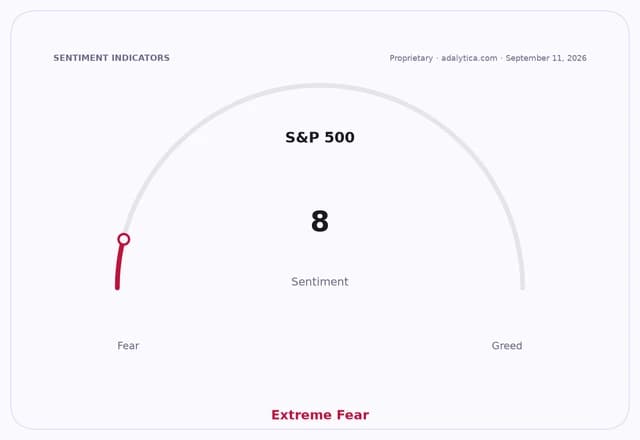
The S&P 500 has already shown how fragile the backdrop can be. Cantor Fitzgerald’s analysis shows the index fell 5% or more in the September-October stretch in 15 of the 24 midterm years since 1930, a reminder that the seasonally quiet summer often gives way to a more unstable stretch as investors refocus on political risk. Yet the Cboe Volatility Index recently touched a year low around 15, below its long-term median of 17.6, while VIX futures and equity correlations suggest investors are still assuming an orderly market.
That complacency is what has drawn concern from derivatives desks. UBS’s “Turbu-lens” framework, which tries to forecast one-month market stress, hit its highest reading at the end of August, and the firm described the market as showing “extreme fragility.” The point is not that a selloff is inevitable; it is that the market’s ability to absorb bad news may be thinner than the pricing of protection implies.
Some of the risk is political, but not in the simplistic sense of a binary election trade. Polling cited by Reuters/Ipsos shows Democrats have opened an advantage in perceptions of which party is better able to handle the cost of living, raising the odds of a House flip and, potentially, a divided government. Evercore ISI’s Julian Emanuel said that outcome could add uncertainty, and a Senate flip would magnify it. For investors, the issue is less partisan than institutional: a change in congressional control could alter the pace of fiscal policy, tax debate and regulatory expectations.
The bull case is that earnings and growth remain strong enough to overpower the noise. That has been the dominant market narrative all year, and it explains why some investors have been reluctant to pay up for hedges after several years in which shorting risk assets was costly. The bear case is that equities are priced for smooth sailing just as the political calendar, macro data and geopolitics are becoming less predictable. Evercore argues implied volatility is still cheap relative to those risks.
The price action in exchange-traded funds tied to the S&P 500 and Treasuries underscores that imbalance. SPY has held well above its 200-day moving average, but the 50-day average has flattened and momentum indicators have cooled from overbought levels. Treasury proxy TLT has also been soft, suggesting investors are not rushing into duration as a hedge. That combination points to a market still anchored by confidence in earnings, but not obviously preparing for a defensive rotation.
For investors, the message is straightforward: the midterms may not by themselves drive the next major move, but they arrive at a moment when market resilience is being tested by multiple catalysts at once. If volatility spikes, the winners are likely to be holders of cheap protection and cash; the losers are crowded longs, momentum traders and anyone assuming the current calm will last through November.
| Entity | Gains | Losses |
|---|---|---|
| Option buyers | ▲Cheap protection | ▼Complacent equities |
| Crowded stock longs | ▲Continued earnings support | ▼Volatility spike |
| Democrats | ▲House gains, policy leverage | ▼Cost-of-living scrutiny |
| Republicans | ▲Base turnout from Trump pledge | ▼Midterm backlash risk |