U.S. employers added 165,000 jobs in October, a stronger-than-expected gain that suggests the labor market remains resilient even as the political backdrop changes in Washington.
U.S. Jobs Add 165,000 in October

The report matters because payroll growth is one of the clearest gauges of whether the economy can keep expanding without reigniting inflation or tipping into recession. A headline gain that more than doubled expectations, along with a slight dip in unemployment, points to an economy still generating enough demand to hire. That reduces the urgency for the Federal Reserve to cut rates quickly, even as markets continue to look for evidence that tighter policy is finally cooling growth.
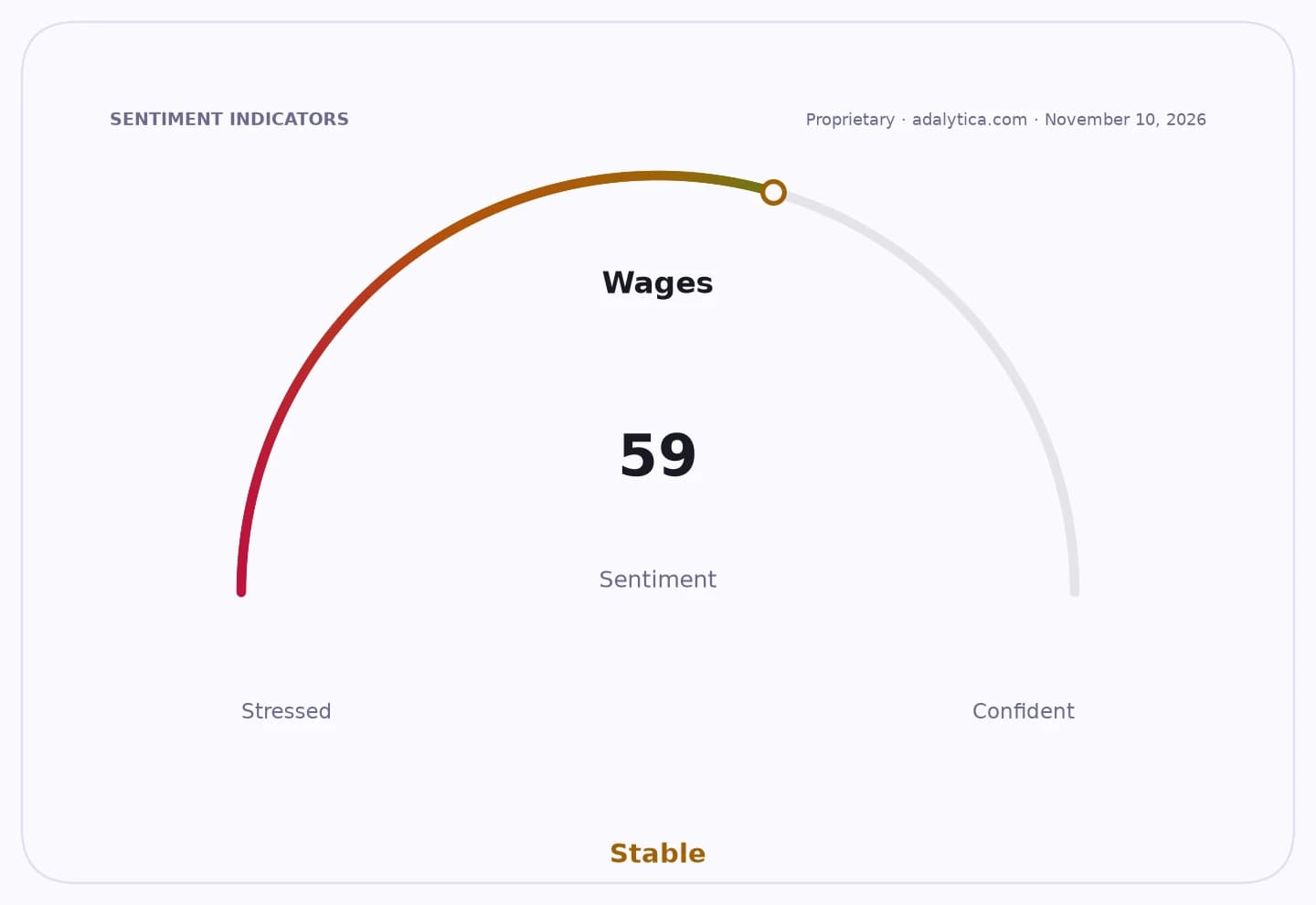
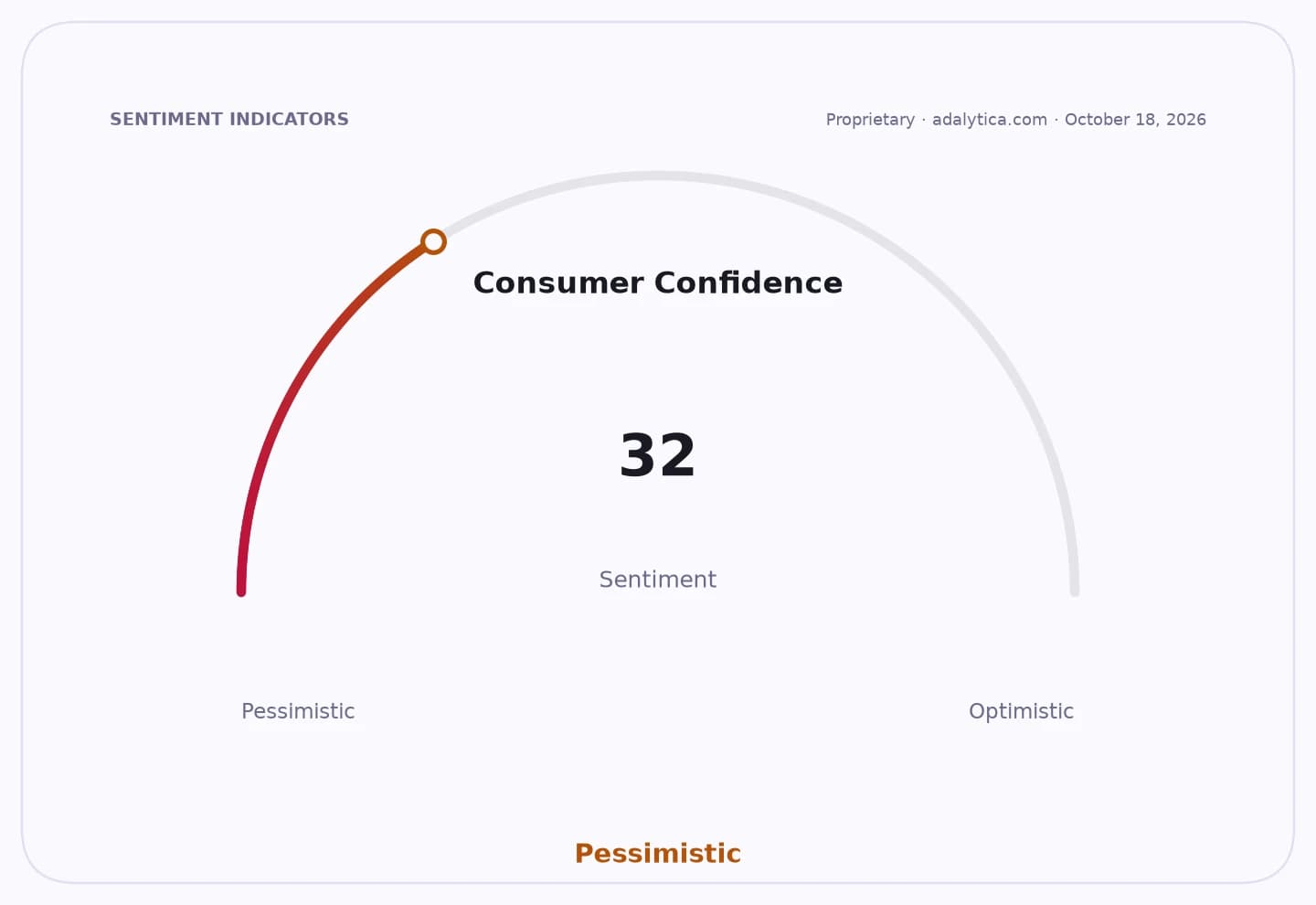
Sentiment Indicators

For investors, the implication is a familiar one: a stronger jobs print is good for risk appetite in one sense, because it lowers recession odds, but it also complicates the case for aggressive easing. Treasury yields are likely to stay sensitive to every labor reading, while rate-cut expectations could be pushed further out. Equities tied to domestic growth may take comfort from the labor backdrop, but rate-sensitive sectors such as real estate and utilities are more vulnerable if borrowing costs stay elevated for longer.
The jobs data also arrives at a politically important moment. A new government does not automatically mean a new labor cycle, and October’s figures suggest the underlying employment engine still has momentum. That is notable because policymakers will have less room to lean on fiscal support if the job market remains this steady. It also means the next phase of the cycle may depend less on government turnover than on whether consumer demand, wage growth and hiring all begin to soften together.
PAYEMS vs UNRATE — macro contextadalytica.com
Explore this data interactively — full history, time series and cross-market comparisons.
Nonfarm Payrolls
Recent revisions to earlier months reinforce that the labor market entered November on firmer footing than many had assumed. The unemployment rate edged lower, underscoring that payroll gains are not coming solely from a surge in labor-force participation, but from continued employer demand for workers.
Still, the report does not eliminate downside risks. Job openings have been trending lower from their post-pandemic peaks, and if hiring cools in coming months, the market could reprice quickly toward slower growth and easier policy. For now, though, the message from October is that the U.S. jobs market remains intact — and that limits how fast policymakers, bond traders and equity investors can assume the economy is heading toward relief.
| Entity | Gains | Losses |
|---|---|---|
| U.S. workers | ▲More job security | ▼Less wage leverage if policy stays tight |
| Federal Reserve | ▲More evidence of economic resilience | ▼Less room for rapid rate cuts |
| Equity bulls | ▲Lower recession risk | ▼Higher-for-longer rates |
| Rate-sensitive sectors | ▲— | ▼Pressure from elevated yields |