US mortgage rates climbed to 7.22%, the highest since January, deepening the affordability squeeze for homebuyers already facing elevated home prices and signaling more pressure on an already sluggish housing market.
US Mortgage Rates Hit 7.22% as Housing Slump Deepens

The average rate on a 30-year fixed mortgage rose five basis points in a day and has climbed 33 basis points over six straight sessions, according to Mortgage News Daily. The move pushes borrowing costs back near levels that can quickly reshape buying power, with even modest rate increases adding hundreds of dollars to monthly payments on typical loans.
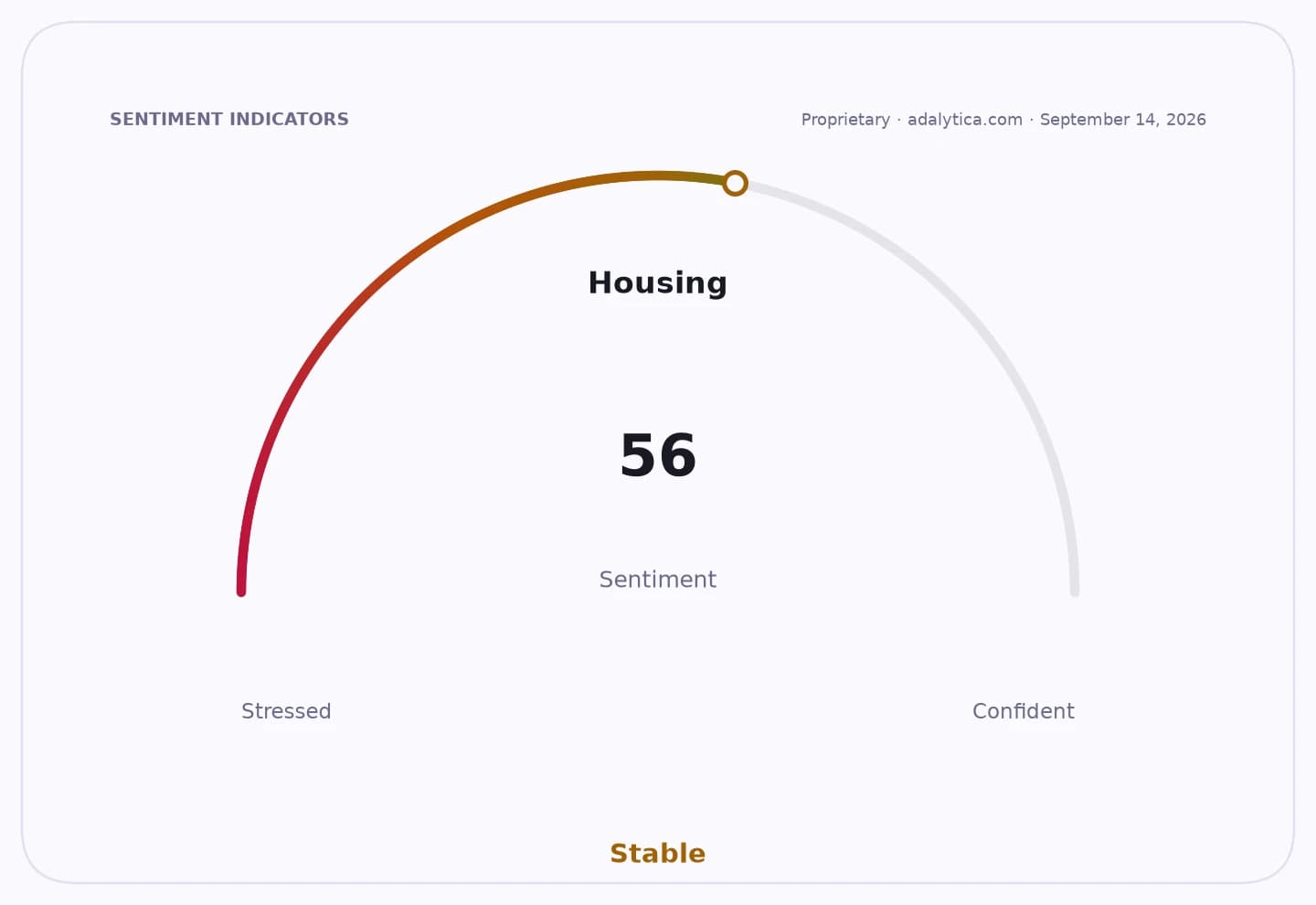
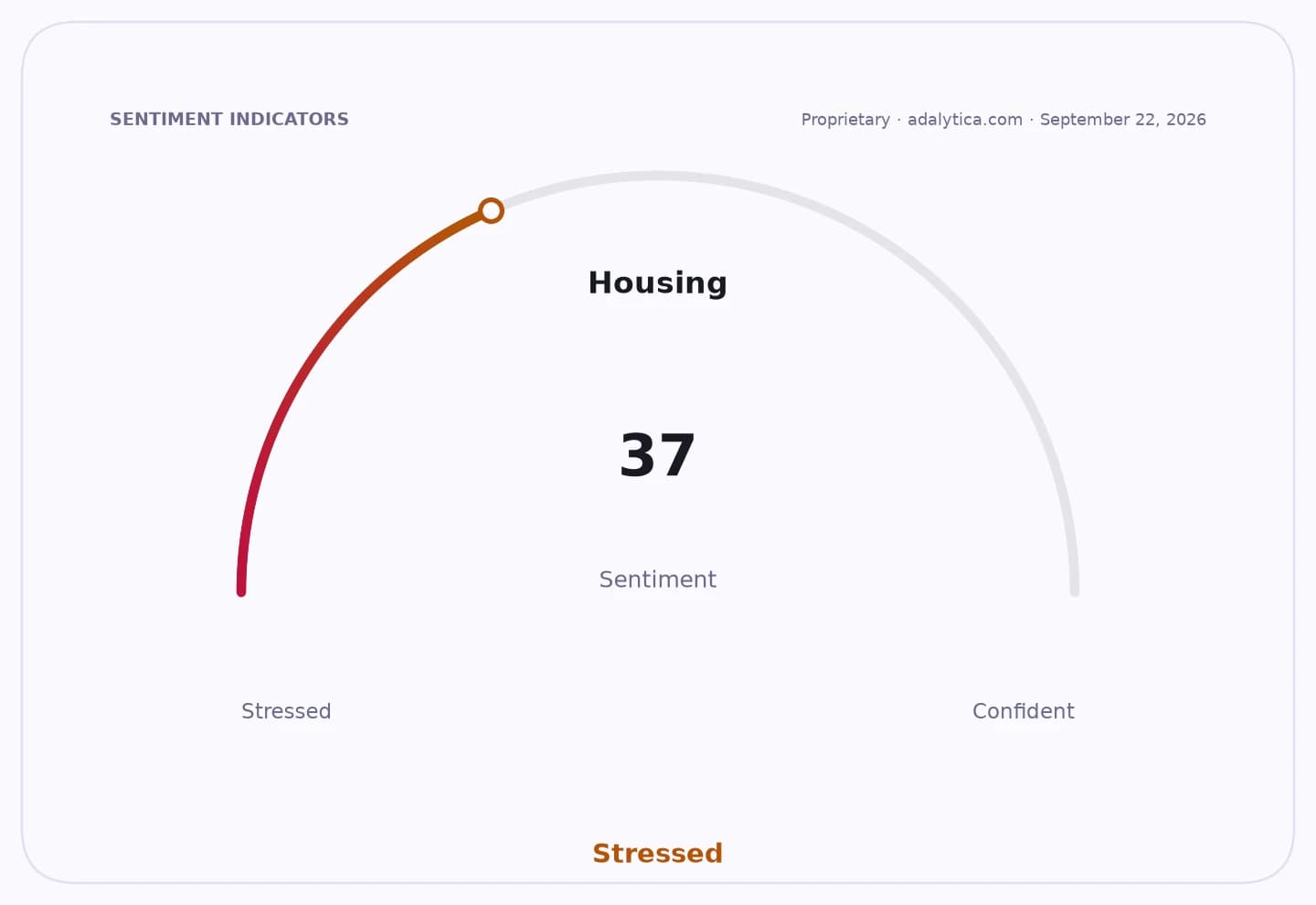
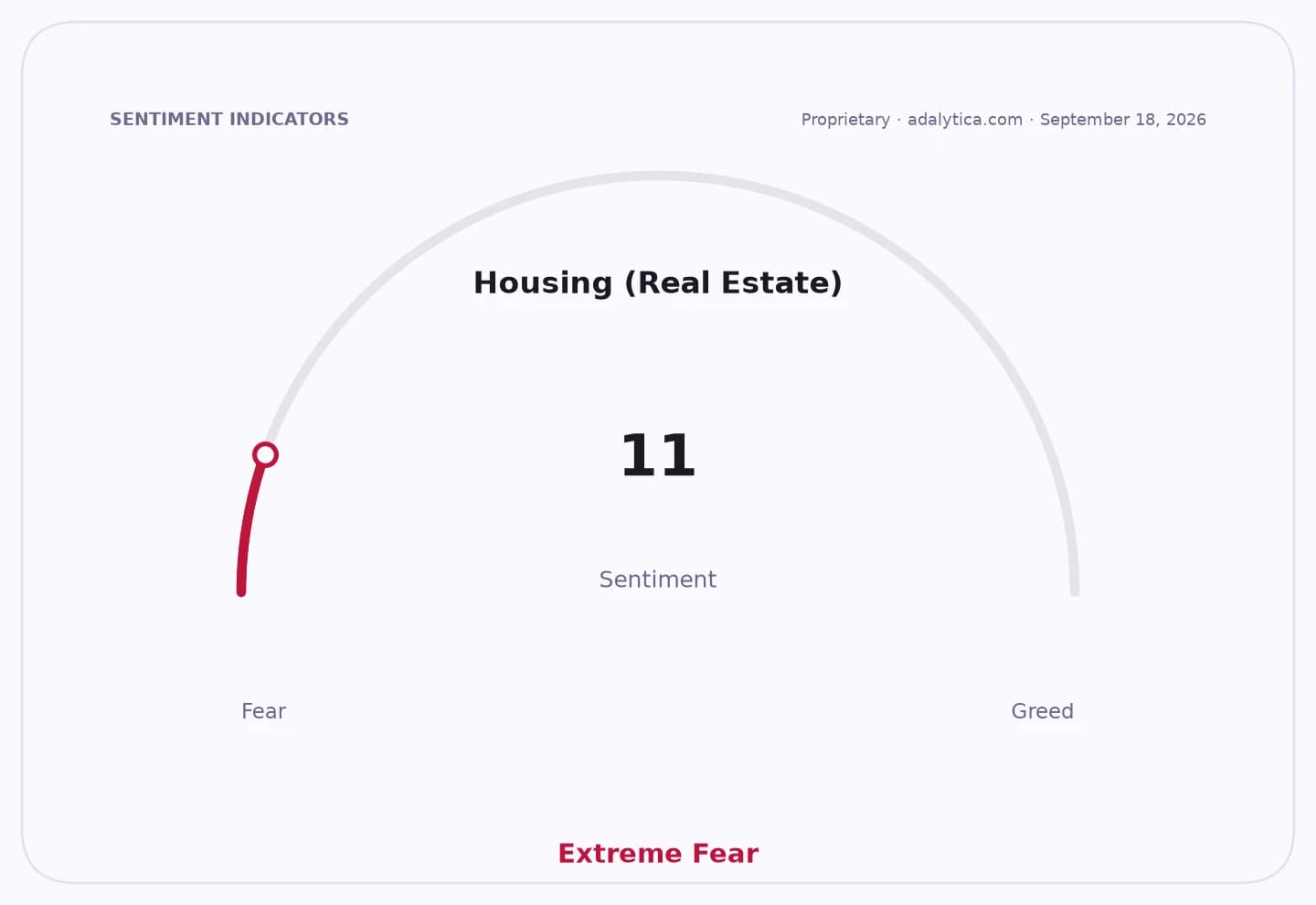
Sentiment IndicatorsⓘProprietary · adalytica.com · September 18, 2026
This is a snapshot — live sentiment, awareness and momentum for 130+ markets update continuously in the dashboard.Open AlphaPulse
The jump is being driven less by the Federal Reserve and more by the bond market, where the 10-year US Treasury yield has approached 5%, its highest level since 2007. Mortgage rates tend to track long-dated yields and mortgage-backed securities, so the Fed’s latest rate move does not translate directly into cheaper housing finance.
For investors, that matters because housing is showing classic affordability stress without the sharp price correction that usually accompanies a downturn. Existing-home sales fell 2% in August to an annualized 3.98 million, the slowest pace in 14 months, while inventory rose to 1.62 million, the most since November 2019.
DGS10 vs CSUSHPINSA — macro contextadalytica.com
Explore this data interactively — full history, time series and cross-market comparisons.Open AlphaPulse
Home prices are still holding up overall, limiting relief for buyers. The National Association of Realtors said the median existing-home price in August was $429,100, up 1.6% from a year earlier, while the S&P CoreLogic Case-Shiller index showed national home prices still rising 1.5% in June, though at a far slower pace than in recent years.
The strain is more visible in new construction, where sales fell to an annualized 607,000 in July and the median new-home price slipped 0.9% to $393,800. Builders are leaning harder on incentives, with 38% reporting price cuts in September and 66% using sales promotions such as mortgage-rate buydowns, while sentiment fell to a one-year low.
That leaves lenders, homebuilders and housing-linked stocks exposed to a market where demand is being throttled by financing costs rather than a collapse in prices. Rocket Companies has been volatile around the move in rates, while Zillow and builders such as Lennar face a slower transaction environment unless bond yields ease or sellers start cutting prices more aggressively.
The next catalyst is whether Treasury yields stay near 5% and keep mortgage rates pinned above 7%, or whether softer inflation data and a cooler bond market offer buyers some relief. Until then, the US housing market looks set to stay stuck in a low-affordability, low-transaction slump.
| Entity | Gains | Losses |
|---|---|---|
| Treasury bond sellers | ▲Higher yields, stronger demand for duration | ▼Borrowing costs stay elevated |
| Homebuyers | ▲More inventory choices | ▼Higher monthly payments |
| Homebuilders | ▲Incentive-driven traffic | ▼Lower pricing power, slower sales |
| Rocket Companies / Zillow | ▲More rate-driven refinance and origination interest | ▼Weak purchase affordability, thinner transaction volume |