US business activity slowed in November, with the flash composite purchasing managers’ index from S&P Global falling to 54.6, the weakest reading in four months, as investors looked for signs that the economy is losing some momentum after a strong autumn run.
US PMI Falls to 54.6 in November
S&P 500
The headline number still points to expansion, since any reading above 50 signals growth, but the softer pace matters because the PMI is one of the earliest gauges of demand, hiring and pricing pressure across factories and services. A slowdown from October’s 55.9 suggests the economy is still growing, just less briskly than before.
Sentiment Indicators
The manufacturing PMI eased to 54.5 from 54.9, a three-month low, while the services gauge slipped to 54.7 from 56.1, its lowest in four months. S&P Global said both sectors continued to expand, supported by gains in employment and new orders, and business confidence improved after the US midterm elections.
For investors, the report is a mixed read. It supports the case for continued economic expansion, which is positive for corporate earnings, but it also points to less intense growth than in recent months, a dynamic that can ease inflation pressure and influence rate expectations. That combination typically matters for the S&P 500, which has been trading with a weaker technical tone, and for cyclical shares tied most directly to the industrial and consumer backdrop.
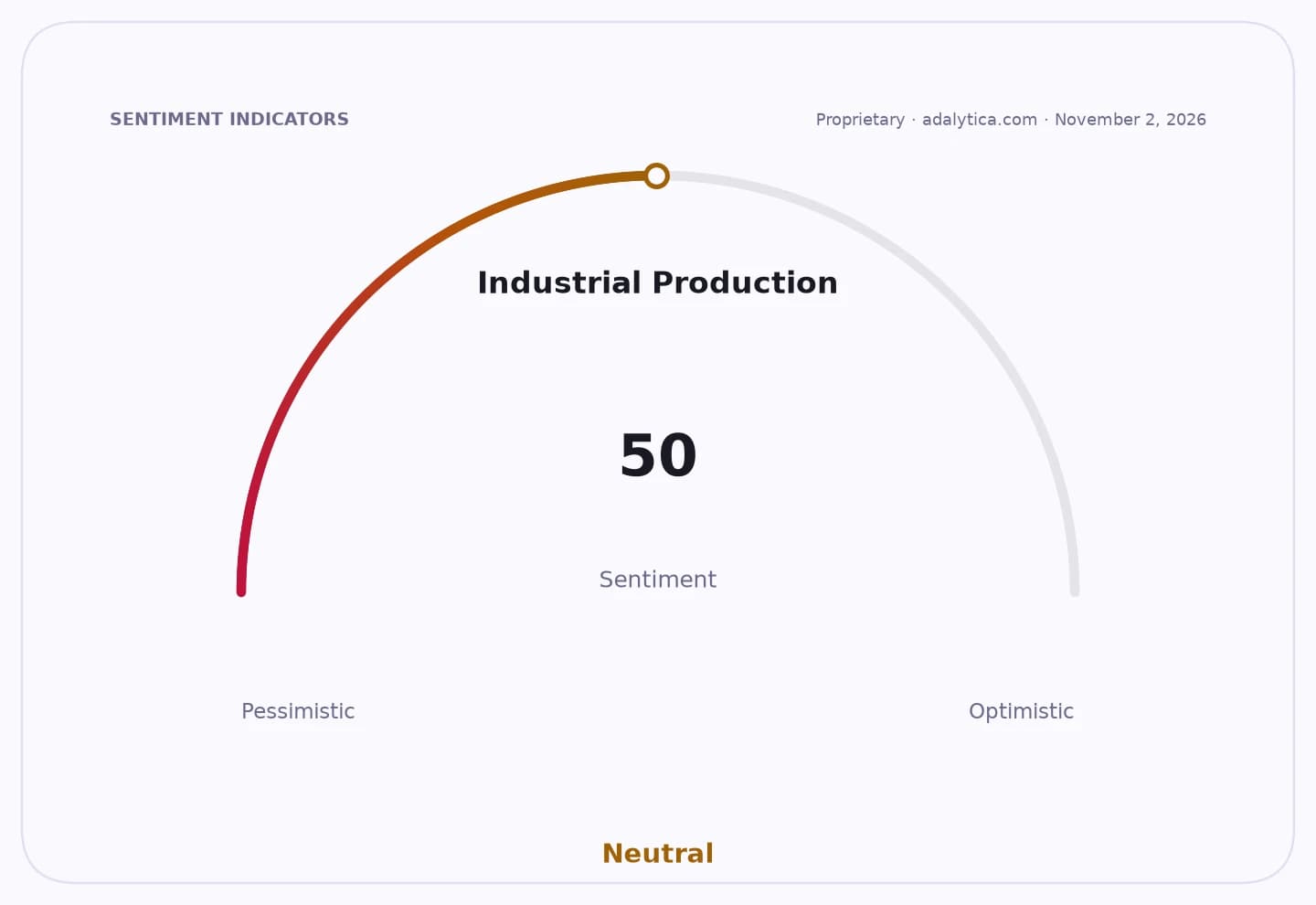
Sector signals were uneven. Industrial names tracked by the XLI ETF were still holding above the 50-day moving average after recent volatility, but the fund has been below its 200-day moving average, showing that sentiment toward the group remains fragile. The small-cap Russell 2000, often more sensitive to domestic growth, has also lagged and remains below its 200-day average.
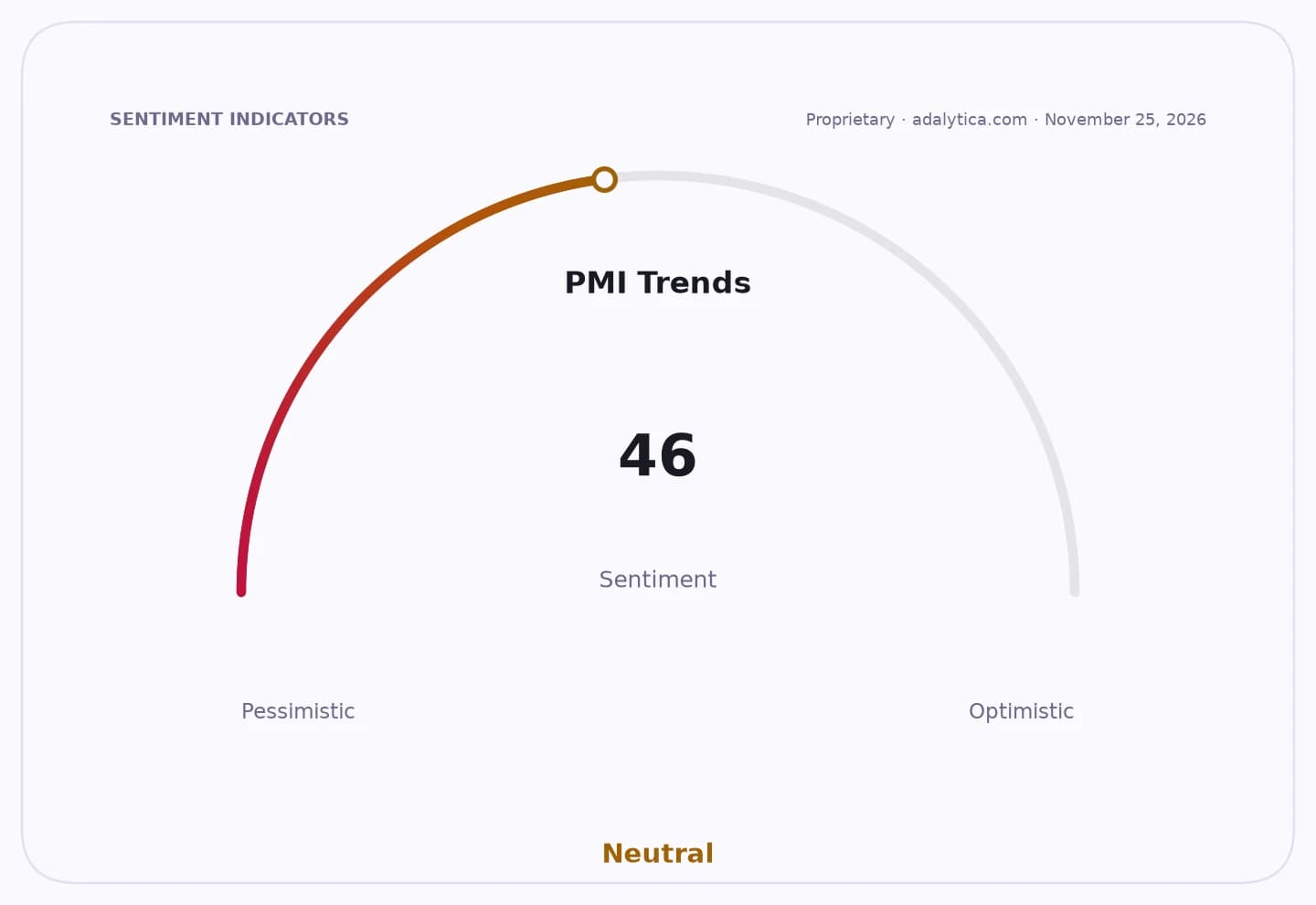
Adalytica’s PMI Trend Recession Sentiment gauge, while not an official economic indicator, points to elevated concern around the growth backdrop even as the PMI remains expansionary. The next major test for markets will be whether upcoming US data confirm a moderation in activity or show the slowdown is temporary.
| Entity | Gains | Losses |
|---|---|---|
| US consumers | ▲slower inflation pressure | ▼hot-growth momentum |
| Equities broadly | ▲ongoing expansion | ▼faster policy tightening fears |
| Industrial stocks | ▲still expanding orders | ▼stronger cyclical upside |
| Fed hawks | ▲weaker inflation case | ▼justification for tighter policy |