Rent increases are still running above average this year, even as the pace has eased from the past two years, keeping a floor under inflation and homeownership costs for households.
US rent growth stays elevated in 2026
Average rents are up 4.4% in 2026, below the surge seen in 2024 and 2025 but still high enough to keep housing one of the stickiest parts of the U.S. cost-of-living picture. That matters because rent is a major input in shelter inflation, which feeds directly into the Consumer Price Index and shapes the Federal Reserve’s view on how quickly price pressures are fading.
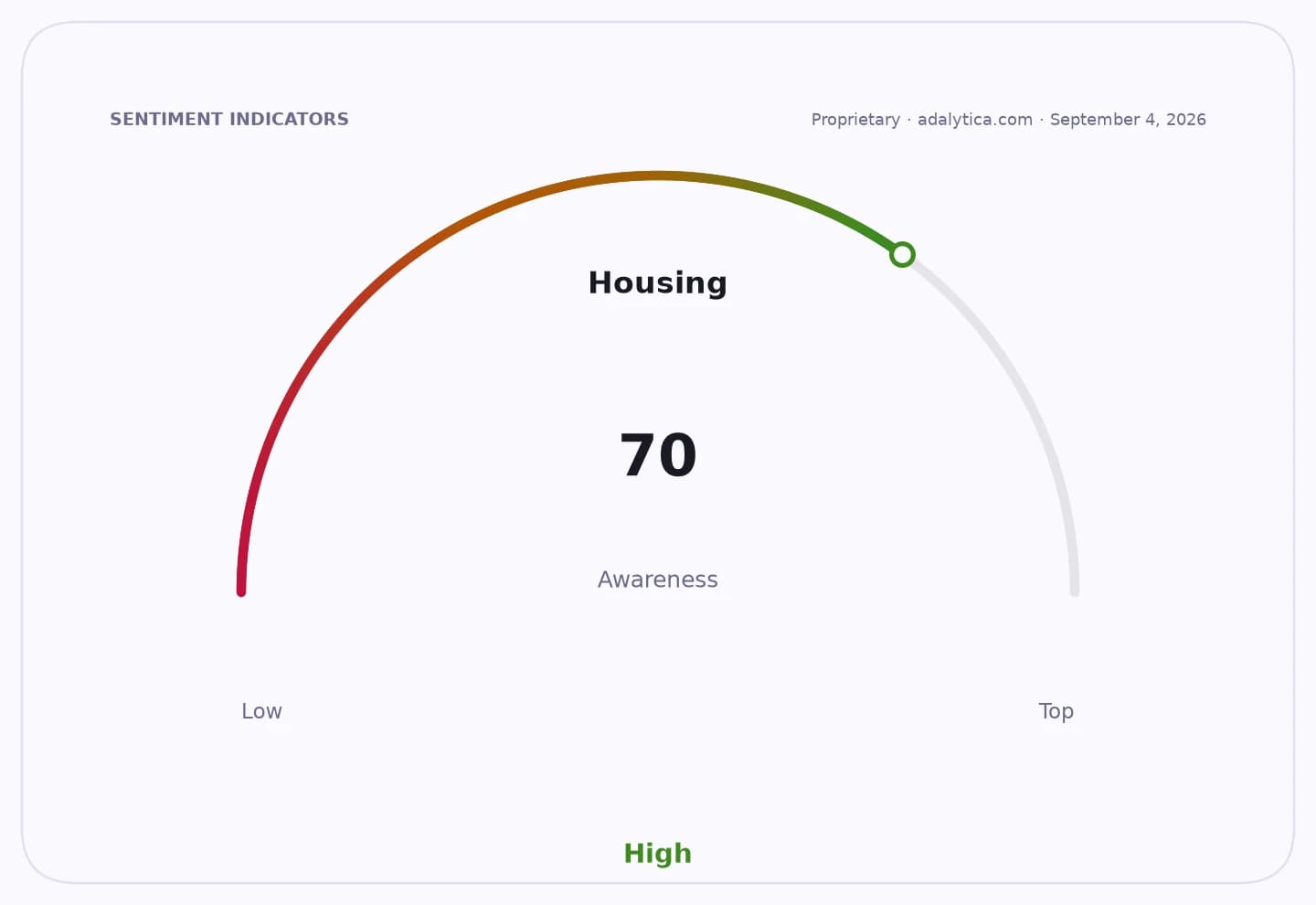
Sentiment IndicatorsⓘProprietary · adalytica.com · September 4, 2026
This is a snapshot — live sentiment, awareness and momentum for 130+ markets update continuously in the dashboard.Open AlphaPulse
The latest housing data show a market that is no longer accelerating the way it did during the post-pandemic boom, but has not cooled enough to relieve affordability strain. August rent growth was reported at 5.8% year on year, while monthly changes turned negative, underscoring volatility rather than a clean downtrend. The overall message for policymakers is that shelter inflation remains persistent even as broader CPI readings are forecast to rise just 0.35% in August.
For investors, that keeps landlord earnings tied to a still-supportive pricing environment, even as higher mortgage rates and a weaker labor backdrop temper tenant demand. Apartment and single-family rental owners continue to benefit from elevated rent levels, but the slowdown in momentum suggests less room for aggressive pricing later in the cycle.
Shares of apartment landlords have reflected that tension. American Homes 4 Rent, Invitation Homes and Essex Property Trust have all traded below recent highs in early September, even though their longer-term moving averages remain intact, showing investors are balancing rent support against valuation and growth concerns.
The bigger risk for the market is that persistent shelter inflation delays any broader easing in interest rates or consumer pressure, while regional swings in rents keep the housing picture uneven. Unless supply improves more quickly, rent growth is likely to stay above historical norms into year-end, supporting landlords but prolonging the squeeze on renters.
| Entity | Gains | Losses |
|---|---|---|
| Landlords | ▲Higher rental income | ▼Pressure from slower growth |
| Renters | ▲— | ▼Elevated housing costs |
| Federal Reserve | ▲Clearer inflation signal | ▼Less room to cut rates |
| Apartment REITs | ▲Supportive pricing power | ▼Softer share momentum |