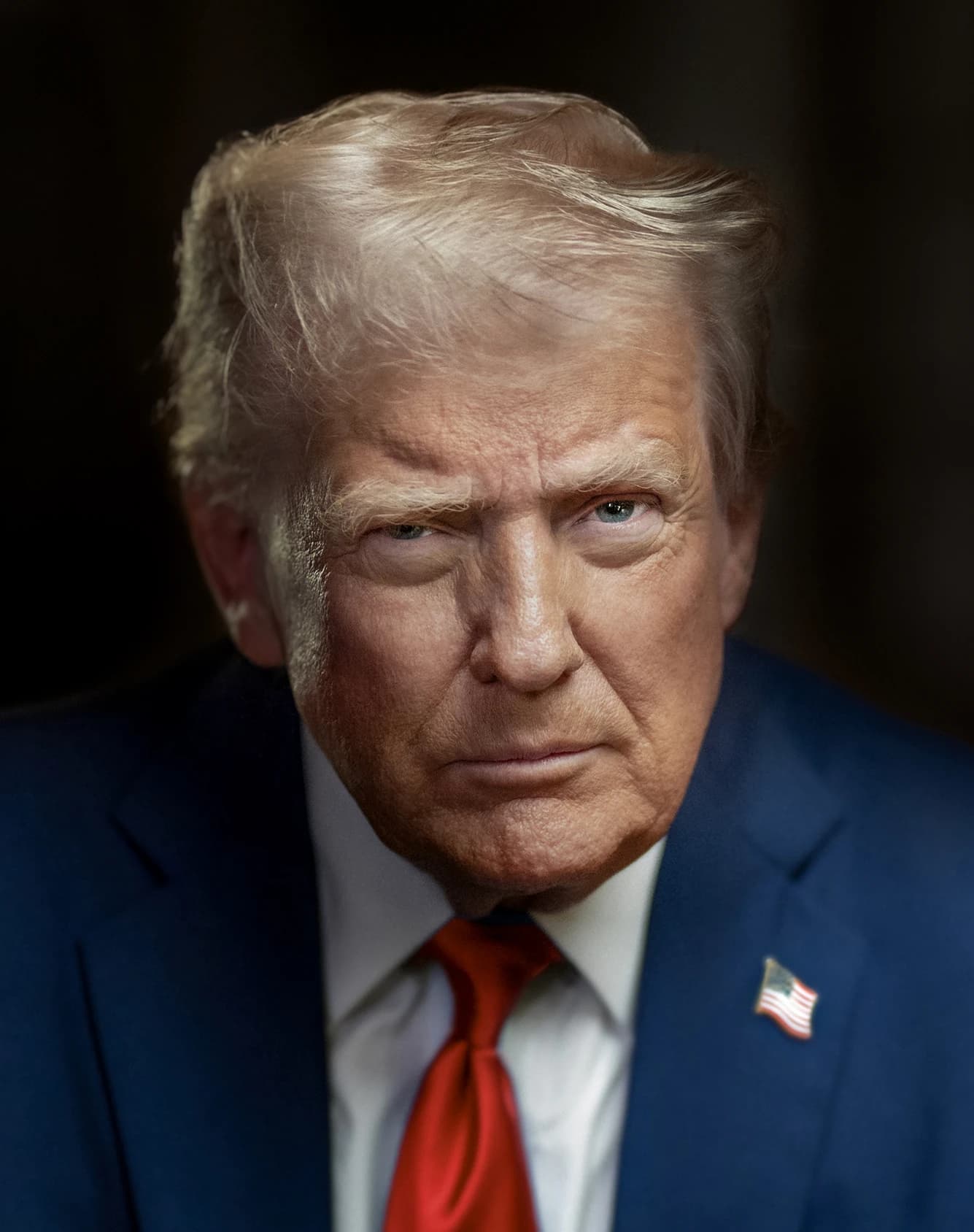
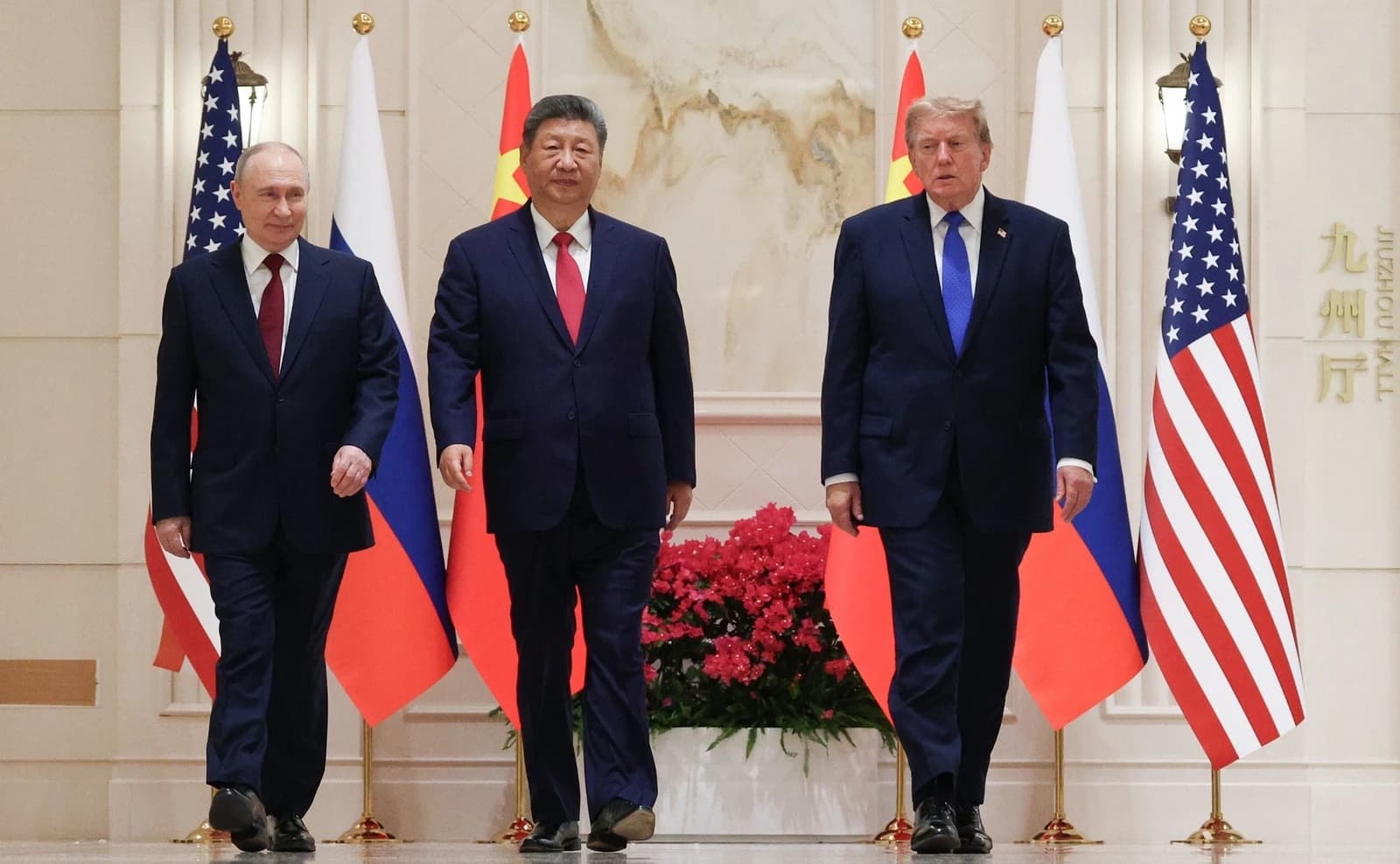
Donald Trump’s refusal to say whether Vladimir Putin is a friend of America is another reminder that the U.S.-Russia relationship remains a live geopolitical risk for investors, even when markets are busy pricing in other concerns.
U.S.-Russia Risk Keeps Gold, Treasuries in Focus
The immediate issue is not the optics of a presidential sound bite. It is that Washington’s stance toward Moscow still carries consequences for sanctions, energy flows, defense spending and the broader appetite for risk. When the White House leaves room for ambiguity, investors are forced to keep a geopolitical premium in the background, especially with the war in Ukraine still grinding on and tensions inside NATO rising.
Sentiment Indicators
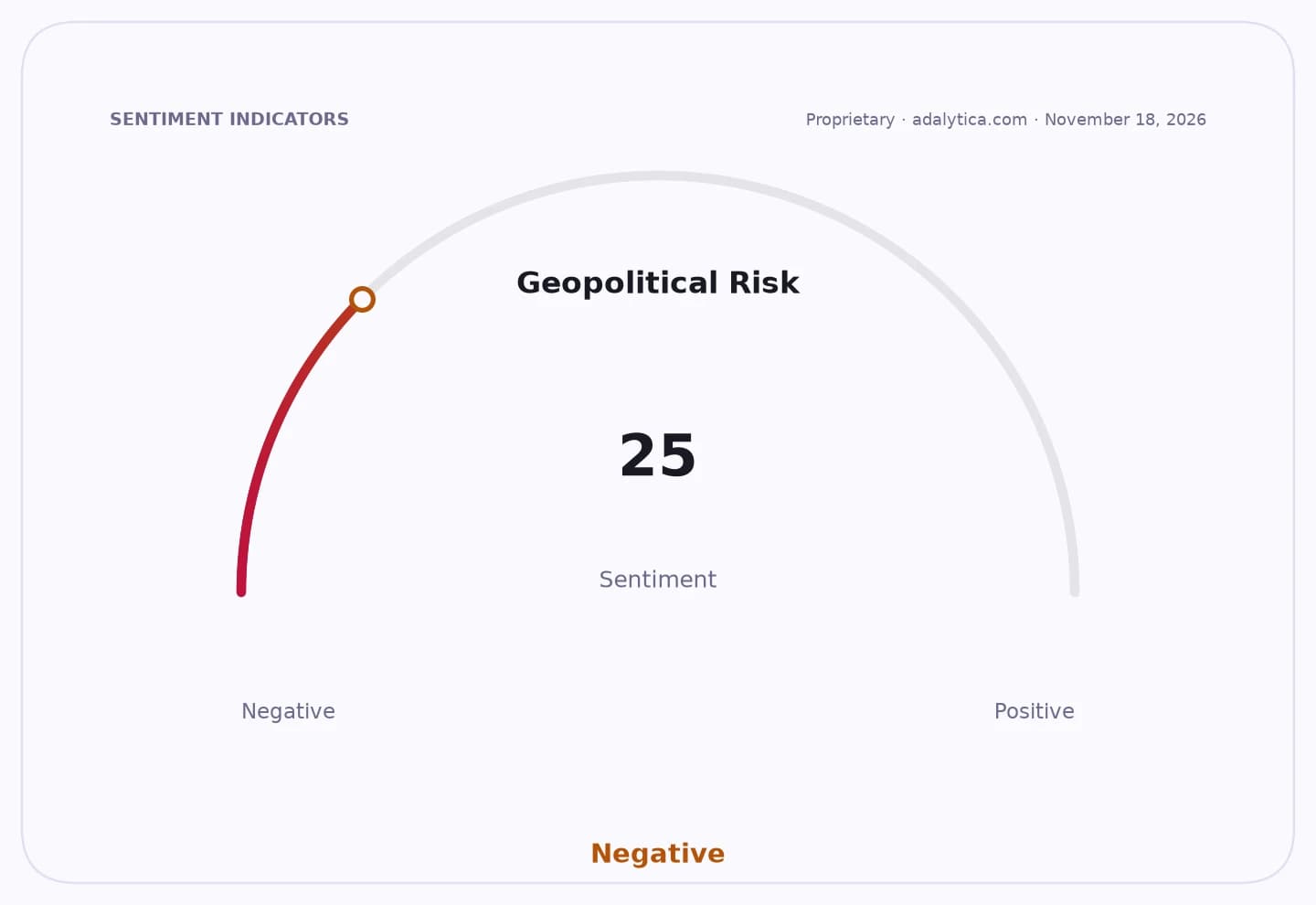
Geopolitical Risk
That helps explain why havens and defensive trades continue to matter. Gold, tracked by GLD, has been volatile but remains elevated after a sharp run this year, a sign that investors are still willing to pay up for protection when the world looks unstable. Bond markets are also telling a cautious story: TLT, the long-dated Treasury ETF, has stabilized in recent sessions, reflecting persistent demand for safety even as growth and policy expectations shift.
Energy is the other obvious market channel. XLE, the energy sector ETF, has pulled back from its highs, but the broader thesis has not gone away. Any escalation in U.S.-Russia friction can ripple through crude supplies, refining margins and sanctions enforcement, and energy investors know those swings can be abrupt. For long-term investors, that means geopolitics is not a side issue; it is part of the earnings setup for oil producers, refiners and integrated majors.
Geopolitical Risk — 30-day sentimentadalytica.com
Explore this data interactively — full history, time series and cross-market comparisons.
Geopolitical Risk
The macro backdrop reinforces that view. Adalytica’s Global Stability Sentiment gauge shows “Extreme Fear,” while its U.S. dollar trade signal also points to extreme caution. Those readings do not tell investors what to do on a day-to-day basis, but they underline a broader truth: uncertainty tends to support defensive assets and punish complacency.
There is also a longer-term portfolio lesson here. Geopolitical headlines rarely create permanent value on their own, but they can change the odds across entire sectors. If tensions deepen, defense contractors, energy producers and safe-haven assets can benefit, while importers, airline-heavy portfolios and companies exposed to higher fuel costs may feel the pressure. If diplomacy improves, the reverse can happen quickly.
For investors, the right response is not to trade every headline. It is to stay diversified, keep a long horizon and recognize that foreign policy can influence cash flows just as much as interest rates do. Trump may have avoided the direct answer, but the market still has to answer the bigger question: how much geopolitical risk should be priced into stocks, bonds and commodities? Right now, quite a bit — and that makes this story worth watching, not dismissing.
| Entity | Gains | Losses |
|---|---|---|
| Gold/GLD | ▲Safe-haven demand | ▼Risk-on traders |
| Energy/XLE | ▲Supply-risk premium | ▼Fuel-sensitive consumers |
| Long Treasuries/TLT | ▲Flight-to-safety bids | ▼Growth bulls |
| U.S.-Russia doves | ▲Room for diplomacy | ▼Hawkish policymakers |