Asian shares edged higher on Tuesday as Wall Street’s tech-led rally spilled into the region, but the move came with a warning from bond markets: US Treasury yields remain near their highest levels since 2002, keeping borrowing costs elevated and financial conditions tight.
US Treasury yields stay near 2002 highs
The MSCI Asia-Pacific gauge outside Japan rose 0.2%, Japan’s Nikkei gained 0.7% and European futures pointed higher, helped by a record close for the Nasdaq and a modest retreat in oil prices. But the more consequential market signal was in rates, where the US 10-year yield held around 5.31% after touching 5.35% overnight and the 30-year briefly reached 5.70%, levels that raise the discount rate on equities and the cost of capital across the economy.
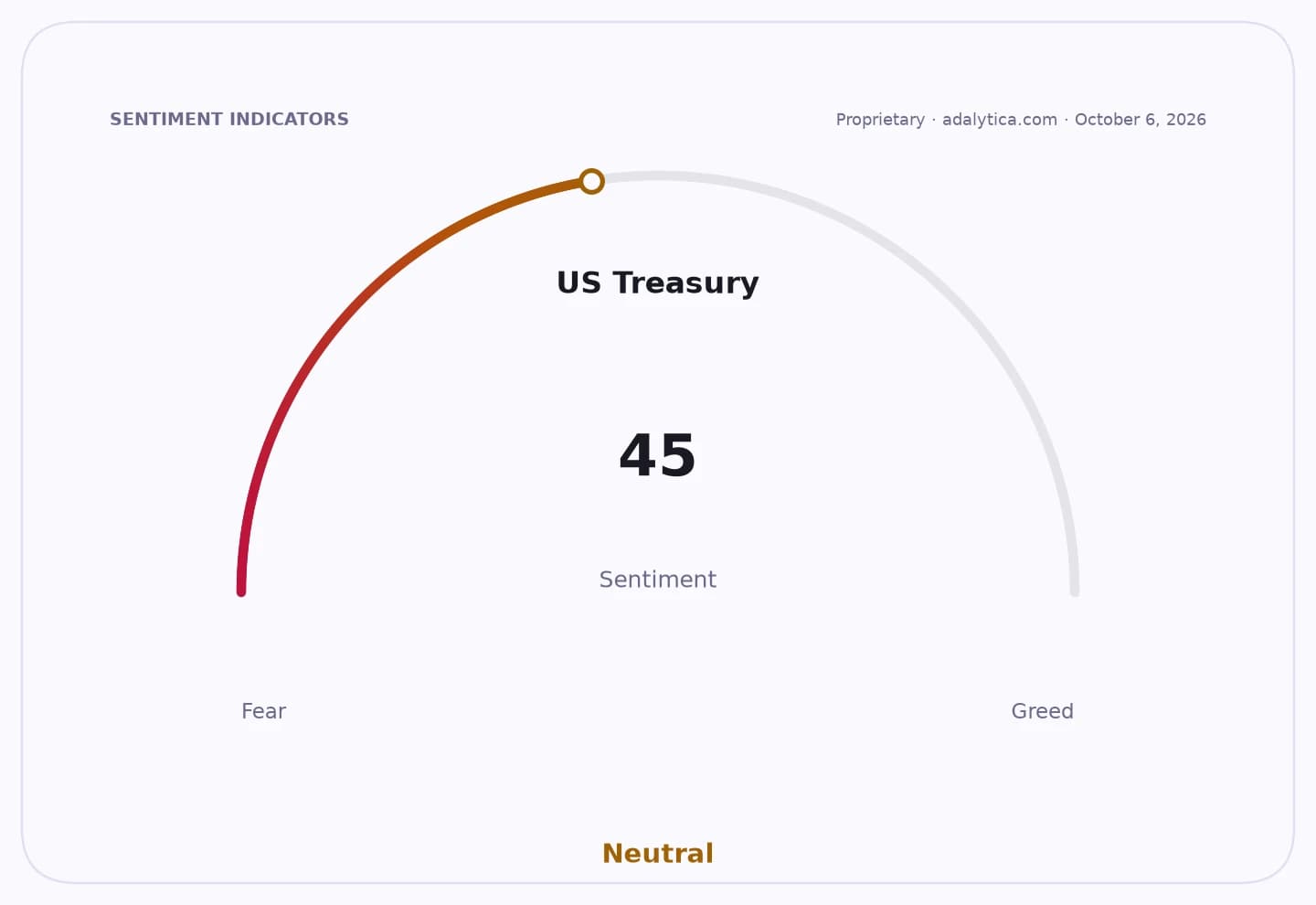
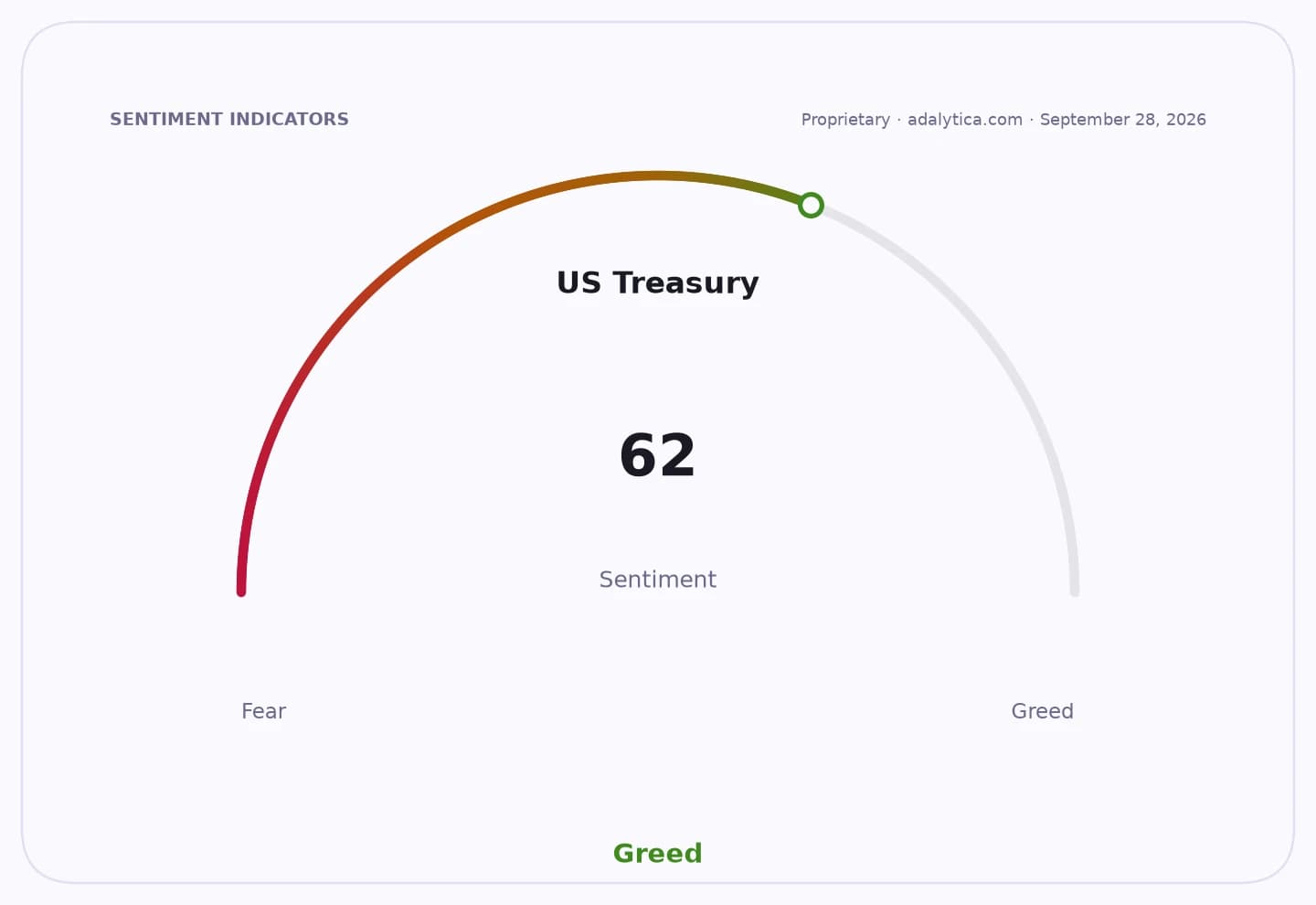
Sentiment IndicatorsⓘProprietary · adalytica.com · October 6, 2026
This is a snapshot — live sentiment, awareness and momentum for 130+ markets update continuously in the dashboard.Open AlphaPulse

Investors are increasingly split between enthusiasm for artificial intelligence and concern that the bond market is forcing a longer period of restrictive financial conditions. Nvidia added 2.1% to a record close and lifted its market value to $5.76 trillion, while Goldman Sachs said consensus expects third-quarter S&P 500 earnings to grow 27%, with more than half of that coming from AI infrastructure spending.
That equity strength is being tested by the persistence of the bond selloff. Longer-dated Treasury yields have climbed steadily since mid-August on inflation and debt worries, while a recent ISM survey showed services firms’ prices paid jumped to a more than four-year high. The market has also sharply reduced bets on another Federal Reserve rate increase this month, but yields remain elevated because investors are demanding more compensation for inflation risk and supply pressure rather than just pricing in the next policy move.

The jump in US yields matters beyond Wall Street. Higher long-term borrowing costs feed through to mortgages, corporate debt, government financing and asset valuations, and they are already tightening pressure on regions such as Europe. The euro slipped to a 17-month low near $1.116 overnight as investors dumped French bonds after a weak budget and political uncertainty deepened in Spain, underscoring how US rates are exporting stress globally.
In Asia, the immediate effect is support for exporters and technology shares, but the broader message is less reassuring. A strong dollar and a Treasury market near multi-decade highs can limit foreign inflows into risk assets and keep pressure on highly valued growth stocks, even when earnings momentum is strong.
The next test comes with third-quarter results next week and fresh inflation data, which will determine whether the market keeps rewarding AI-led growth or starts to focus more aggressively on the cost of money.
| Entity | Gains | Losses |
|---|---|---|
| AI stocks | ▲earnings-driven buying | ▼valuation scrutiny |
| Treasury sellers | ▲higher yields | ▼price losses |
| Borrowers | ▲— | ▼higher funding costs |
| Asian exporters | ▲weaker yen/euro support | ▼tighter global financial conditions |