Electricity demand is set to jump far faster than it has in decades, and that makes a select group of large U.S. utilities unusually attractive for income investors who also want a direct stake in the power boom.
Utilities Set to Benefit From Rising Electricity Demand

That’s the core reason NextEra Energy, Dominion Energy, Duke Energy, Southern Company, American Electric Power and Xcel Energy stand out now. Industry estimates call for U.S. electricity demand to rise 60% between 2025 and 2045, versus just 10% growth over the prior 20 years. If that forecast proves anywhere close to right, utilities with the scale, regulated rate base and capital plans to keep building generation and grid infrastructure could enjoy years of steady earnings growth while still paying attractive dividends.
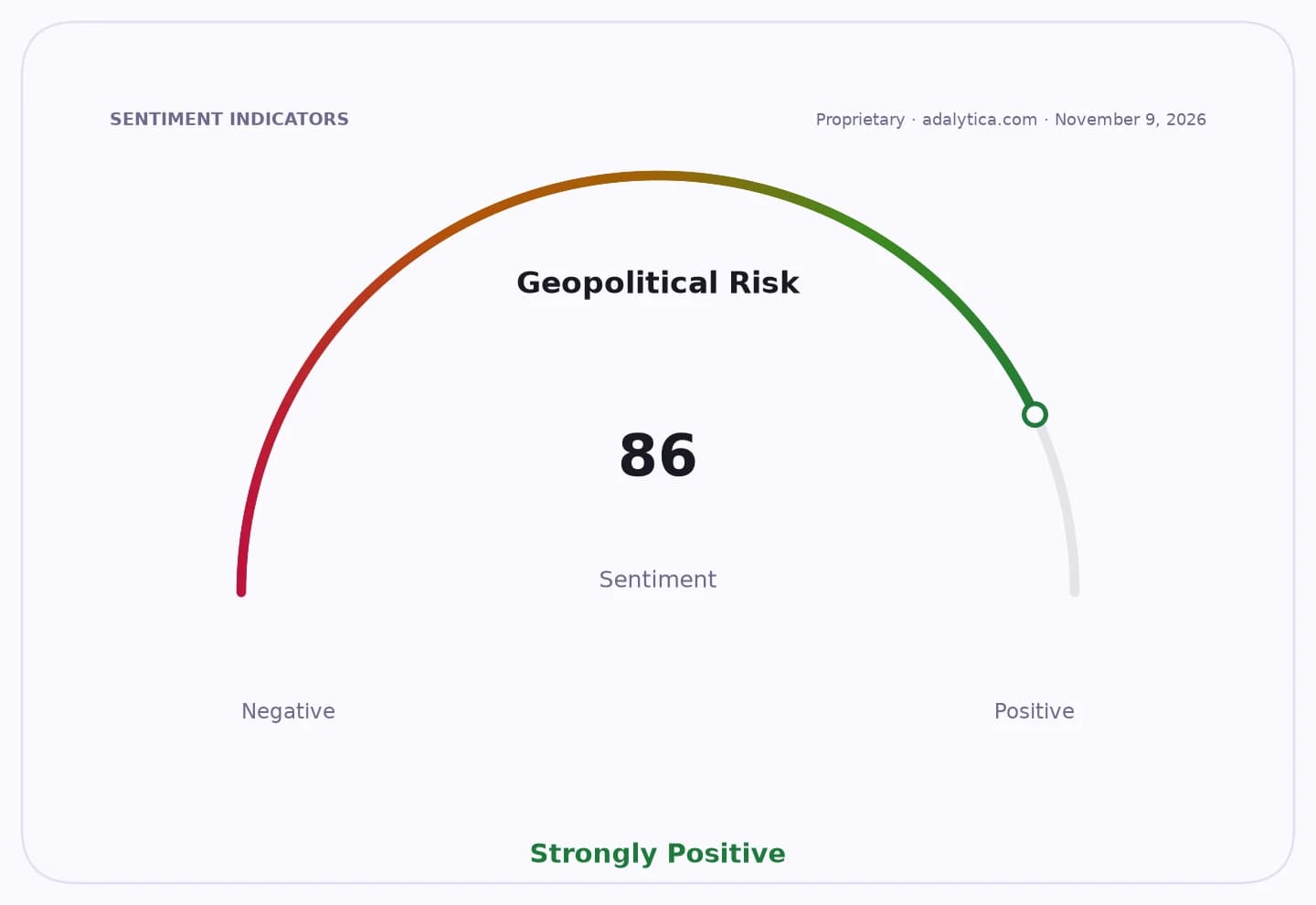
Sentiment Indicators

For investors, this is one of those rare setups where a defensive sector also has a secular growth story. Utilities are usually prized for stability, not excitement. But a prolonged increase in electricity use from data centers, electrification and industrial demand changes the equation. The winners are likely to be the companies that can spend heavily, win regulatory approval and earn a return on the new assets they put in the ground. That’s why the biggest names in the sector are worth a close look rather than a passing glance.
NextEra Energy is the most ambitious of the group. It yields 2.8%, right around the industry average, but the appeal is not the dividend alone. NextEra is the world’s largest utility by market value, and it brings a rare mix of regulated operations in Florida and a leading wind and solar business that relies on long-term contracts. That combination gives investors exposure to both the dependable utility model and the faster-growing renewable buildout that should benefit as power demand climbs. Its proposed acquisition of Dominion Energy would make that platform even larger.
Dominion is also positioned to benefit from the same trend, though through a more traditional utility lens. The stock yields 2.8%, and the company’s value lies in its regulated service territory and its role in meeting rising power needs. If demand growth accelerates, the utilities with the most visible capital programs and strongest access to rate recovery should be the ones best able to translate that demand into earnings.
Duke Energy is another straightforward way to play the theme. It yields 3.3% and has sharpened its focus on regulated electricity and natural gas businesses across several Southeastern and Midwestern states. Duke expects its $100 billion capital spending plan over the next five years to support annual earnings growth of 5% to 7%, which is exactly the kind of combination long-term investors like: moderate growth, reliable regulation and a meaningful dividend. Recent price action also shows the stock trading above both its 50-day and 200-day moving averages, with momentum strengthening after a pullback earlier in the year.
Southern Company offers a similar income-and-growth profile, with a 3.3% yield and large regulated operations across the Southeast. It has spent years building out transmission, generation and grid assets, and that should matter more if power demand continues rising faster than expected. The stock has also recovered from an earlier dip and is trading above its 50-day and 200-day moving averages, which suggests investors have been willing to pay up for the company’s steadier earnings profile.
American Electric Power may be the clearest pure utility bet on grid investment. AEP serves large swaths of the Midwest and South, where industrial activity and new load growth could support more spending on infrastructure. Its regulated model makes it a classic compounding machine if management can keep increasing the rate base and regulators allow those investments to flow through to returns.
Xcel Energy rounds out the group with a strong presence in the Upper Midwest and Mountain West, plus a meaningful renewable portfolio. That matters because the power transition is not just about building more capacity; it is about building cleaner capacity that can still meet rising demand reliably. Xcel’s mix gives it exposure to both sides of that equation.
The bigger message for investors is that utilities are no longer just bond substitutes. They are becoming infrastructure owners in a world that needs far more electricity than it did a decade ago. That does not mean every utility will be a great investment, of course. Regulatory delays, higher borrowing costs and execution risks can all slow the story. But the long-term setup looks constructive, especially for companies that already have scale, financing access and clear capital pipelines.
| Entity | Gains | Losses |
|---|---|---|
| NextEra Energy | ▲Higher demand, renewable scale | ▼Acquisition execution risk |
| Dominion Energy | ▲Rate-base growth potential | ▼Slower growth than peers |
| Duke Energy | ▲Capital-spending returns, dividend income | ▼Regulatory setbacks |
| Southern Company | ▲Steady earnings from regulated assets | ▼Higher financing costs |
| American Electric Power | ▲Grid investment cycle | ▼Load growth disappointments |
| Xcel Energy | ▲Clean-power demand tailwind | ▼Project and permitting delays |