Investors looking for income that can keep pace with sticky inflation are finding support in essential infrastructure assets, where regulated cash flows and elevated yields are combining to produce distributions as high as 8.5%.
Infrastructure Income Funds Offer Inflation-Linked Yield

The appeal is straightforward: in an environment where U.S. consumer prices are still rising and the 10-year Treasury yield is holding near 4.8%, income investors need assets that can generate cash without relying solely on falling rates or economic softness. Infrastructure, utilities and related closed-end funds can fit that brief because they are tied to services households and businesses cannot easily avoid, from power and water to transport and communications.
Sentiment Indicators
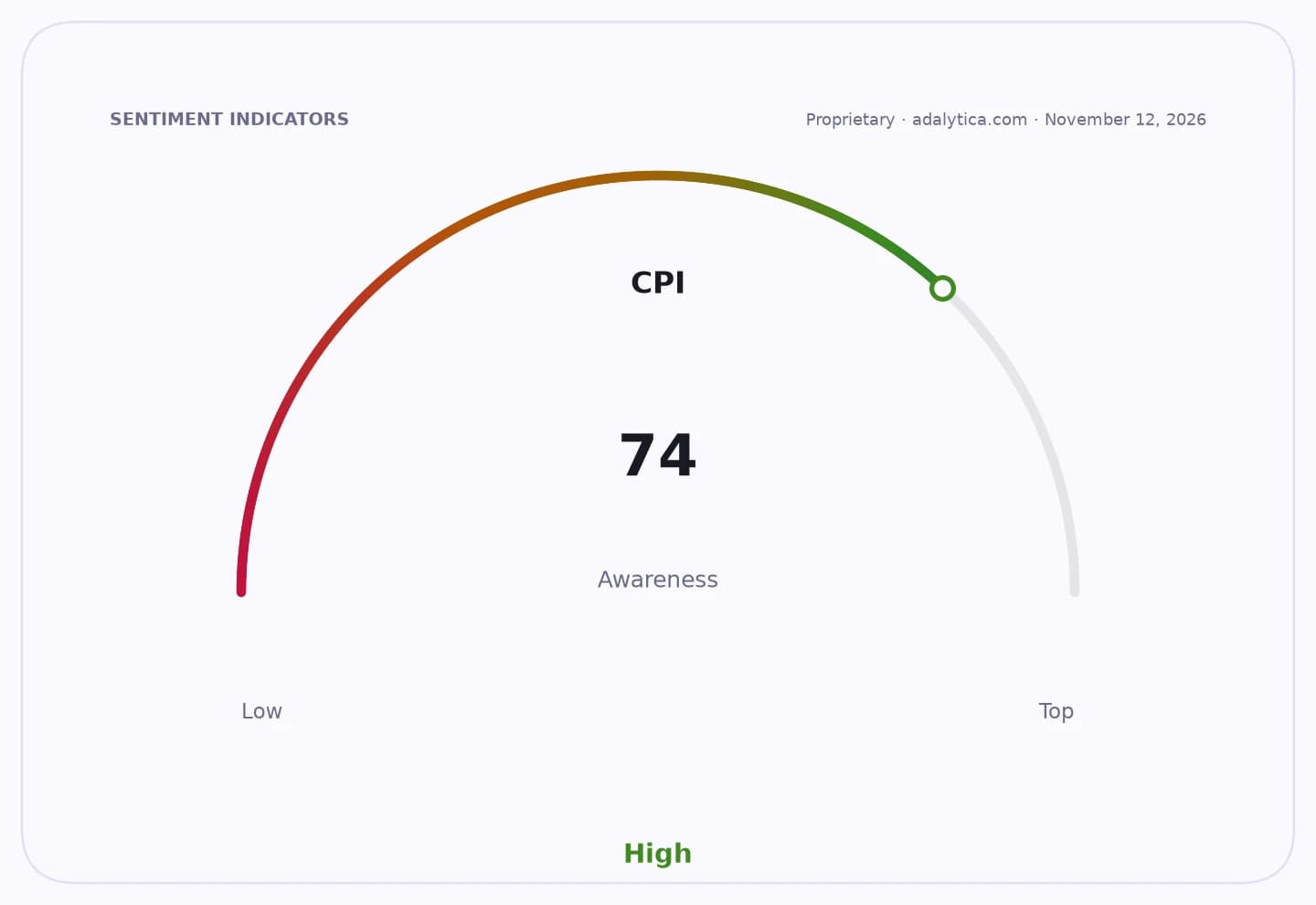
The inflation backdrop remains constructive for the case. U.S. CPI is projected at 338.65 for November, up from 337.48 in October, extending a run of persistent price gains that keeps real returns under pressure. At the same time, credit conditions are not benign: high-yield spreads sit around 3.34 percentage points, leaving lower-quality borrowing expensive and making dependable cash generation more valuable. For investors, that argues for assets with pricing power, contracted revenue or regulated returns rather than cyclical businesses dependent on a strong consumer.
That is why the income story is not just about yield, but about the source of the yield. Funds and companies exposed to infrastructure tend to benefit from long-duration assets, inflation-linked tariffs and steady demand. Brookfield Infrastructure Corp, Brookfield Infrastructure Partners and utilities such as Duke Energy have all pointed to the capital intensity of the sector and the need for large, durable investment programs. Duke, for instance, said recent strategic transactions generated about $5.3 billion of proceeds to help fund future infrastructure investment, underscoring how capital is being recycled into the grid and related assets.
CPIAUCSL vs DGS10 — macro contextadalytica.com
Explore this data interactively — full history, time series and cross-market comparisons.
The listed funds tracking the theme have also held up relatively well. IFRA, the iShares U.S. Infrastructure ETF, recently traded at $58.11, above its 50-day moving average of $57.07, while UTF, the Cohen & Steers Infrastructure Fund, was at $25.77, near its 50-day average of $25.35 and above its 200-day average of $25.69. BIP/BIPC exposure has also recovered from earlier weakness, with BIPC at $39.84 versus a 200-day average of $40.13 after rebounding from a spring selloff. That pattern suggests investors remain willing to pay for defensive cash flows even as broader equity sentiment has become stretched, with SPY showing Extreme Greed in Adalytica’s trade signals.
The bull case is that essential infrastructure offers a rare combination of income, inflation linkage and resilience. The bear case is that those cash flows are not risk-free: higher rates can compress valuations, leverage raises refinancing risk and some funds use return-of-capital structures that can obscure the durability of distributions. If inflation eases faster than expected, the premium for inflation protection could also fade.
Still, for investors prioritizing cash generation over pure capital gains, the theme remains compelling. In a market where the benchmark 10-year yield is still near multi-year highs and real purchasing power remains under pressure, infrastructure income funds and operators offer one of the cleaner ways to turn inflation anxiety into distributions.
| Entity | Gains | Losses |
|---|---|---|
| Infrastructure funds | ▲Higher demand for yield | ▼Rate-sensitive valuation risk |
| Income investors | ▲Inflation-linked distributions | ▼Lower upside than growth stocks |
| Utilities and operators | ▲Easier capital recycling | ▼Higher borrowing costs |
| Short-duration bond proxies | ▲Less appeal versus yield-rich equity income | ▼Relative income advantage |