Uzbekistan’s central bank now expects inflation to fall to its 5% target only in the second half of 2027, underscoring how long tight monetary conditions may need to stay in place before price stability is secured.
Uzbekistan central bank sees 5% inflation in 2027
The forecast matters because it sets the policy horizon for the region’s fastest-growing economies: inflation is still seen at 7% in 2026, while GDP growth is projected at 7% to 7.5% in 2027 and 6.5% to 7.5% in 2028 and 2029. In other words, policymakers are trying to preserve strong real growth without easing financial conditions prematurely, a balance that will shape borrowing costs, credit expansion and the pace of currency adjustment over the next three years.
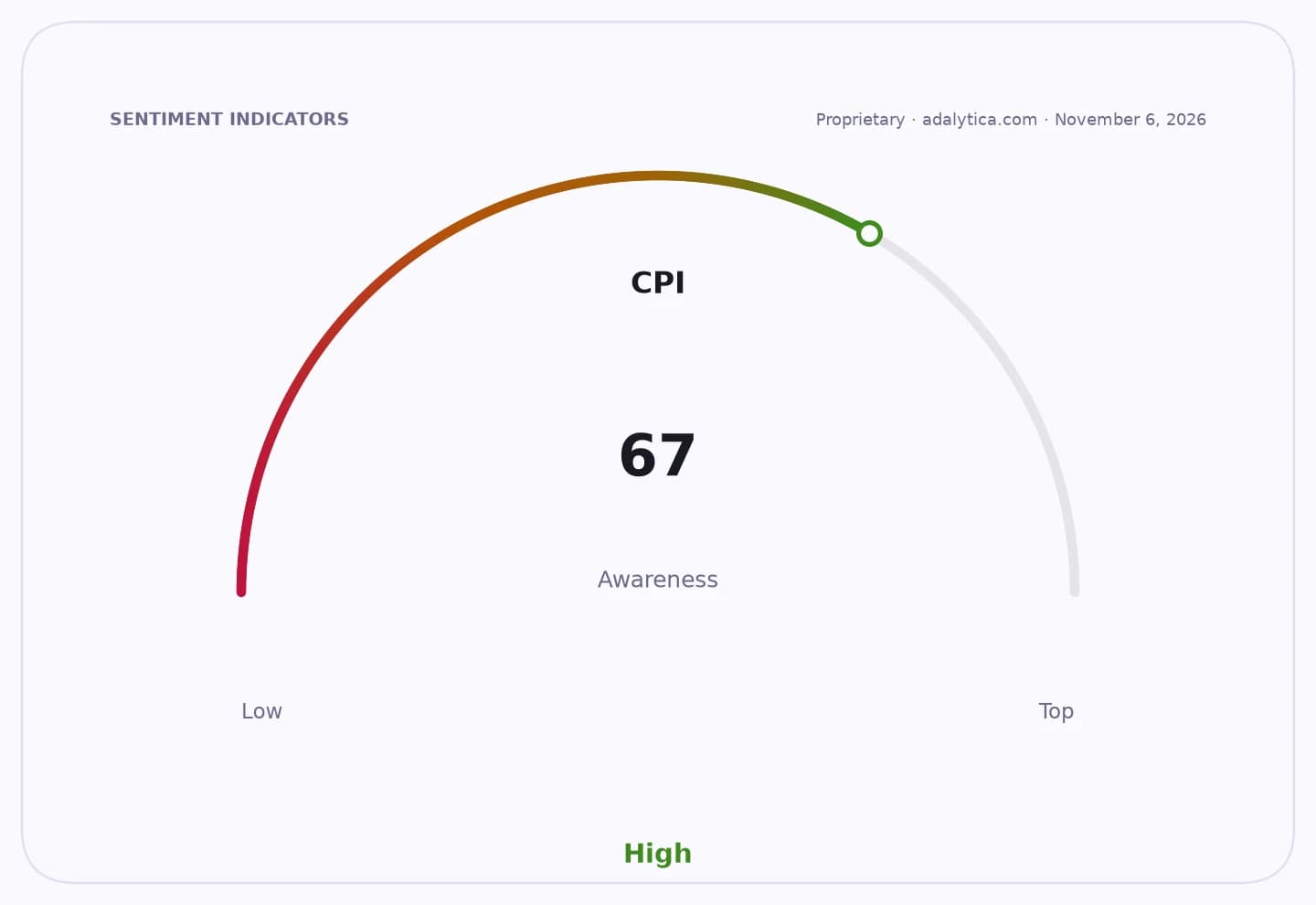
Sentiment Indicators
The draft monetary policy guidelines for 2027-2029 suggest the central bank is not yet ready to declare victory over inflation, even as price pressures gradually cool. It said maintaining tight monetary conditions until inflation stabilizes will remain the priority, alongside improving liquidity management, strengthening the transmission mechanism and building a more sophisticated framework for macroeconomic analysis and forecasting.
That stance reflects the risks the regulator sees on the horizon. A sharp depreciation in the currencies of major trading partners, a jump in global oil and food prices, or faster lending driven by more intense competition in the banking sector could all push inflation above the baseline path. For an import-dependent economy, external price shocks and exchange-rate weakness can quickly feed through to domestic prices, making the central bank’s credibility as important as the nominal inflation target itself.
For investors, the message is that Uzbekistan’s policy rate may stay restrictive longer than some had hoped, supporting the som sometimes uneven path of the som and keeping local funding costs elevated for banks and corporates. The currency has been volatile in recent sessions, trading near 11,980 per dollar on Nov. 6 after slipping below that level earlier in the week, while technical readings on the exchange rate still point to a market trying to find direction rather than a clean breakout. A tighter-for-longer policy mix would tend to support the currency over time, but it also raises the cost of capital for domestic growth sectors.
The central bank’s broader reform agenda also matters. Its plan to modernize liquidity operations, develop instruments for Islamic banks and improve communications suggests a shift toward a more market-based policy framework. That could help deepen Uzbekistan’s financial system and improve investor confidence, particularly if the regulator can show that inflation expectations are anchored well before the 2027 target is reached.
The key question now is whether growth can remain robust while disinflation continues. If the baseline holds, Uzbekistan would have one of the clearer medium-term inflation convergence stories in Central Asia. If external shocks or credit growth overwhelm the central bank’s tightening, the return to 5% could slip again, forcing policymakers to choose between slower growth and harder inflation control.
| Entity | Gains | Losses |
|---|---|---|
| Uzbekistan central bank | ▲Credibility if disinflation holds | ▼Room to ease policy |
| Savers and currency holders | ▲Higher real returns, firmer som | ▼Faster credit growth |
| Borrowers and banks | ▲— | ▼Higher funding costs |
| Importers and consumers | ▲Lower inflation later | ▼Near-term price pressure |