Uzbekistan and Iran are turning a political thaw into a practical economic agenda, with a new agricultural business forum in Tashkent highlighting where the two sanctioned and resource-constrained economies can most quickly deepen trade.
Uzbekistan and Iran Hold Agribusiness Forum in Tashkent
The immediate significance is less about diplomacy than about commercial access: both countries are looking for lower-friction channels to move goods, technology and services across sectors that can be scaled without waiting for large infrastructure projects or sweeping policy changes. Agriculture is a natural starting point because it spans food security, machinery, animal health and greenhouse production, and can generate near-term contracts for private firms on both sides.
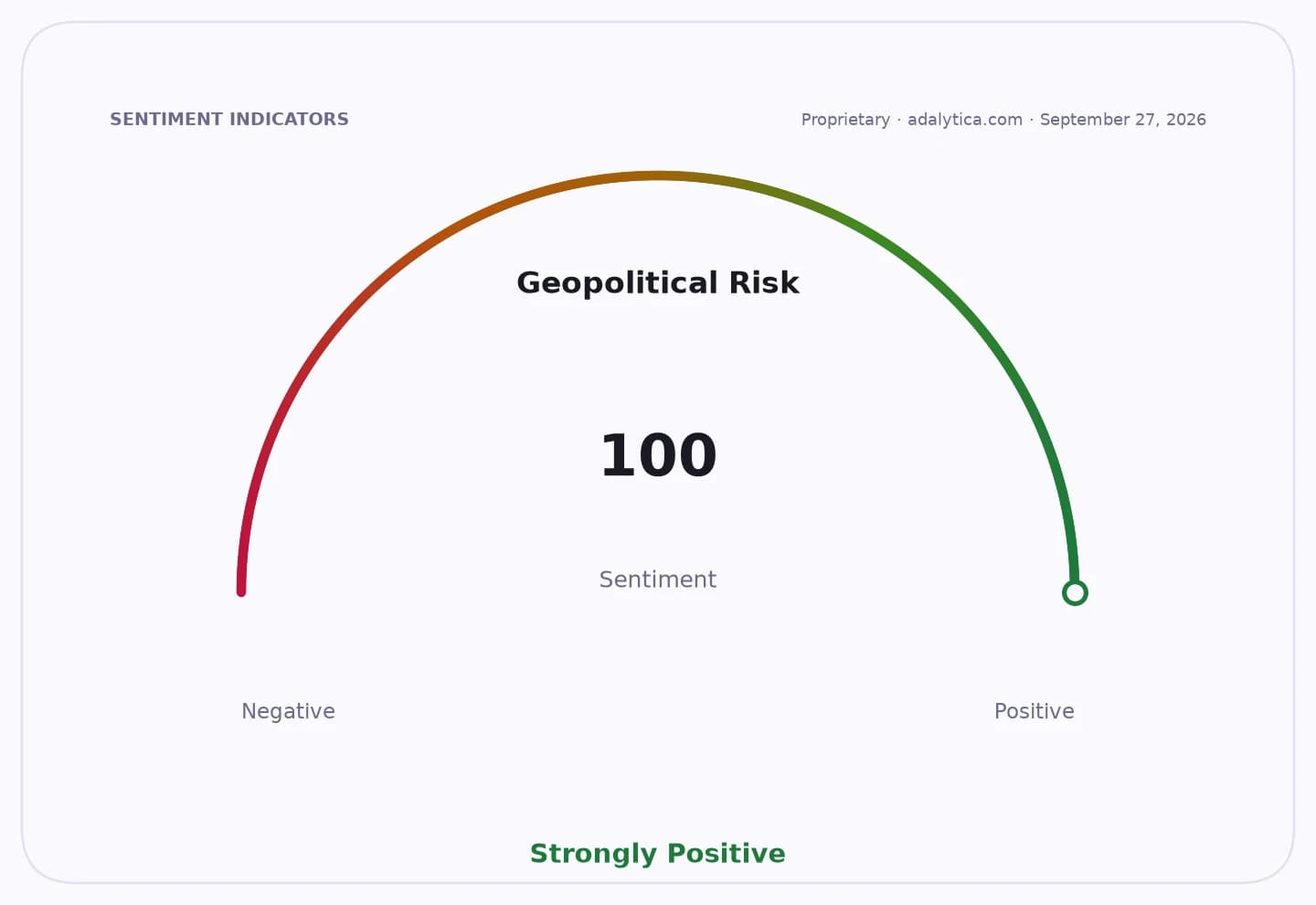
Sentiment IndicatorsⓘProprietary · adalytica.com · September 27, 2026
This is a snapshot — live sentiment, awareness and momentum for 130+ markets update continuously in the dashboard.Open AlphaPulse
At the forum, hosted by Uzbekistan’s Agriculture Ministry and its embassy in Tehran, officials and entrepreneurs identified livestock, veterinary medicine, poultry, fisheries, aquaculture, feed and seed production, nurseries, horticulture and greenhouse farming as priority areas. They also singled out the introduction of farm machinery, drones and other agrotechnologies, suggesting the cooperation is meant to move beyond symbolic exchanges toward productivity gains.
For Uzbekistan, the pitch is straightforward: foreign know-how and equipment can help modernize a farm sector that remains important to employment, exports and food prices. For Iran, the opportunity lies in exporting agricultural expertise, industrial inputs and potentially lower-cost production solutions into a neighboring market that wants to diversify suppliers and accelerate technology adoption.
The broader economic logic is regional. With global supply chains still vulnerable to sanctions, logistics bottlenecks and geopolitical disruption, Uzbekistan has been expanding ties with nearby partners to reduce dependence on any single route or market. Strengthening commercial links with Iran could also support transit ambitions tied to Central Asia’s access to Persian Gulf routes, even if the forum itself focused on smaller, faster-moving deals rather than transport megaprojects.
For investors, the key question is whether the relationship produces tradable flows or remains diplomatic theater. A credible agribusiness pipeline would matter for Uzbek importers of machinery and inputs, Iranian exporters of agricultural services and equipment, and logistics operators that stand to benefit from more cross-border cargo. It could also have second-order effects on local food prices and farm margins if new technology improves yields or reduces losses.
The case for optimism is that agriculture is one of the few sectors where bilateral cooperation can be commercialized relatively quickly. The bear case is that financing, sanctions risk and payment mechanisms may still limit scale, leaving the initiative vulnerable to broad political headlines without a large immediate impact on trade balances.
Even so, the forum points to a pragmatic next phase in Uzbekistan-Iran relations: fewer declaratory statements, more sector-specific deals. If the two governments can translate these discussions into contracts for equipment, breeding, feed, greenhouse systems and agritech services, the relationship could become a useful template for broader economic engagement.
| Entity | Gains | Losses |
|---|---|---|
| Uzbek farmers and agribusinesses | ▲New technology and inputs | ▼Higher costs if deals stall |
| Iranian agri-exporters and suppliers | ▲Market access in Central Asia | ▼Sanctions and payment risk |
| Logistics and trade intermediaries | ▲More cross-border flows | ▼Weak volumes if cooperation stays symbolic |
| Domestic consumers | ▲Potentially better supply and prices | ▼None material if projects succeed |