Vietnam’s push to turn artificial intelligence into a real economy story is moving from policy talk to commercial competition, with 15 local solutions shortlisted for a $1 million prize that could help determine which ideas reach hospitals, factories and the power grid.
Vietnam AI contest shortlists 15 finalists
The contest matters because it comes as Vietnam is already embracing AI at scale. Official and industry estimates cited in the briefing show about eight new businesses adopting AI every hour, with more than 245,000 companies now using the technology. That means the prize is not just a trophy; it is a financing and validation mechanism in a market where AI adoption is spreading faster than governance and product development capacity.
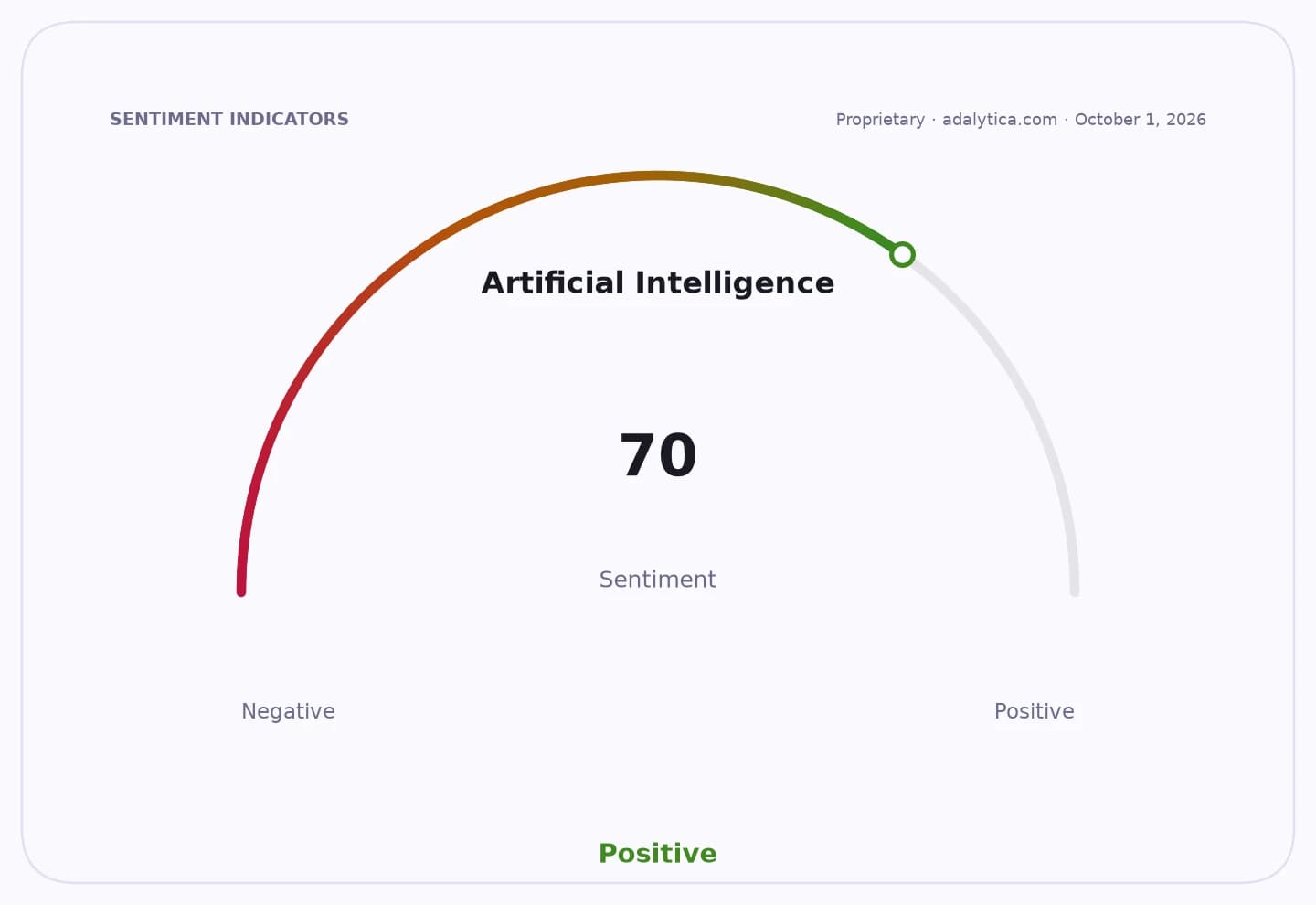
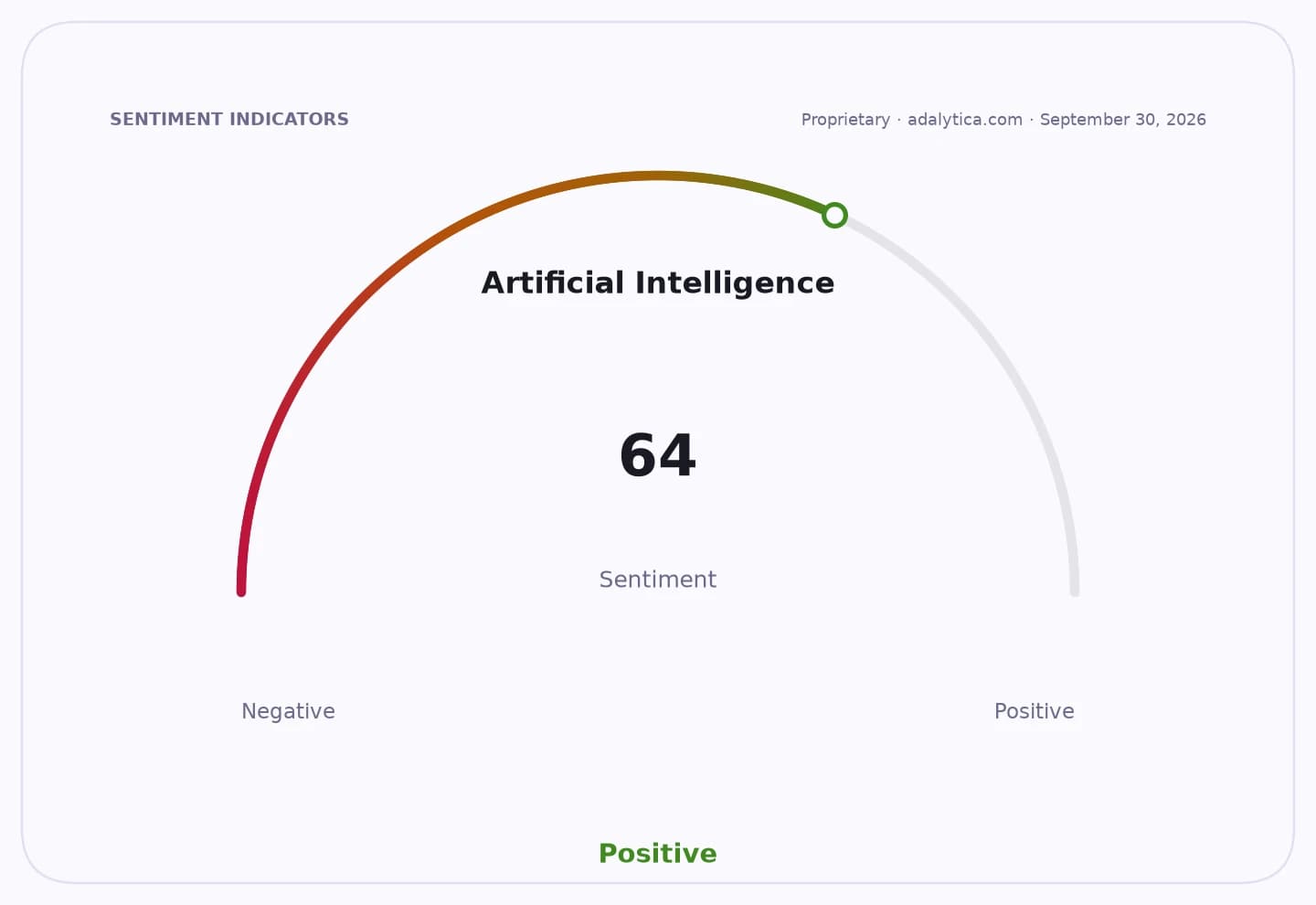
Sentiment IndicatorsⓘProprietary · adalytica.com · September 30, 2026
This is a snapshot — live sentiment, awareness and momentum for 130+ markets update continuously in the dashboard.Open AlphaPulse
The 15 finalists are tackling problems that are economically meaningful rather than experimental: decoding the molecular mechanisms of traditional medicine, supporting cancer diagnosis, classifying the sex of chicken embryos and optimizing electric-vehicle charging stations. Those are the kinds of use cases that can produce measurable savings, improve throughput and reduce error rates in sectors that matter for domestic productivity.
For investors, the significance is twofold. First, the contest highlights where Vietnam’s AI opportunity is most likely to be monetized: healthcare, agriculture, logistics, energy and industrial optimization. These are fragmented sectors where even modest automation or diagnostic gains can produce outsized returns. Second, it underscores a broader regional theme: capital is increasingly chasing applied AI, not just model-building. In markets like Vietnam, where enterprise adoption is widening, winners will likely be companies that solve local problems with deployable systems rather than generic software.
The broader backdrop is a government trying to keep pace with the technology. The Ministry of Science and Technology is promoting innovation through initiatives such as the National Innovation Festival and the preliminary round of the Au Lac Grand Prize 2026, while universities are being encouraged to teach responsible AI use. That combination signals an attempt to create both supply and guardrails at the same time, even as policy continues to lag the speed of adoption.
That gap between rapid uptake and weaker oversight is the main risk. As AI spreads into banking, healthcare and infrastructure, Vietnam will need better data governance, clearer liability rules and stronger standards around ethics and safety. Without those, some of the most promising projects could stall at pilot stage, limiting commercial payoff for backers and slowing broader deployment.
Still, the competitive pressure created by a $1 million prize should help surface the most viable solutions and give them a path to scale. If the finalists can prove they improve outcomes in sectors that are central to Vietnam’s growth model, the event may be remembered less as a one-off award and more as a marker of where the country’s AI market starts to become investable.
| Entity | Gains | Losses |
|---|---|---|
| Vietnamese AI finalists | ▲Funding, visibility, validation | ▼Smaller startups without traction |
| Hospitals and clinics | ▲Faster diagnostics, better tools | ▼Manual workflows, slower detection |
| Farmers and industrial users | ▲Higher efficiency, lower costs | ▼Legacy processes, inefficiency |
| Regulators and policymakers | ▲Concrete test cases for rules | ▼Delay in governance catches up |