Vietnam and France are turning their digital partnership into something far more practical: a pipeline for government modernization, AI know-how and semiconductor training that could shape how Vietnam builds its next phase of growth.
Vietnam-France Digital Partnership Adds AI and Chip Training
That matters because digital transformation is no longer just a public-sector slogan in Hanoi. It is becoming a competitiveness issue. Vietnam says it has already completed many of the tasks in its “100-day” digital campaign, including a shift away from fragmented local systems toward centralized processing at ministries and the National Public Service Portal. For a fast-growing economy, that kind of infrastructure change can lower administrative friction, improve data use and make government services more scalable — all of which support productivity over time.
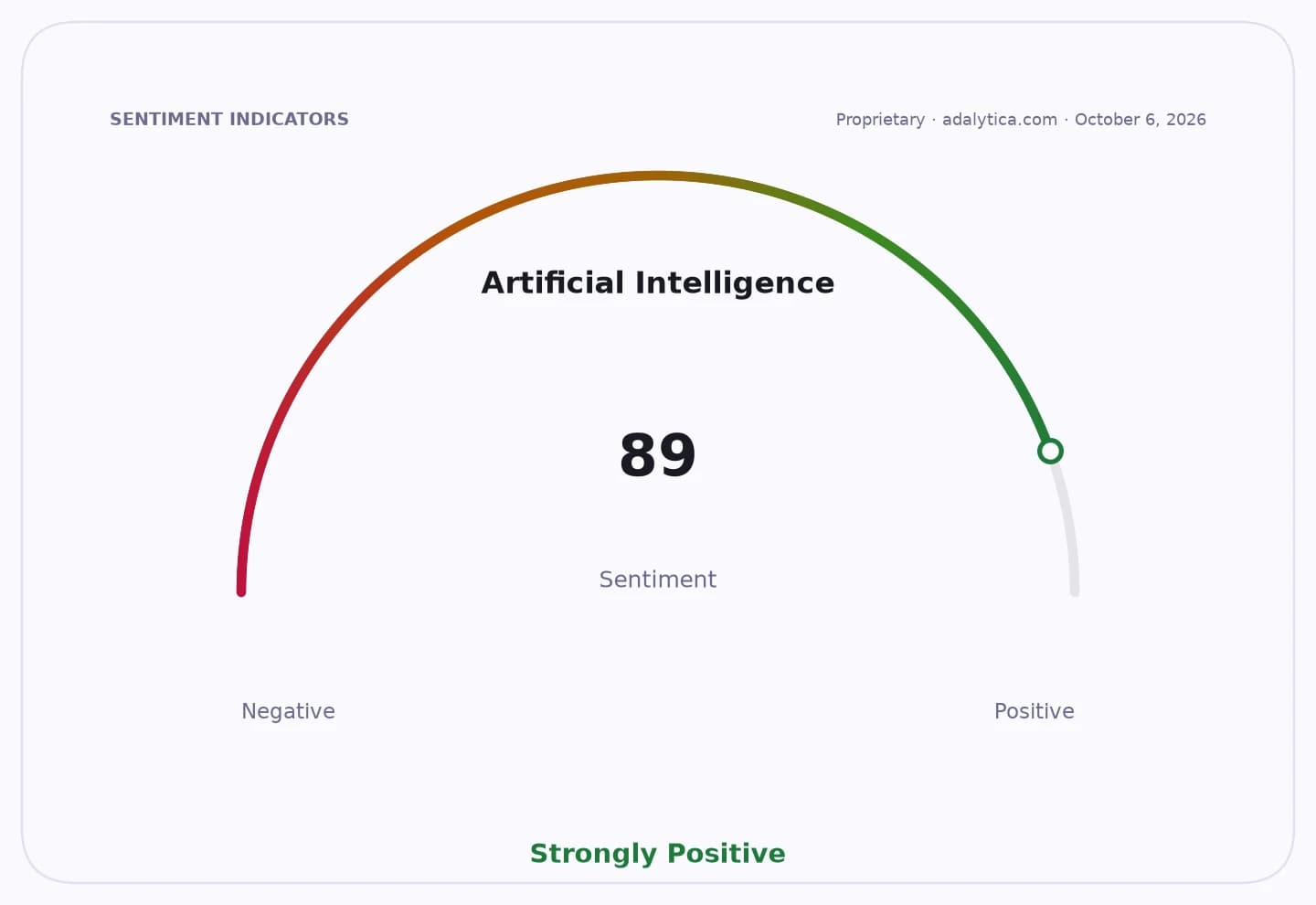
Sentiment IndicatorsⓘProprietary · adalytica.com · October 6, 2026
This is a snapshot — live sentiment, awareness and momentum for 130+ markets update continuously in the dashboard.Open AlphaPulse
France is helping anchor that effort. Vietnamese officials said cooperation with French partners since June 2026 has included expert support and training for Office of Government staff at France’s National School of Public Administration, or INSP. The next step is even more telling: the two sides plan to hold a semiconductor training course at the Vietnam-France University of Science and Technology, or USTH, while also discussing digital twins, AI, data governance, cyber security and the ethics of AI.
For investors, the story is less about a ceremonial friendship and more about capacity building. Vietnam is trying to move up the value chain in a world where data, chips and digital public services are increasingly strategic. If it can improve state digital systems, train more technical talent and strengthen links with European institutions, that helps the country’s long-term case as a manufacturing and technology hub. It also fits a broader regional trend: governments want sovereign control over data and better digital infrastructure without sacrificing interoperability or privacy.
France, for its part, gets a foothold in a market where industrial policy, education and technology diplomacy are converging. Officials in Paris see digital cooperation as a visible sign of the two countries’ comprehensive strategic partnership, and the French side said the relationship has been reinforced by higher-level political visits and upcoming exchanges. France also pointed to areas where it can add value beyond software, including high-speed rail and workforce training.
The economic payoff will not show up overnight, but it can compound. Better-trained administrators usually mean better execution. Better data management usually means better policy design. And better technical education usually means a deeper talent pool for foreign investors looking at Vietnam’s next decade of industrial growth. In that sense, the partnership is part diplomacy, part productivity strategy.
The main risk is the familiar one: big digital ambitions can stall if implementation lags, standards stay fragmented or talent pipelines do not keep pace with demand. But the direction is clear. Vietnam is trying to hardwire digital capability into its institutions, and France is positioning itself as a useful partner in that buildout. For long-term investors watching Southeast Asia’s upgrade cycle, that makes the cooperation worth following closely.
| Entity | Gains | Losses |
|---|---|---|
| Vietnam government | ▲Better digital capacity | ▼Legacy fragmented systems |
| French institutions | ▲Strategic influence in Vietnam | ▼Limited impact if projects stall |
| USTH and trainees | ▲Semiconductor and AI skills | ▼Time and resources needed |
| Foreign investors in Vietnam | ▲More efficient operating environment | ▼Firms relying on slow bureaucracy |