Gold prices in Vietnam fell across major brands on Oct. 4, with both gold bars and gold rings dropping 500,000 to 600,000 dong per tael as local traders followed a softer global bullion market. The decline matters because domestic prices remain far above the international benchmark, leaving Vietnamese buyers paying a premium of more than 12 million dong per tael even after the pullback.
Vietnam gold prices fall as domestic premium stays high

SJC, Bao Tin Minh Chau, PNJ and DOJI all cut their gold bar quotes by 600,000 dong on both sides to 140.5 million dong a tael for buying and 143.5 million dong for selling. At Phu Quy SJC, bars fell to 140.3 million dong on the buy side and 143.5 million dong on the sell side.
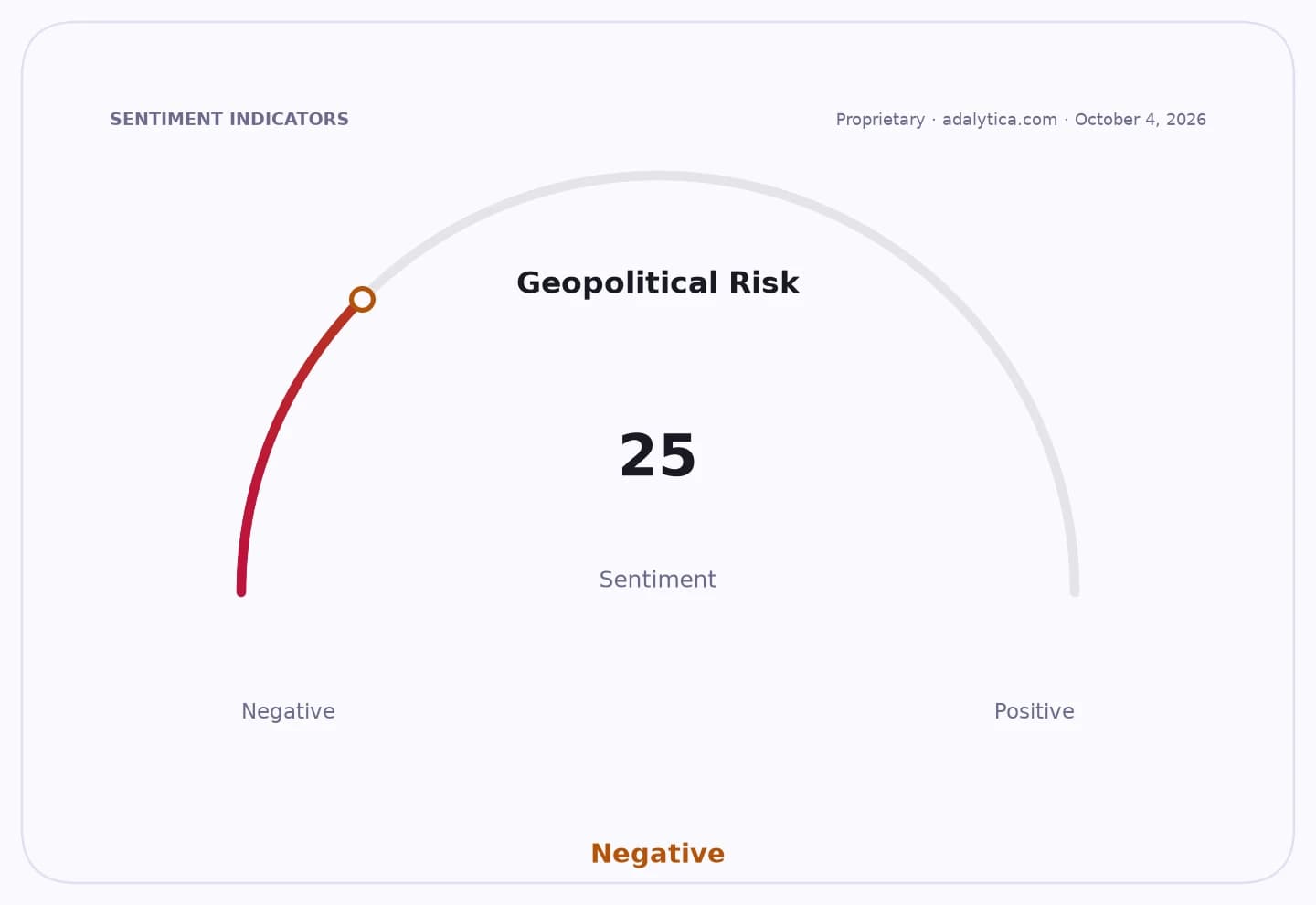
Sentiment IndicatorsⓘProprietary · adalytica.com · October 4, 2026
This is a snapshot — live sentiment, awareness and momentum for 130+ markets update continuously in the dashboard.Open AlphaPulse
Gold rings also moved lower at most retailers. SJC rings dropped to 140 million dong buying and 143 million dong selling, while PNJ and DOJI each cut ring prices by 500,000 to 600,000 dong. Phu Quy SJC lowered rings to 140.3 million dong buying and 143.3 million dong selling.
The only outlier was Bao Tin Minh Chau, where the buy price for rings rose 100,000 dong to 139 million dong, though the selling price was left unchanged. Even so, the market-wide tone was weaker, with the top selling price for both bars and rings now clustered around 143.5 million dong a tael.
Global gold was trading near $4,141.8 an ounce, equivalent to about 131.1 million dong per tael before taxes and fees, according to the cited exchange rate. That still leaves local prices about 12.4 million dong higher than the international conversion, keeping the domestic market expensive by historical standards.
The move comes as bullion remains under pressure from rising U.S. Treasury yields. The 10-year Treasury yield posted its biggest quarterly increase in decades in the third quarter, a development that typically weighs on non-yielding assets such as gold by raising the opportunity cost of holding them.
But this time the yield surge is also being read through a fiscal-risk lens, which could keep gold supported if investors view higher yields as a sign of concern over U.S. debt sustainability rather than simply stronger growth expectations. Real yields around 2.24% are still a headwind, but gold has held above the $4,000 level, showing that demand for defensive assets has not disappeared.
For investors, the key issue is whether the current correction is a pause in a still-strong uptrend or the start of a broader reset in bullion. In the near term, U.S. yields, the dollar and fiscal headlines will steer global prices, while the size of the domestic premium will shape buying appetite in Vietnam.
| Entity | Gains | Losses |
|---|---|---|
| Vietnamese bullion buyers | ▲Lower entry prices | ▼Still face a large domestic premium |
| Gold retailers | ▲Inventory repricing flexibility | ▼Softer retail demand risk |
| Global gold bulls | ▲Support above $4,000/oz | ▼Pressure from higher Treasury yields |
| U.S. Treasury market | ▲Higher yields attract capital | ▼Gold investors seeking safe havens |