Vietnam’s industry and trade overhaul is shifting from policy language to a business-led race to raise productivity, cut costs and move deeper into global supply chains, with small and medium-sized firms increasingly seen as the engine of that change.
Vietnam industry sector shifts to productivity growth
The central economic point is simple: the country is trying to grow by value added rather than volume. Under Decision 165, the government wants the industry and trade sector to lift productivity, quality and competitiveness through 2030, and business leaders say that will depend less on directives from Hanoi than on whether companies can adopt technology, improve management and meet higher standards demanded by bigger domestic and foreign buyers.
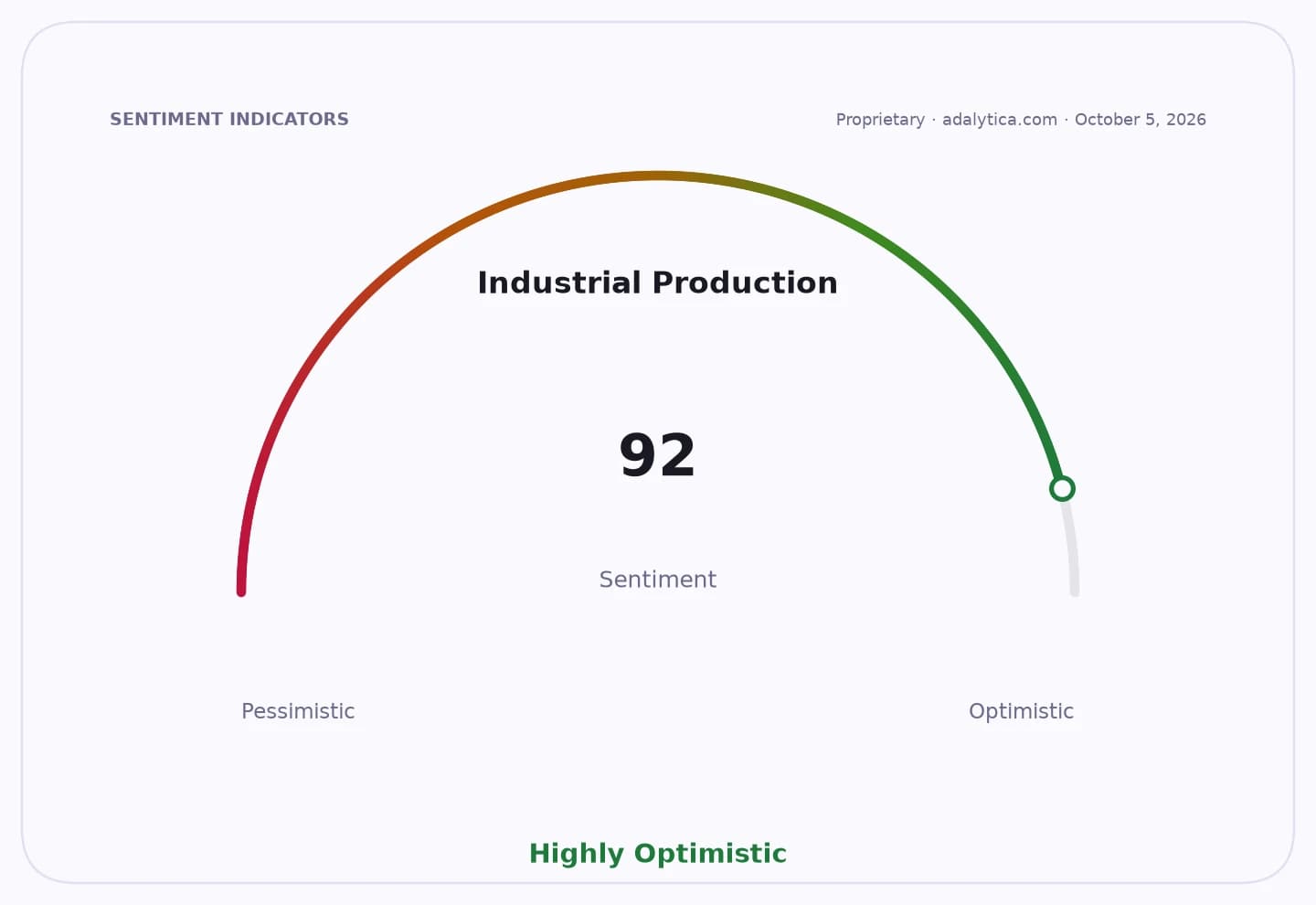
Sentiment IndicatorsⓘProprietary · adalytica.com · October 5, 2026
This is a snapshot — live sentiment, awareness and momentum for 130+ markets update continuously in the dashboard.Open AlphaPulse
That matters because the sector’s gains now hinge on capital, technology and execution, not cheap labor. Businesses, especially small and medium-sized enterprises, are being pushed to invest in automation, digital tools, energy savings, branding and cleaner production if they want to hold margins and win orders in higher-value parts of the chain. The shift is also a response to tighter market requirements around green standards and traceability, which are increasingly gating access to export markets and large supply networks.
TS. Tô Hoài Nam, vice chairman and secretary-general of the Vietnam Association of Small and Medium Enterprises, said companies are already changing behavior, moving from a mindset of “making more” to “making more efficiently” and extracting higher value. He said many smaller firms are using digital technology in management, production and sales, while also adjusting to green production and supply-chain requirements.
The bottleneck is financing and know-how. Many small businesses lack the capital to replace equipment, automate production or adopt digital systems, while others do not know which technologies to prioritize or how to reorganize operations around them. Workforce quality remains another constraint, particularly for firms trying to meet the standards of larger domestic groups and foreign direct investment companies.
For investors, the story is about the quality of industrial growth and the firms positioned to benefit from it. If Vietnam can lower operating frictions, improve access to capital and streamline regulation, the result could be stronger demand for industrial technology, logistics, energy efficiency, industrial support services and supply-chain partners. If it cannot, the restructuring push risks staying at the level of slogans while smaller firms remain trapped in low-margin subcontracting.
Policy support is therefore part of the market story. Business groups want simpler procedures, fewer overlapping inspections, easier land access, better credit channels and more practical support tied to equipment upgrades, process improvements, management digitalization and certification. They also want deeper links between SMEs, large companies, FDI groups, universities and research institutes.
The broader narrative is that Vietnam is trying to turn its private sector into the main carrier of industrial upgrading. The government has set the framework, but the payoff will come only if businesses use it to climb the value chain, modernize production and compete on productivity rather than scale.
| Entity | Gains | Losses |
|---|---|---|
| Small and medium-sized enterprises | ▲Better access to value chains | ▼Low-margin outsourcing model |
| Large manufacturers and FDI groups | ▲More capable local suppliers | ▼Dependence on weak subcontractors |
| Government reform agenda | ▲Credibility if cuts red tape | ▼Risk of slow implementation |
| Investors in industrial tech and logistics | ▲Higher demand for upgrades | ▼Firms tied to old production methods |