Fresh rice prices in Vietnam’s Mekong Delta edged higher on Sept. 22 even as raw rice for processing weakened, underscoring a market that is still trying to clear a large crop while farmers remain under pressure.
Vietnam Rice Prices Edge Higher in Mekong Delta
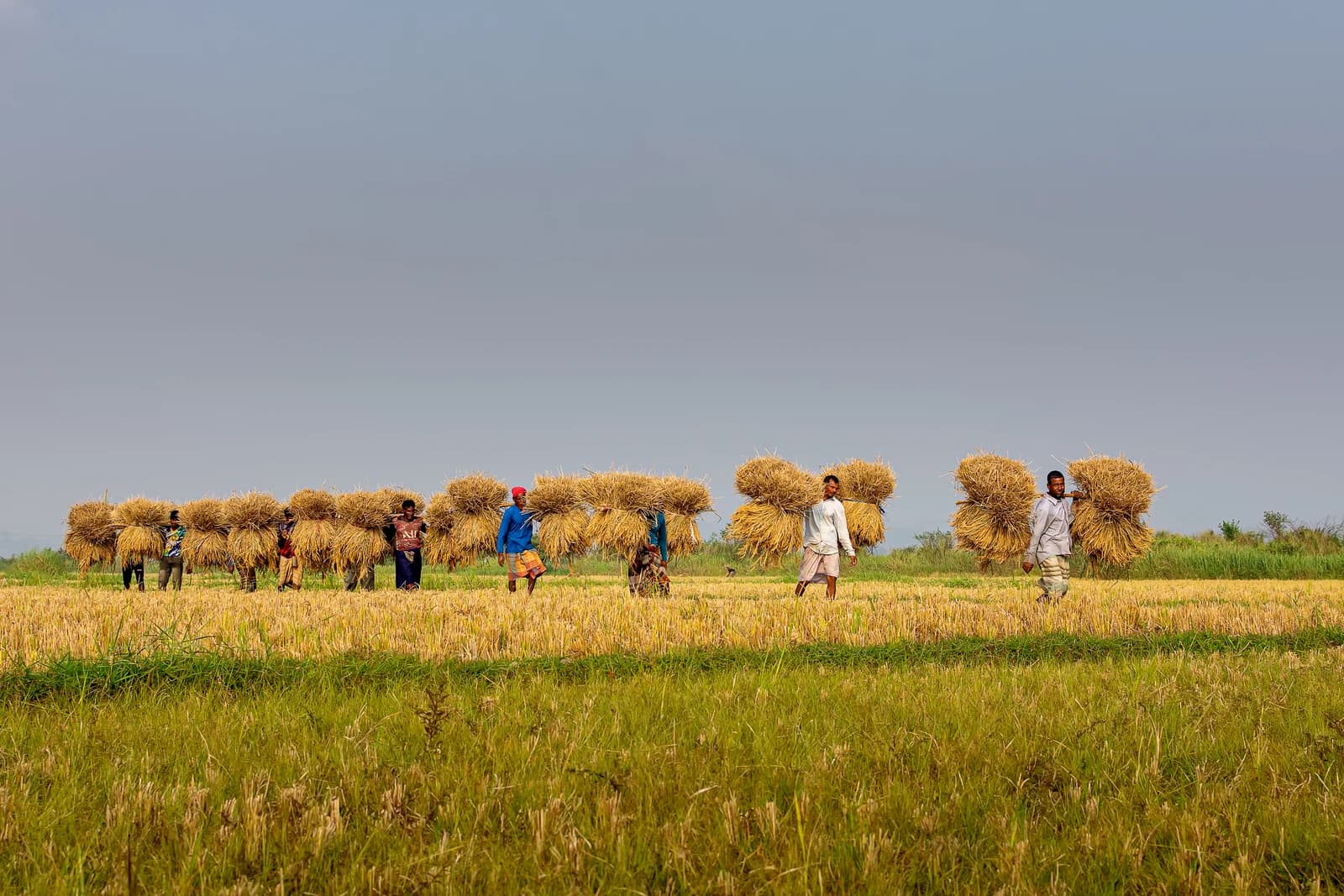
The divergence matters because rice is both a household staple and a critical source of income in southern Vietnam, where small price moves can quickly affect farm margins, mill utilization and export competitiveness. Fresh paddy prices for several varieties rose 100 dong per kilogram, while raw rice used by processors slipped 50 dong per kilogram, a sign that buying interest is uneven and that the supply chain is not absorbing grain smoothly.
Sentiment IndicatorsⓘProprietary · adalytica.com · September 26, 2026
This is a snapshot — live sentiment, awareness and momentum for 130+ markets update continuously in the dashboard.Open AlphaPulse

In An Giang province, fresh OM 18 rose to 6,000-6,100 dong per kilogram, Dai Thom 8 to 6,100-6,200 dong, OM 5451 to 6,000-6,100 dong, IR 50404 to 5,900-6,000 dong and OM 34 to 5,700-5,900 dong. By contrast, raw IR 504 and CL 555 both eased to 8,600-8,700 dong per kilogram. Bran and broken-rice byproducts were unchanged, suggesting the move was confined to paddy and raw rice rather than the broader milling complex.
The split pricing comes at a time when farmers are already reporting financial strain from weak domestic demand and excess inventories. A small rebound in fresh paddy may provide temporary relief in the field, but the decline in raw rice points to pressure further downstream, where mills and traders remain cautious about restocking.
Export markets are offering only partial support. Vietnam’s Jasmine rice continued to trade at $526-$530 a ton, while 5% broken fragrant rice was quoted at $440-$445 and 5% broken white rice at $423-$427. Those levels keep Vietnam competitive, but not decisively so. Thailand’s 5% broken white rice remained the priciest in the region at $477-$481 a ton, while Pakistan and India stayed cheaper, limiting Vietnam’s pricing power in key tenders.
The global backdrop is also less supportive than it was earlier in the year. The UN Food and Agriculture Organization lifted its estimate for world rice production after adjusting Myanmar’s historical output data and citing strong Sri Lankan yields, but it still projects 2026-27 output at 553.1 million tons, down 1.9% from the revised 2025-26 estimate. FAO also sees world consumption rising to 559 million tons, keeping the market tight enough to prevent a deep correction in prices, even as global trade is forecast to fall 1.9% from a record 2025 level.
For investors and agribusiness players, the key question is whether Vietnam’s domestic market can stabilize without heavier state intervention. If fresh paddy prices continue to firm while raw rice lags, mills may face margin compression and inventory risk, while farmers could still struggle to lock in profitable sales. Any policy move to buy surplus rice, ease exports or support storage would likely matter more than this week’s modest price changes.
| Entity | Gains | Losses |
|---|---|---|
| Farmers in Mekong Delta | ▲Slightly higher paddy prices | ▼Still weak farm margins |
| Rice mills/processors | ▲Lower raw rice input costs | ▼Tighter downstream demand |
| Vietnamese exporters | ▲Stable export quotations | ▼Limited pricing power |
| Consumers/buyers | ▲More stable supply | ▼Higher procurement costs if paddy keeps rising |