Vietnam’s stock market enters September with its clearest catalyst in years: FTSE Russell’s upgrade path, which could unlock foreign inflows and keep the VN-Index bid even as inflation, rates and geopolitics argue for a choppier ride.
Vietnam stocks eye FTSE Russell upgrade inflows

That matters because market reclassification is not just a headline. It changes who can own Vietnamese stocks, when they can buy them and how much passive money has to follow. For a market that has already climbed 5.55% in August to 1,832.12 points, the upgrade story adds a fresh layer of demand just as investors begin positioning for third-quarter earnings and a still-resilient economy.
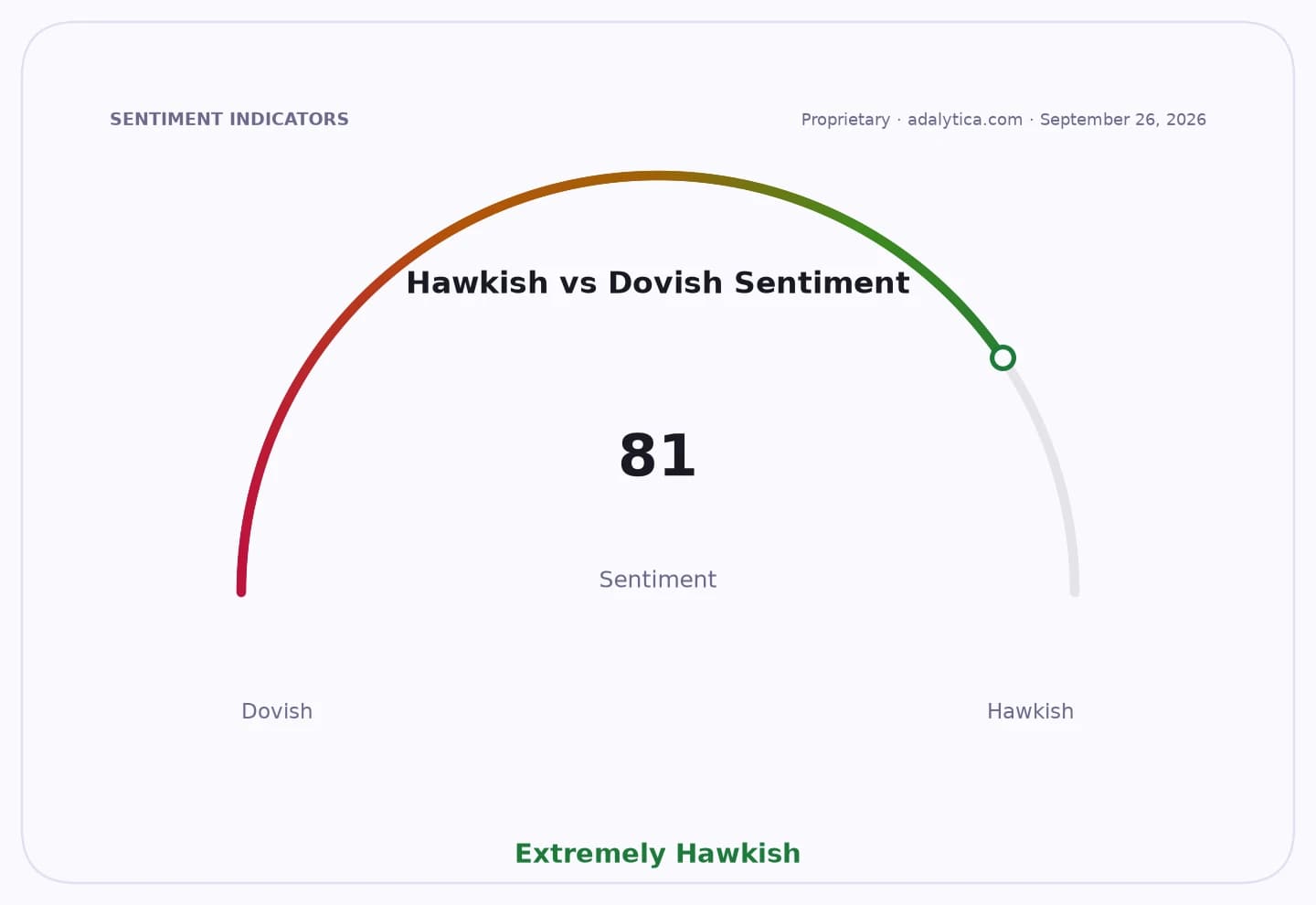
Sentiment IndicatorsⓘProprietary · adalytica.com · September 8, 2026
This is a snapshot — live sentiment, awareness and momentum for 130+ markets update continuously in the dashboard.Open AlphaPulse
FTSE Russell has already confirmed Vietnam’s move from frontier to secondary emerging market, effective Sept. 21, 2026, with inclusion phased in over four tranches from September 2026 to September 2027. TPS Research estimates a base-case trading range of 1,787 to 1,930 for the VN-Index, while KIS Vietnam sees the index pushing toward 1,850 to 1,950 if foreign demand builds and domestic money follows.
The economic backdrop is giving that thesis support. Vietnam’s industrial production rose 14.4% from a year earlier in August and 11.9% in the first eight months, while the manufacturing PMI held at 53.3 for a 14th straight month above expansion territory. Registered foreign investment in the first eight months reached $40.63 billion, up 55.4%, with disbursed capital at $17.25 billion, the strongest eight-month pace in five years. Public investment is also doing more of the heavy lifting, with budget spending up 18.5% in the year to date.
That combination matters for investors because it points to a market where earnings are still underpinned by real activity, not just rerating. Banks should remain a core support thanks to profit base and valuations, brokers stand to benefit from improving liquidity, and construction, steel, materials and industrial parks are obvious winners from the infrastructure and manufacturing cycle. The stocks most likely to attract incremental foreign capital are those already in the upgrade pipeline, with high liquidity, transparent governance and clear earnings momentum.
The market is not without risk. Consumer demand has not broadened evenly, export orders are softening, and inflation has crept toward 5%, with August CPI up 4.89% year on year. That leaves less room for the central bank to ease aggressively if the dong comes under pressure. The Fed’s stance also matters: a tighter U.S. policy backdrop could keep the dollar firm and slow foreign inflows into emerging markets. For Vietnam, that means the upgrade is a catalyst, not a guarantee.
Still, the setup is asymmetric. Passive funds are not expected to flood in all at once, but even an initial allocation estimated at around $100 million could sharpen positioning, while active managers often move earlier to front-run index inclusion. In a market where foreign selling has already narrowed and domestic investors are looking for the next structural theme, the FTSE upgrade is the kind of long-duration catalyst that can reprice leadership.
My view: the market is still underestimating the second-order effects of this upgrade. Don’t chase the index blindly. Focus on the names with liquidity, earnings visibility and direct inclusion potential — especially banks, brokers, industrial parks and infrastructure-linked stocks — because those are the stocks most likely to capture the first wave of capital.
| Entity | Gains | Losses |
|---|---|---|
| FTSE-included Vietnamese stocks | ▲Passive foreign demand | ▼Frontier-only valuation discount |
| Banks and brokers | ▲Higher liquidity, better sentiment | ▼Funding-cost pressure if rates rise |
| Industrial parks, steel, materials | ▲Public investment, manufacturing tailwind | ▼Export slowdown, weaker external demand |
| Cash and lagging small caps | ▲— | ▼Missed re-rating from upgrade flows |