Visa is moving to make its network ready for a world where AI agents can shop and pay on a consumer’s behalf, a shift that could open a new growth lane for card volume while reshaping how digital commerce is authenticated and controlled.
Visa expands AI agent payment network in Asia Pacific
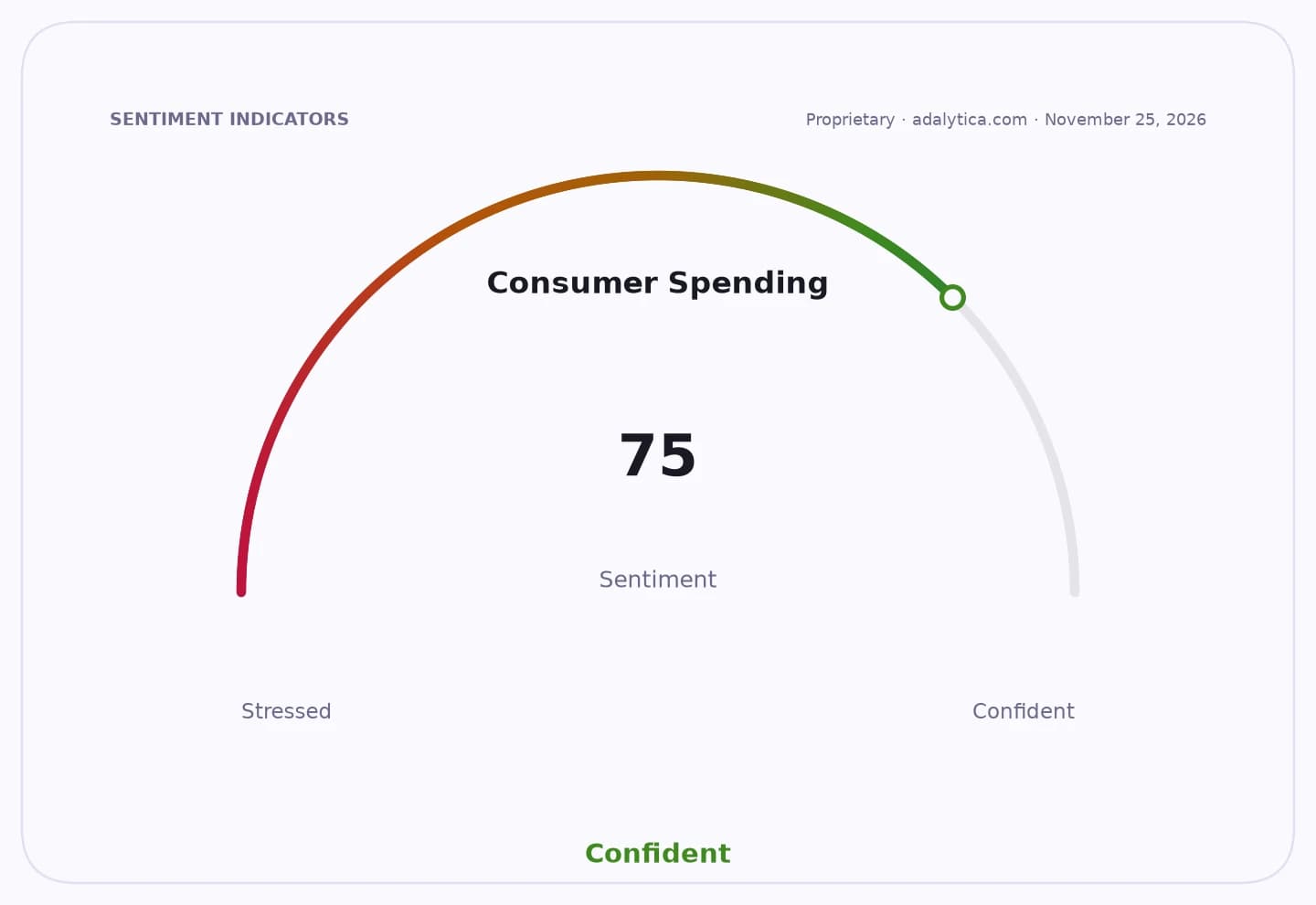
Consumer Spending
That matters because agentic commerce is not just another checkout feature — it is a potential new payment rail for the AI economy. If digital agents can search, assemble carts and complete purchases autonomously, payment networks will sit at the center of the transaction flow, capturing fees and data from a much larger universe of machine-initiated spending. Visa’s expansion of its Agentic Ready program in Asia Pacific signals that the company wants to own that infrastructure before rivals or fragmented standards define it.
Sentiment Indicators
Visa said the second phase of the program includes more than 50 participants spanning banks, payment providers, technology firms and merchants, with names such as Adyen, Stripe, Airwallex, Checkout.com and Indonesia’s Xendit. The initiative is part of Visa Intelligent Commerce, the company’s broader push to enable AI-driven shopping on top of existing payment systems. The test bed will examine whether systems can recognize legitimate AI agents, authenticate them, process purchases, manage post-payment service and use tokenization to shield sensitive card data.
For investors, the strategic logic is straightforward: the more commerce moves from human clicks to AI-triggered transactions, the more valuable the toll road becomes. That is especially relevant for Visa, which already showed in its latest 10-K that it is investing in generative AI, stablecoins and agentic commerce as the payments industry undergoes “dynamic and rapid change.” The company is not treating AI as a side project; it is positioning the network for the next operating system of spending.
The opportunity is also bigger than Visa alone. Payment processors, merchant platforms and gateway providers that can prove they can safely verify AI activity may gain an early advantage as merchants adopt agentic checkout. That makes the names in Visa’s pilot, including Stripe, Adyen and Xendit, important strategic beneficiaries if the standard becomes widely adopted. In Southeast Asia, the presence of Xendit gives the move added relevance for Indonesia’s digital payments ecosystem, even though Visa has not laid out a commercial rollout timetable there.
There is, however, an economic catch: machine-driven commerce raises the stakes on fraud, authorization and dispute resolution. The more autonomous the buyer, the more vital it becomes to prove the agent had permission to act. That is why Visa is pairing the program with identity management and anti-fraud tools. In a market where regulators are already scrutinizing AI businesses and financial systems for hidden risk, trusted authentication could become the real moat.
The stock market is already rewarding companies tied to durable payment rails and digital commerce, but this announcement argues the biggest upside may still be underappreciated. If AI agents become a mainstream layer of shopping, payment networks will not be disintermediated — they will be more embedded than ever. The investors who should care most are those looking for secular cash-flow winners from AI that do not depend on speculative model labs or hardware cycles.
Visa is not promising a full commercial launch yet, and that is exactly why this matters now. Standards tend to be set before the market notices them. The companies building agentic-ready payment infrastructure today are positioning for a multi-year expansion in AI-enabled transaction volume, and the first movers may end up owning the protocol layer of automated retail.
| Entity | Gains | Losses |
|---|---|---|
| Visa | ▲Higher payment volume; AI network relevance | ▼Slower adoption if standards fragment |
| Stripe, Adyen, Xendit | ▲Early integration advantage | ▼Late movers in AI checkout |
| Merchants | ▲More automated sales conversion | ▼Higher fraud and auth complexity |
| Legacy checkout systems | ▲— | ▼Disintermediation risk |