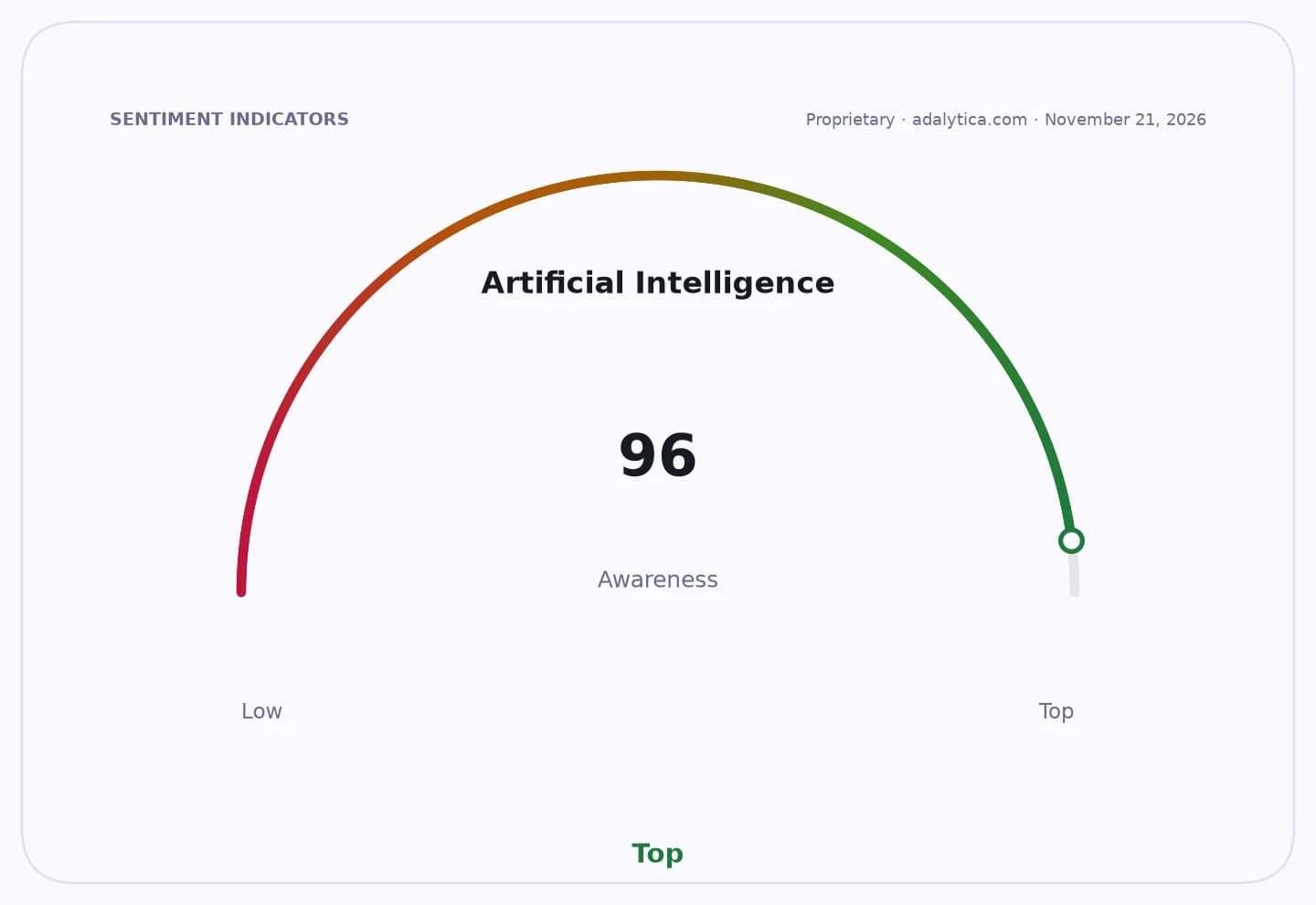
AI-driven hackers are increasingly exploiting payment workflows rather than card networks themselves, exposing a fast-growing weak point in the plumbing that moves money for companies, governments and consumers.
India warns on AI payment fraud risk
India’s Computer Emergency Response Team said in an urgent advisory on Nov. 20 that cybercriminals are using AI-based “agentic offensive frameworks” to automate attacks, probe systems for vulnerabilities and manipulate payment records before funds are released. The agency warned the threat is not confined to banks and financial firms: technology providers that support government-related payment processes, as well as vendors that receive corporate payouts, are also in scope.
Sentiment Indicators
That distinction matters because it shifts the battlefield from the perimeter of payment gateways to the business applications and approval chains that authorize transfers. In practice, hackers are altering beneficiary details and other account records upstream, then allowing normal payment procedures to route the money to unauthorized recipients. For companies, that raises the odds of fraud that can slip past traditional controls designed to catch attacks on the payment rail itself.
The economic cost is broader than the immediate theft. Payment fraud erodes trust in digital commerce, increases compliance and remediation expenses, and can force firms to hold more controls, more staff and more cash as a buffer against operational risk. It is also a reminder that AI is lowering the cost of attack while raising the speed and scale of intrusion, a combination that can make cybercrime more persistent and harder to detect.
The warning lands in a sector already under pressure. Visa, Mastercard and PayPal all flag cyber and payment fraud risks in recent filings, underscoring how central security has become to the economics of payments. For payments networks and processors, the near-term upside is that clients may spend more on fraud prevention and monitoring tools. The downside is that repeated incidents can increase card-blocking, transaction friction and customer churn, particularly if consumers begin to see digital payments as less reliable.
Market signals have been mixed. PayPal’s shares have recovered to about $56 from a 2026 low near $39, but the stock remains below its 50-day moving average and recent momentum gauges such as RSI have softened, suggesting investors are still cautious about the outlook for digital-payments growth and margins. Visa, by contrast, has held up far better, trading around $417 and well above both its 50-day and 200-day moving averages, reflecting the market’s preference for the network with deeper scale and stronger pricing power. Mastercard has also stayed elevated around $647, though it too has pulled back from earlier highs.
The broader read-through is that payments companies now have to defend not only the transaction but the data and approval architecture around it. The immediate winners are firms that can sell stronger fraud detection, identity controls and workflow verification. The losers are companies, vendors and public-sector systems with fragmented controls, weak access management or poor reconciliation between internal approvals and external records.
For investors, the key question is whether AI-fueled fraud becomes a recurring operating expense or a catalyst for durable demand in security spending. The answer will shape margins across the sector, especially for platforms that process high volumes of vendor and business payments. Regulators are likely to keep pressure on firms to harden controls, and any further incidents could accelerate spending on security but also add friction to payment growth.
| Entity | Gains | Losses |
|---|---|---|
| Fraud-prevention vendors | ▲Higher demand for controls | ▼No material downside |
| Payment networks and processors | ▲More security spending by clients | ▼Higher fraud and compliance costs |
| Businesses and government payors | ▲Better controls if upgraded | ▼Exposed approval chains and false payments |
| Hackers / cybercriminals | ▲Easier automation with AI | ▼Greater scrutiny and enforcement |