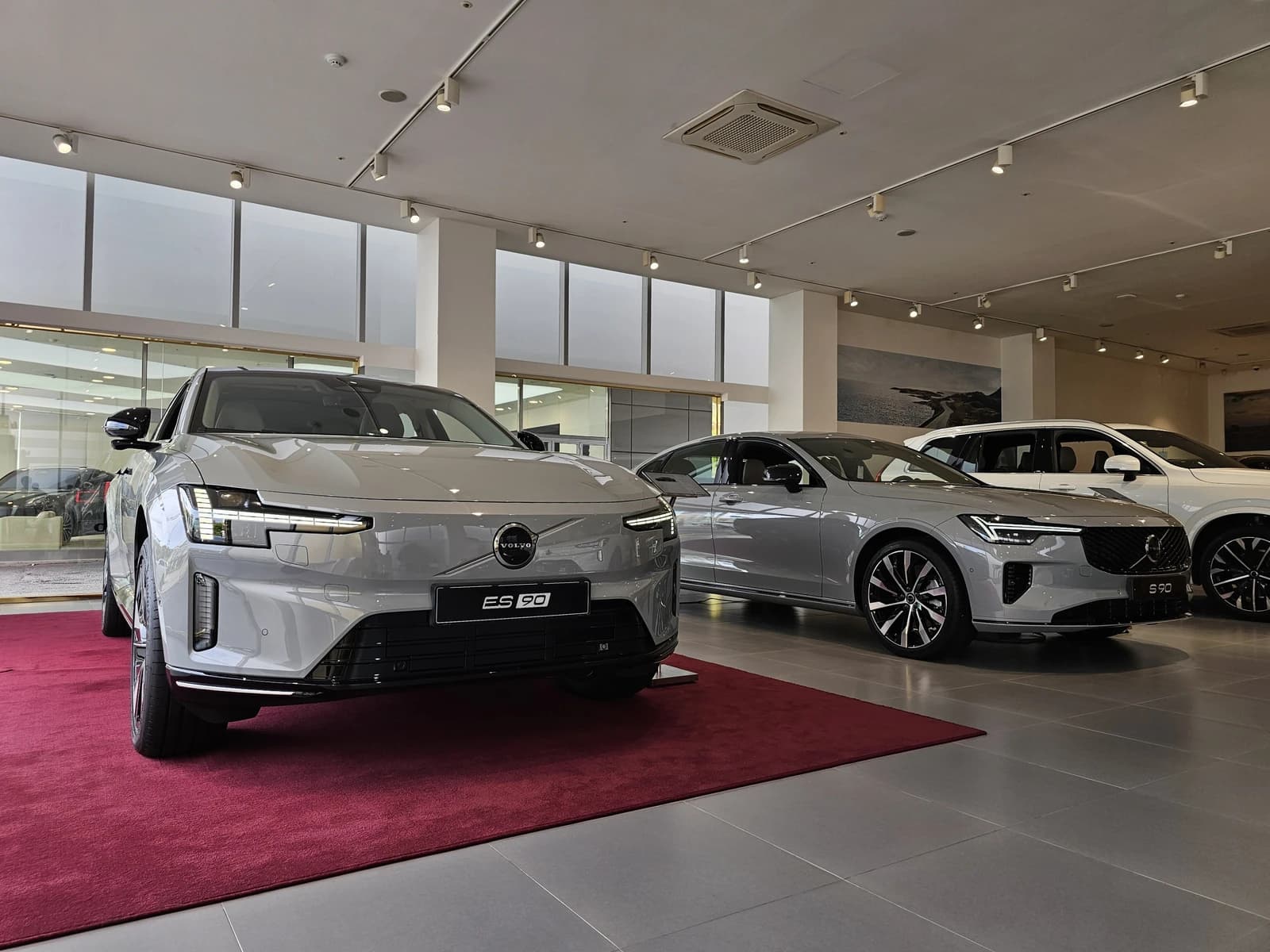
Volvo has launched the ES90 in Vietnam, entering the country’s top end of the battery-electric sedan market with a long-range, fastback-style model aimed directly at Mercedes-Benz’s EQS Sedan and BMW’s i7.
Volvo ES90 launches in Vietnam luxury EV market
The arrival matters because Vietnam’s luxury EV segment is becoming a sharper battleground just as automakers across Southeast Asia push more electrified models into the market. Volvo is not trying to compete on price alone; it is using range, charging speed and safety technology to justify a place in a segment where buyers are paying for status, comfort and the credibility of the badge. That makes the ES90 a test of whether a Scandinavian premium brand can win share against German incumbents in a market where new EVs are arriving quickly and dealers are still facing tight margins.
Sentiment Indicators
The ES90 comes to Vietnam as a Twin Motor Performance version with all-wheel drive, 680 horsepower and 870 Nm of torque. More importantly for buyers, Volvo says the 106 kWh battery and 800V architecture deliver up to 706 km of range under the WLTP cycle, while DC fast charging at up to 350 kW can replenish the battery from 10% to 80% in about 22 minutes, or add 300 km of range in 10 minutes.
That range and charging performance place the car in the same conversation as the EQS and i7, two models that define the upper tier of the electric luxury sedan market. In practical terms, Volvo is trying to reduce one of the biggest barriers to premium EV adoption: range anxiety without sacrificing the comfort and refinement expected at this price point. The company is also leaning heavily on its safety reputation, with systems it says draw on five radars, seven cameras and 12 ultrasonic sensors, alongside driver monitoring and occupant-detection features.
The product itself is designed to broaden appeal beyond a traditional sedan buyer. The ES90 uses a fastback profile with a raised ride height, a 3,102 mm wheelbase and 5-seat cabin, while the liftback rear improves cargo flexibility. It offers 442 litres of luggage space, expanding to 922 litres with the rear seats folded, plus a 27-litre front trunk. Inside, Volvo has fitted a 14.5-inch center screen with Google services, 5G connectivity, a 25-speaker Bowers & Wilkins system and an electrochromic panoramic roof, all of which position the car firmly in the premium tech-luxury bracket.
For investors, the launch is less about unit volume in Vietnam than about Volvo’s ability to defend and expand its premium EV footprint in Asia. The competition is intensifying as makers from Europe and China crowd into the region with more EV and hybrid launches, which is likely to keep pricing pressure elevated and make product differentiation more important than ever. For Mercedes-Benz and BMW, the ES90 adds another credible challenger in a segment where brand loyalty is strong but not unbreakable if one competitor can offer materially better range or charging.
The broader signal is that Vietnam’s luxury car market is moving from an early-adopter phase to a more contested phase, where range, software, and charging performance are becoming as important as leather, badge and horsepower. That should support EV adoption over time, but it also raises the bar for profitability, because manufacturers will have to spend more on technology and localization to win buyers in a market that is still developing its charging and premium EV infrastructure.
| Entity | Gains | Losses |
|---|---|---|
| Volvo | ▲Premium EV visibility in Vietnam | ▼Faces higher launch and marketing costs |
| Mercedes-Benz EQS | ▲Category awareness for luxury EVs | ▼New direct competitor in a key segment |
| BMW i7 | ▲Rising premium EV demand | ▼Pressure on share and pricing power |
| Vietnamese luxury EV buyers | ▲More choice, better tech and range | ▼Potentially higher prices amid competition |