A Black-owned beignet mix reaching more than 200 Walmart stores is a reminder that the retailer’s supplier pipeline can turn a niche food idea into a national consumer product almost overnight.
Walmart Expands Black-Owned Beignet Mix to 200 Stores
That matters because distribution is often the hardest part of building a consumer brand. For a small entrepreneur, getting shelf space at Walmart can mean the difference between staying local and becoming a real business with repeat orders, broader recognition and the cash flow to reinvest in production and marketing. For Walmart, it reinforces a strategy that has long been central to its moat: use scale to attract differentiated products, freshen the assortment and draw shoppers who are looking for something new.
Sentiment Indicators
The product’s expansion comes through Walmart’s annual “open call,” a program that gives entrepreneurs a direct route to pitch merchandise to the world’s biggest retailer. In practice, that can be a powerful accelerator for small and diverse suppliers, especially in food and household categories where consumers are increasingly open to trying local, specialty or culturally rooted brands. When a product moves from a one-off pitch to 200-plus stores, it is no longer just a feel-good story. It is a test of whether a brand can meet Walmart’s pricing, supply-chain and consistency requirements at scale.
For investors, the bigger takeaway is not the beignet mix itself but the durability of Walmart’s retail model. The company has been leaning hard into ways to widen its ecosystem, from grocery and membership to digital tools and new product discovery. Programs that help bring in emerging brands can support traffic, basket size and customer loyalty without requiring Walmart to take on all the risk of creating the product itself. That is especially important in a retail environment where consumers remain value-conscious, even as spending sentiment stays elevated in the broader market.
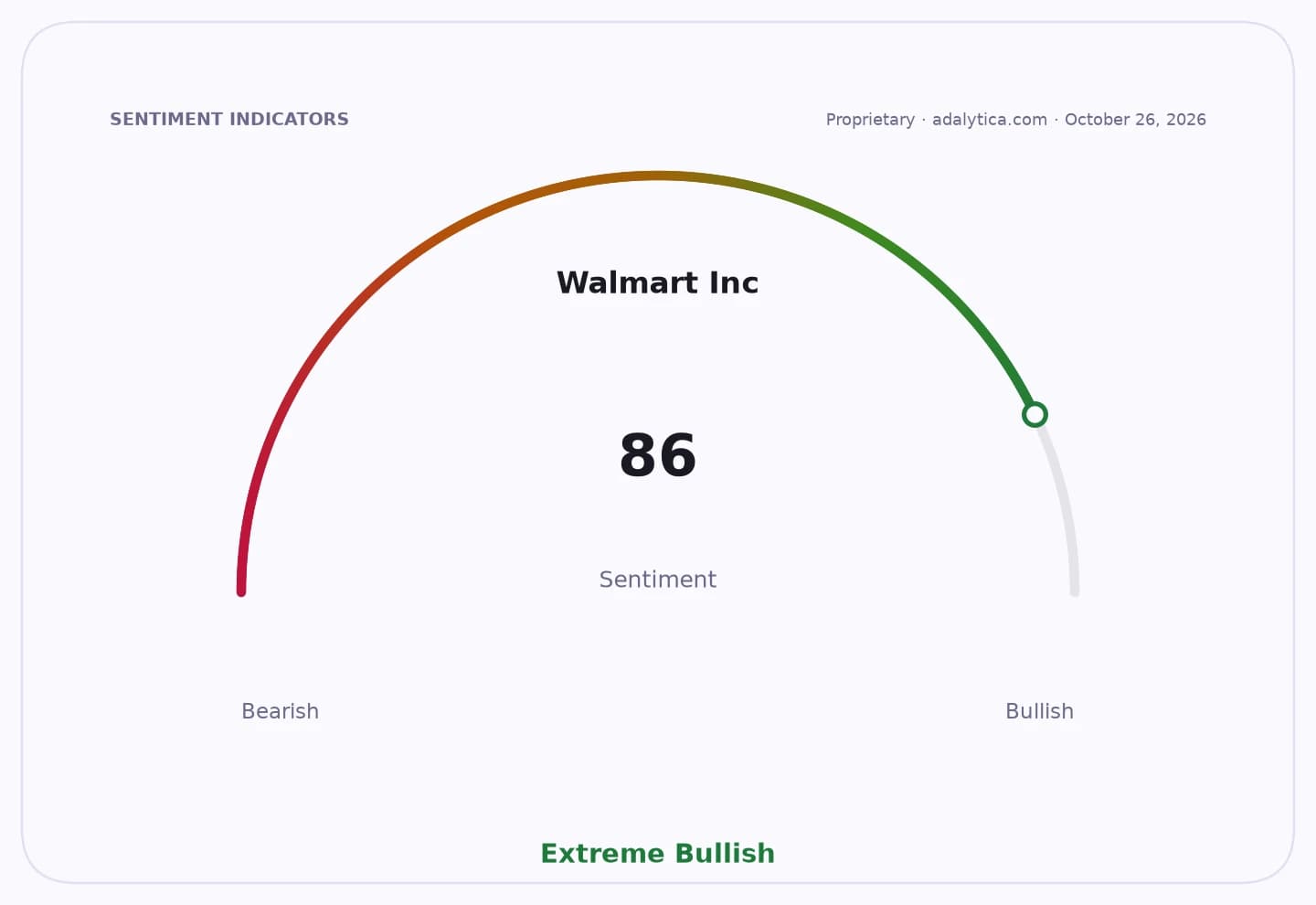
Walmart shares have also been trading with strong technical momentum, with the stock well above its 50-day moving average and its 200-day moving average, while RSI readings have been elevated. That suggests the market is already rewarding the company’s ability to keep finding growth levers beyond plain-vanilla discount retail. Adalytica’s Walmart earnings sentiment is in “Extreme Greed,” while consumer spending sentiment is also at “Extreme Greed,” underscoring how investors are leaning toward businesses that can convert resilient household spending into recurring sales.
There are still risks. Rapid expansion can strain a young supplier’s operations, and consumers can move on quickly if quality slips. Walmart also faces broader scrutiny over how large companies use customer data and pricing power, which could eventually affect retailer trust. But for long-term investors, the core story remains attractive: Walmart’s size is not just about lower prices, it is about being the platform where smaller brands can become household names.
If the beignet mix proves it can hold its place on shelves, that is good news for the entrepreneur, good news for Walmart and a useful reminder to investors that scale still wins in retail. This is the kind of development worth watching for years, not days.
| Entity | Gains | Losses |
|---|---|---|
| Black-owned beignet brand | ▲National exposure | ▼Local-only limits |
| Walmart | ▲Fresh products, traffic | ▼Supplier onboarding risk |
| Consumers | ▲More choice | ▼Possible quality inconsistency |
| Smaller rivals | ▲Category pressure | ▼Shelf-space competition |