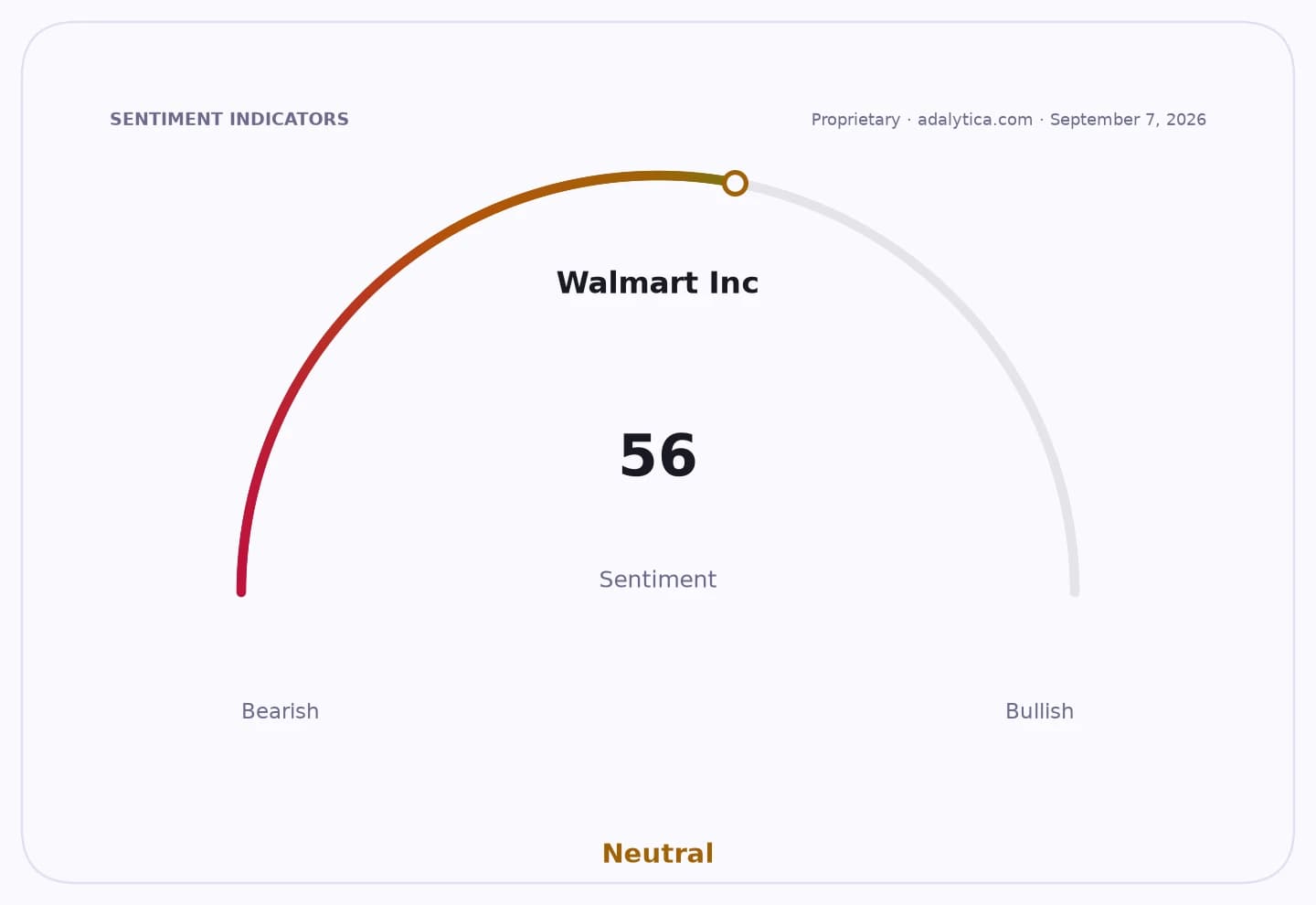
Walmart is emerging as a beneficiary of budget-conscious clothing demand as shoppers gravitate toward cheaper basics, while Nike remains under pressure from a tougher spending backdrop and a weaker premium-sportswear trade.
Walmart benefits as shoppers buy cheaper athletic basics
The setup matters because apparel is turning into a value-versus-brand story. A Sam’s Club purchase of two wicking athletic shirts for $26 captures the consumer pivot toward low-price, functional gear, a trend that favors Walmart’s scale and private-label reach and works against higher-priced rivals trying to defend margins.
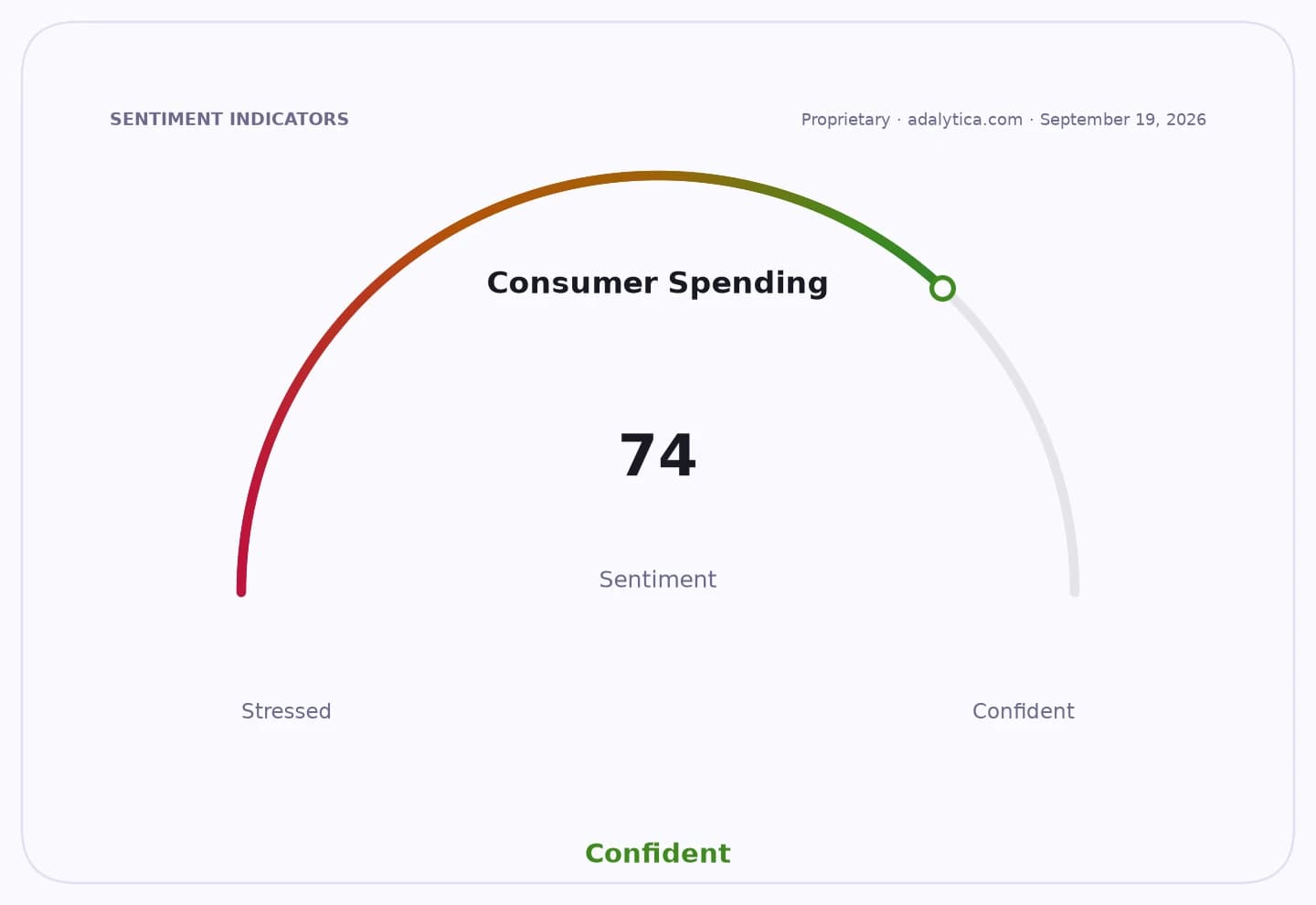
Adalytica’s Consumer Spending Sentiment gauge sits at 26, in “Fear,” with awareness at 15, in “Extreme Fear,” underscoring how cautious households remain. That environment tends to reward retailers that can hold down ticket sizes and offer bulk or multipack bargains, especially in discretionary basics such as sportswear, socks and T-shirts.
Walmart shares were last at $107.14, down modestly in recent trading but still well above the 50-day moving average of $110.67-111.05 range shown in the data, while the stock remains below the 200-day moving average near $118. The recent pullback follows a strong run earlier this year, when the stock reached $131.46.
Nike, by contrast, is still trying to stabilize after a prolonged selloff. The stock traded at $38.40, far below its 50-day moving average of about $41.10 and its 200-day moving average near $50.40, reflecting investor concern that shoppers are trading down and that pricing power is thinner in branded athletic apparel.
That dynamic is also visible in the technicals. Walmart’s 14-day RSI is 36.7, suggesting the stock has cooled after a strong advance, while Nike’s RSI at 48.4 shows neither obvious strength nor a full capitulation. Still, Nike’s share price is down sharply from above $60 earlier in the period, while Walmart has held up far better.
For investors, the trade is straightforward: discount and club-format retailers look better positioned if consumers keep stretching budgets, while premium sportswear names may need stronger product cycles, sharper promotions or improved China and U.S. demand to reaccelerate growth.
The next catalyst is the consumer backdrop itself, along with any fresh read on retail apparel demand and holiday pricing. If shoppers keep chasing low-cost athletic basics, Walmart and its warehouse-club model should keep gaining share; if spending firms, Nike may get room to rebuild pricing and sell-through.
| Entity | Gains | Losses |
|---|---|---|
| Walmart | ▲Value apparel demand | ▼Higher-margin premium rivals |
| Nike | ▲Brand strength if demand recovers | ▼Trading-down shoppers |
| Consumers | ▲Lower-priced athletic basics | ▼Premium pricing |
| Retail competitors | ▲Category volume growth | ▼Margin pressure |