Walmart’s latest product withdrawals underscore the operational and liability risks that come with selling millions of low-cost consumer goods across stores and online, with recalls spanning kitchen, bedroom and outdoor items that could cause serious injury or fire.
Walmart Recalls 4.4 Million Grill Brushes
The U.S. retailer, working with the Consumer Product Safety Commission and suppliers, has pulled more than 4.4 million Expert Grill brush products after metal bristles were found to detach and potentially be ingested, a hazard that could lead to internal injuries and surgery. It also removed about 4,000 Love to Dream portable sleep machines because of a lithium-ion battery overheating risk, and roughly 400 Golden Resale portable camping showers after heater components were found to ignite when used without enough water.
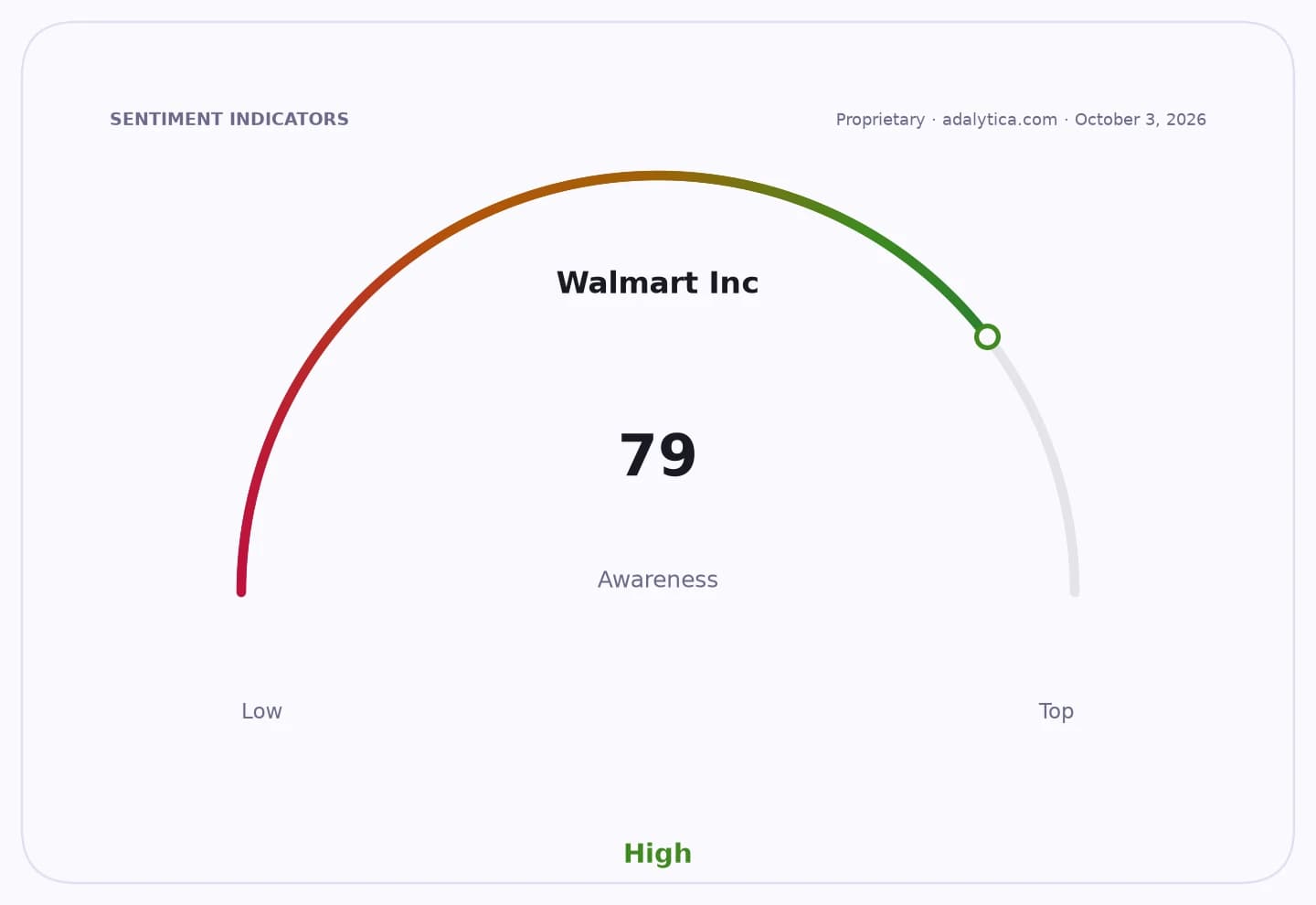
Sentiment IndicatorsⓘProprietary · adalytica.com · October 3, 2026
This is a snapshot — live sentiment, awareness and momentum for 130+ markets update continuously in the dashboard.Open AlphaPulse
No injuries have been reported in the cases cited so far, but the scale of the grill brush recall matters. A withdrawal of more than 4 million units signals not just a consumer safety issue but a potential hit to Walmart’s supplier oversight, recall logistics and brand trust in a category where the company competes on convenience and price rather than premium margins. For investors, the direct financial impact is likely limited, yet the episode adds to the steady background risk around shrink, quality control and product liability that is embedded in Walmart’s vast general merchandise and grocery ecosystem.
The recalls also come at a time when food and household safety scrutiny is already elevated for big-box retailers. Walmart has recently faced separate recall attention tied to frozen pasta products over possible listeria contamination and to frozen berries linked to an E. coli outbreak, reinforcing the fact that the retailer’s scale magnifies even isolated failures. When a company handles such a wide assortment of private-label and third-party goods, the economic cost is not just the replacement of a defective item but the administrative drag of notices, returns, supplier disputes and possible regulatory follow-up.
For shareholders, the immediate question is not whether these individual items will move earnings — they will not — but whether recurring recalls indicate broader execution pressure in a business that depends on stable margins and high trust. Walmart has been winning traffic on price and grocery strength, and its shares have held up better than the wider retail group, but product recalls can still weigh on sentiment if they become frequent enough to suggest weaker controls across the chain. The company will likely tighten vendor audits and safety checks, while consumers are being told to inspect bedrooms, bathrooms, patios and storage areas for the affected products.
| Entity | Gains | Losses |
|---|---|---|
| Consumers | ▲fewer injury risks | ▼inconvenience and product checks |
| Walmart | ▲limited damage control | ▼recall costs and trust risk |
| Suppliers | ▲chance to fix controls | ▼refund and liability exposure |
| Regulators | ▲stronger safety enforcement | ▼pressure to monitor more recalls |