Waygroup for Education Latam is turning workplace-risk training into an export business, expanding its AI- and simulation-based model into five countries as employers and certifiers look for cheaper, faster ways to prove workers can do the job safely.
Waygroup for Education Latam expands training abroad
The Colombian startup, founded by Diego Fernando Ramírez after nearly a decade in occupational-risk firms, says it has already trained more than 750,000 people and worked with about 700 institutions across Colombia, Mexico, Chile, Argentina, Peru and Spain. It is now targeting 1 million Latin Americans and pushing deeper into Mexico, Chile, Peru, Argentina, Guatemala, the U.S. and Spain.
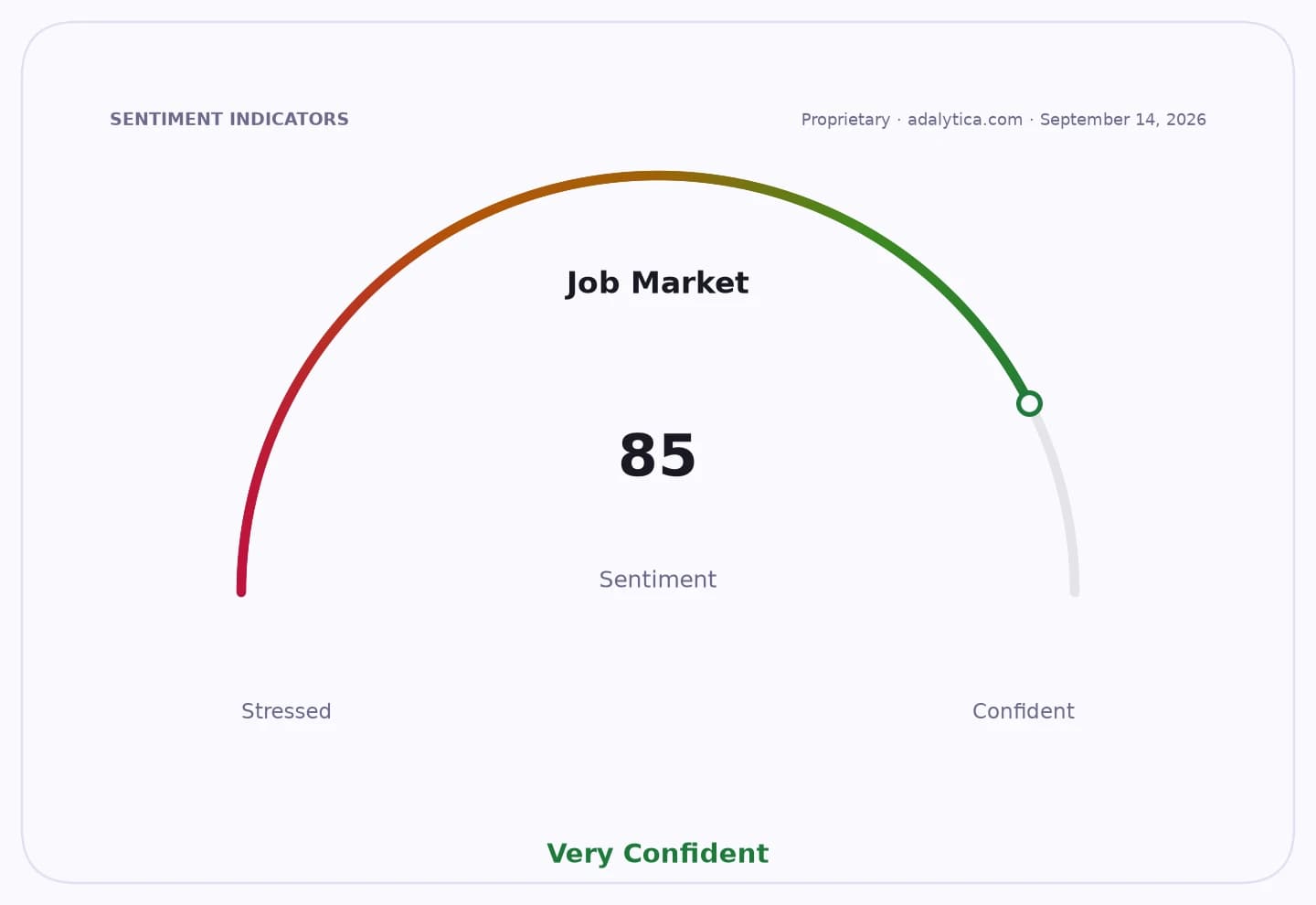
Sentiment IndicatorsⓘProprietary · adalytica.com · September 9, 2026
This is a snapshot — live sentiment, awareness and momentum for 130+ markets update continuously in the dashboard.Open AlphaPulse
That matters economically because occupational safety training is usually labor-intensive, difficult to standardize and expensive when it requires live equipment or hazardous environments. Waygroup is selling a layer of digital infrastructure that lets schools, companies and certification bodies simulate high-risk tasks, measure performance and issue evidence-based credentials instead of relying only on classroom instruction or subjective tests.
The company says it has completed projects worth about 40 billion pesos over the last two years. In Mexico, sales are near $1.5 million, while another $1 million has come from other markets over the past three years, showing the business is already generating cross-border revenue rather than just pilots.
Waygroup’s platform uses immersive education, haptic technology, telemetrics and artificial intelligence to train workers in tasks such as working at heights, confined spaces, heavy vehicle driving, firefighting and weapons handling. It sets a 90% approval threshold, a model Ramírez says is designed to certify “saber hacer” with data from the actual performance of the user.
The company’s expansion is being anchored in Mexico through an alliance with Grupo Alenia and CONOCER, the country’s national competence-certification body. Waygroup provides the simulation layer, Alenia handles deployment and CONOCER validates the skills under national standards, giving the startup a route into formal labor certification rather than informal corporate training.
The same platform is being adapted for schools and universities through STEAM-focused modules in chemistry, biology, physics, electricity and circuits. Waygroup says it has already run projects with the SENA, Universidad de Antioquia, the Escuela Naval and the ITM, which could help it market the product across Latin America’s public education and workforce-training systems.
For investors, the story is less about a one-off edtech contract than about whether Waygroup can scale a specialized, capital-intensive platform across regulated markets where safety compliance and workforce certification are recurring needs. The bigger test is execution: converting its regional footprint and institutional ties into repeatable revenue as it moves from Colombia into larger markets.
| Entity | Gains | Losses |
|---|---|---|
| Waygroup for Education Latam | ▲Regional revenue expansion | ▼Heavy capex and execution risk |
| Employers and certifiers | ▲Safer, measurable training | ▼Higher adoption changeover costs |
| Latin American workers | ▲Faster skills certification | ▼Less reliance on traditional training |
| Competing training providers | ▲— | ▼Pressure from digital simulation model |