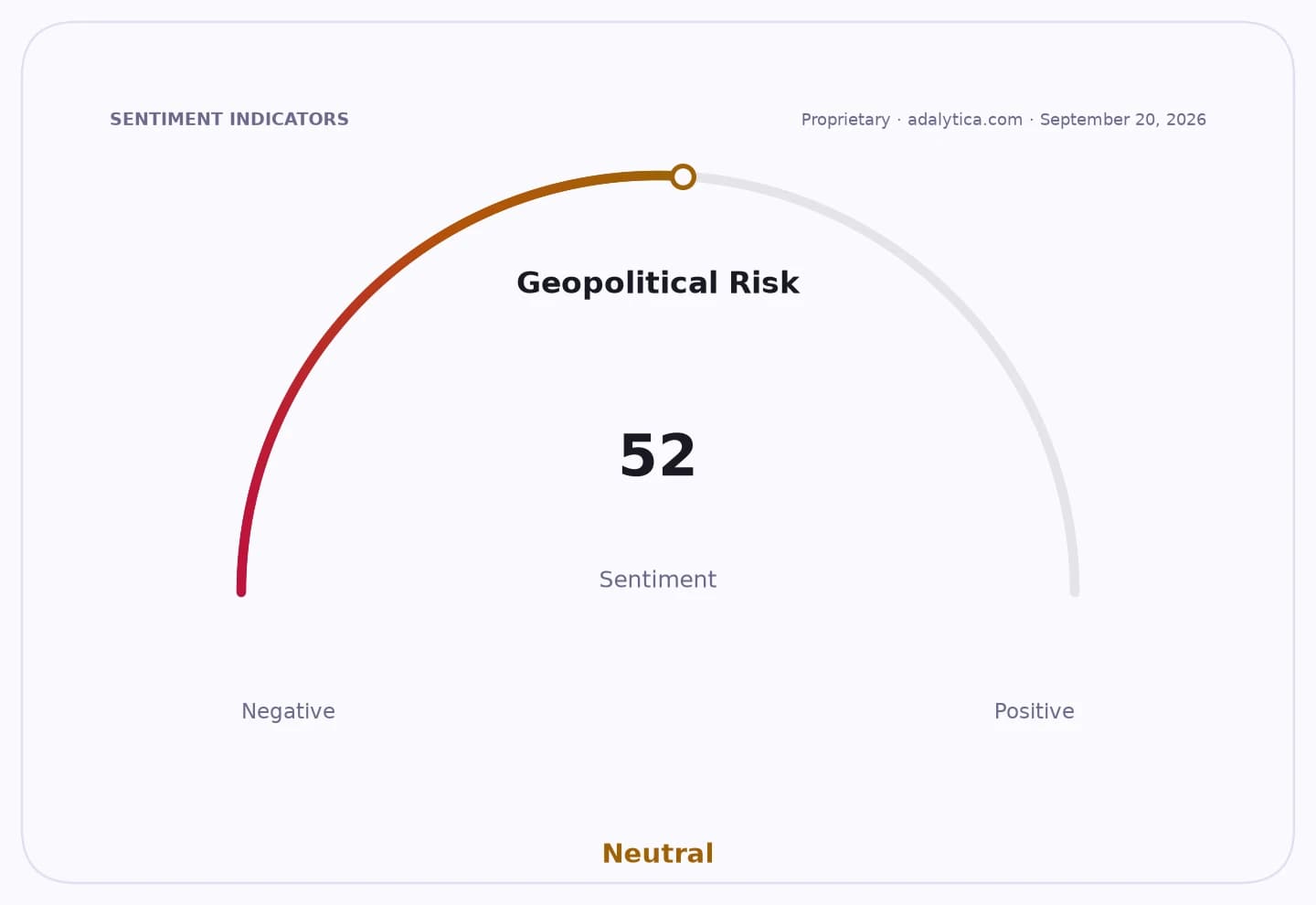
European wheat prices slipped as fading hopes for a diplomatic breakthrough in the Black Sea raised the odds that export flows from one of the world’s most important grain corridors will stay constrained for longer.
Wheat Falls as Black Sea Talks Lose Momentum
The move matters because wheat is not trading just on harvest fundamentals, but on the geopolitical premium attached to Ukrainian and Russian supply. When talks lose momentum, the market has to price in tighter availability, longer shipping disruptions and a bigger risk that importers in the Middle East, North Africa and Asia pay more for supply later in the year. That is why Black Sea headlines tend to show up quickly in wheat futures and in Europe’s physical grain market.
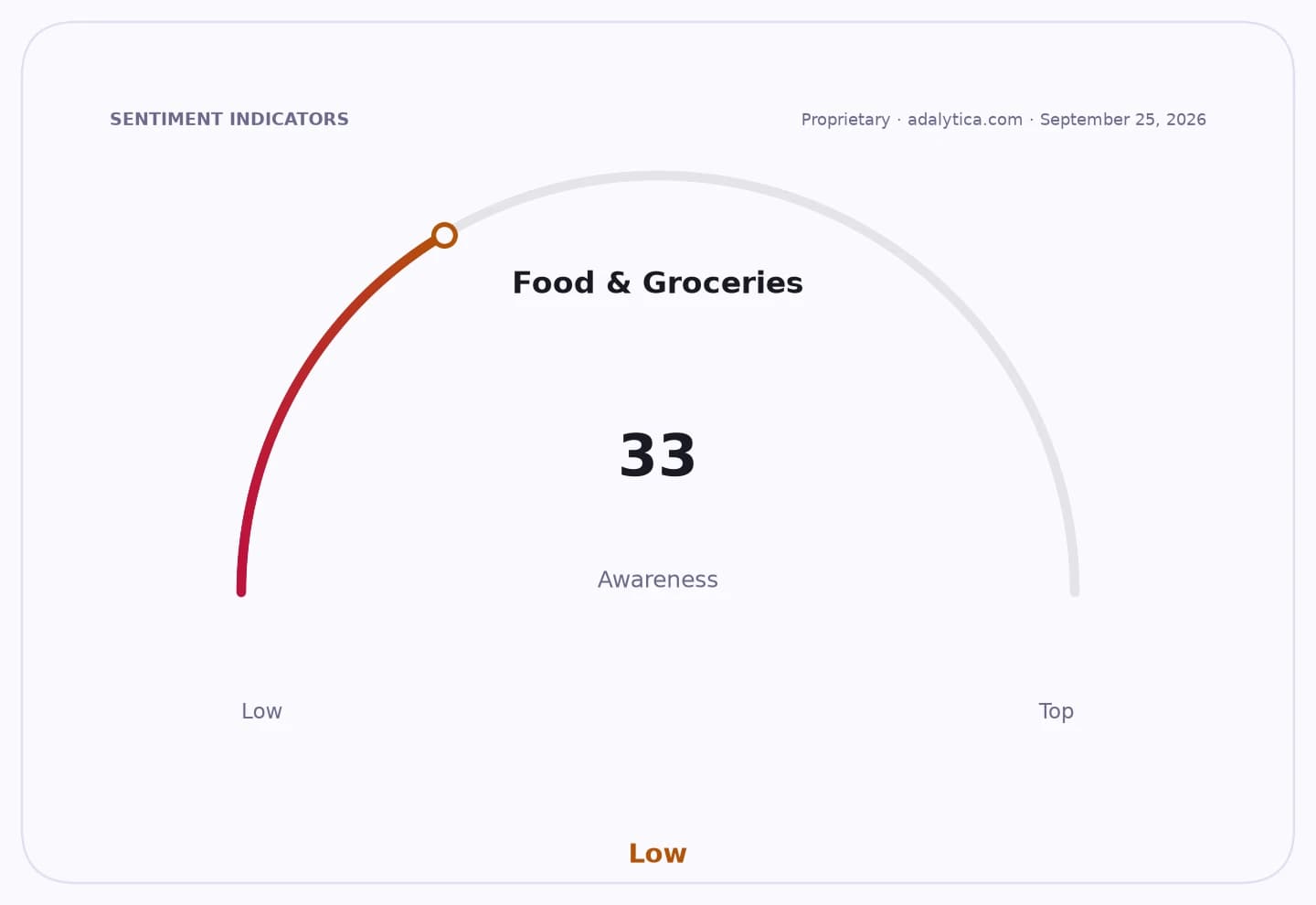
Sentiment IndicatorsⓘProprietary · adalytica.com · September 25, 2026
This is a snapshot — live sentiment, awareness and momentum for 130+ markets update continuously in the dashboard.Open AlphaPulse
Chicago wheat and European contracts were both softer in recent sessions on hopes that a deal could restore more regular shipments from the region, but the latest pullback in those expectations has taken some of that easing out of the market. The U.S. benchmark, CME wheat futures, fell to 687.5 cents a bushel on Sept. 25 from 708.5 cents two days earlier, while the European benchmark on Euronext eased to 21.72 euros a tonne from 22.25 euros over the same period. Even with the retreat, both contracts remain well above their longer-term averages, reflecting a market that is still pricing geopolitical risk rather than a comfortable supply backdrop.
For investors, the significance is twofold. First, sustained uncertainty around the Black Sea can keep global wheat prices supported even as harvests improve elsewhere, which benefits producers and traders with export exposure. Second, it complicates inflation expectations for food and staple goods, especially in economies that rely heavily on imported grain. A renewed rise in wheat would also feed into broader agricultural commodities, support margin pressure for flour millers and food processors, and keep currency-sensitive importers under strain.
Technical gauges are consistent with a market that has cooled from overbought levels but has not broken down. The U.S. wheat contract is still trading above its 200-day moving average, though its relative strength index has slipped from overbought territory into the low-40s and the MACD has weakened, suggesting the latest rally is losing momentum. Euronext wheat shows a similar pattern: prices remain above both the 50-day and 200-day moving averages, but the RSI has fallen to the high-20s, pointing to a sharp recent correction after an earlier spike.
The broader narrative is that wheat is again being pulled between two opposing forces: better crop supply and harvest progress on one side, and geopolitical fragility in the Black Sea on the other. Traders had been leaning toward a diplomatic easing that could unlock more exports and cap prices, but that thesis is now less convincing. Until there is clearer evidence of a durable corridor for shipments, the market is likely to keep a risk premium in place, leaving end users exposed and keeping wheat one of the more policy-sensitive agricultural contracts.
| Entity | Gains | Losses |
|---|---|---|
| Wheat exporters | ▲Higher price support | ▼Easier volume growth |
| Importers / millers | ▲Softer procurement only if diplomacy improves | ▼Higher input costs |
| U.S. and Euronext wheat longs | ▲Geopolitical premium | ▼Pullback if talks revive |
| Black Sea consumers | ▲Potential relief from lower prices | ▼Supply uncertainty and inflation pressure |