Wheat prices steadied after a sharp run-up, with traders watching whether Ukraine war negotiations can ease the threat to Black Sea exports and calm a grain market that remains highly sensitive to geopolitics.
Wheat steadies as Ukraine talks weigh on Black Sea

The bounce in wheat comes after a pullback from recent highs, but the broader setup is still driven by the risk that fighting or failed diplomacy could keep supply from the Black Sea disrupted. That matters economically because the region remains one of the world’s most important wheat export corridors, and any prolonged uncertainty can quickly ripple into global food costs, millers’ margins and import bills for buyers across Europe, Asia and the Middle East.
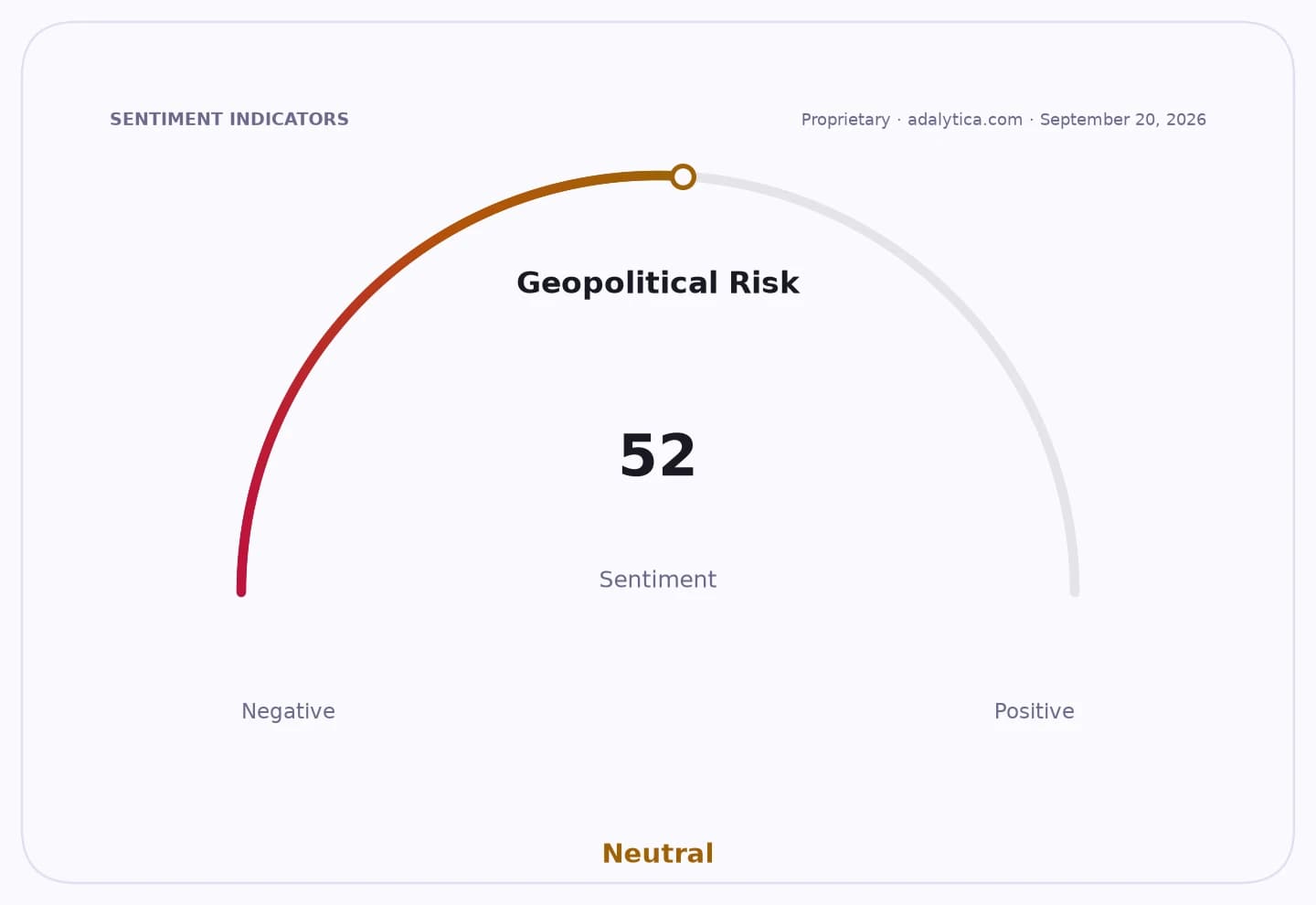
Sentiment IndicatorsⓘProprietary · adalytica.com · September 4, 2026
This is a snapshot — live sentiment, awareness and momentum for 130+ markets update continuously in the dashboard.Open AlphaPulse
The U.S.-listed Teucrium Wheat Fund, WEAT, ended Sept. 4 at $26.49, after closing as high as $27.86 on Sept. 2, when the fund touched levels that left it well above its 50-day moving average at $24.71. The latest reading still shows momentum intact: RSI is 63.6 and the fund remains above both the 50-day and 200-day moving averages, even after a two-day slide.
Corn and soybeans were also firmer on the same stretch, underscoring a broader grain market bid rather than a wheat-only move. Teucrium Corn Fund, CORN, finished Sept. 4 at $20.07, while the Teucrium Soybean Fund, SOYB, closed at $27.65, both near recent highs and still well above their long-term trend lines.
For investors, the key issue is whether wheat can hold these elevated levels or whether peace-talk headlines trigger a deeper unwind in a market already prone to abrupt swings. A deal that improves Black Sea shipping security would likely pressure prices and weigh on long positions, while any setback in negotiations could quickly revive the rally and keep food inflation risks alive.
The latest moves also come against a mixed currency backdrop, with U.S. dollar trade signals showing neutral sentiment but a sharp one-day and one-week improvement. A firmer dollar can add another layer of pressure to dollar-priced commodities for overseas buyers, though geopolitics remains the dominant driver in wheat for now.
Traders will be watching for fresh developments in Ukraine talks, weather updates from European growing regions and any new export-policy shifts from major suppliers, all of which could decide whether the recent pullback marks a pause or the start of a larger correction.
| Entity | Gains | Losses |
|---|---|---|
| Wheat importers | ▲Lower prices if talks ease supply risk | ▼Higher costs if the rally resumes |
| Black Sea exporters | ▲Stable shipping if negotiations progress | ▼Disruption risk if fighting continues |
| Long wheat holders | ▲Upside from renewed geopolitical stress | ▼Drawdown if peace talks deepen |
| Food buyers globally | ▲Relief from any supply normalization | ▼Inflation pressure if exports stay constrained |