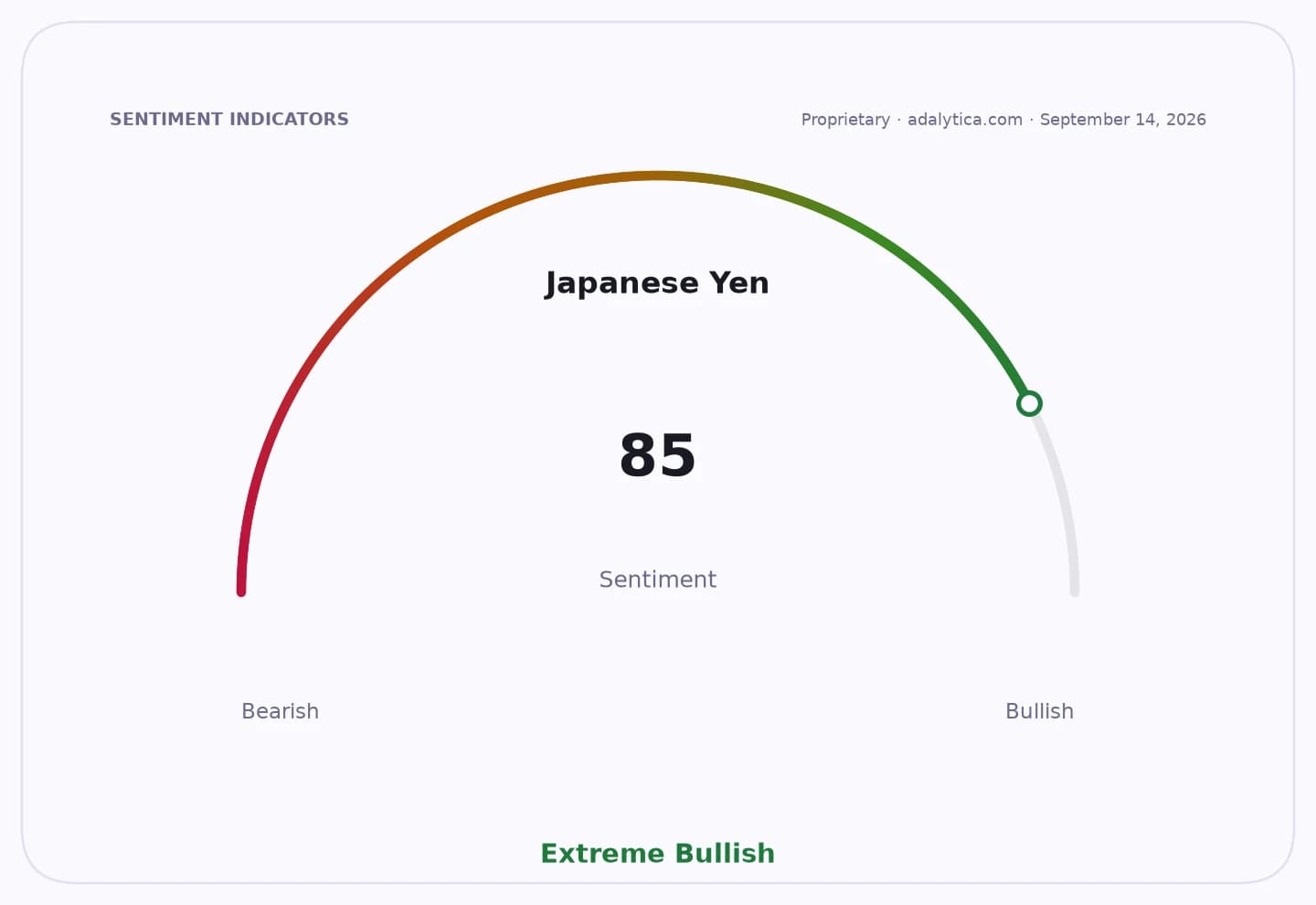
The yen jumped to around 155.20 per dollar in New York, its strongest level in a month, as signs the Federal Reserve may not need to keep tightening for long prompted traders to cut dollar bets and reassess how far the U.S.-Japan rate gap can stay stretched.
Yen rises to 155.20 as Fed peak bets build

The move matters because foreign exchange markets have been dominated this year by the wide spread between U.S. and Japanese interest rates, which encouraged carry trades against the yen and kept import costs elevated for Japan. When that gap begins to narrow, even modestly, the currency can snap higher quickly, forcing leveraged positions to unwind and raising the odds of official action from Tokyo.
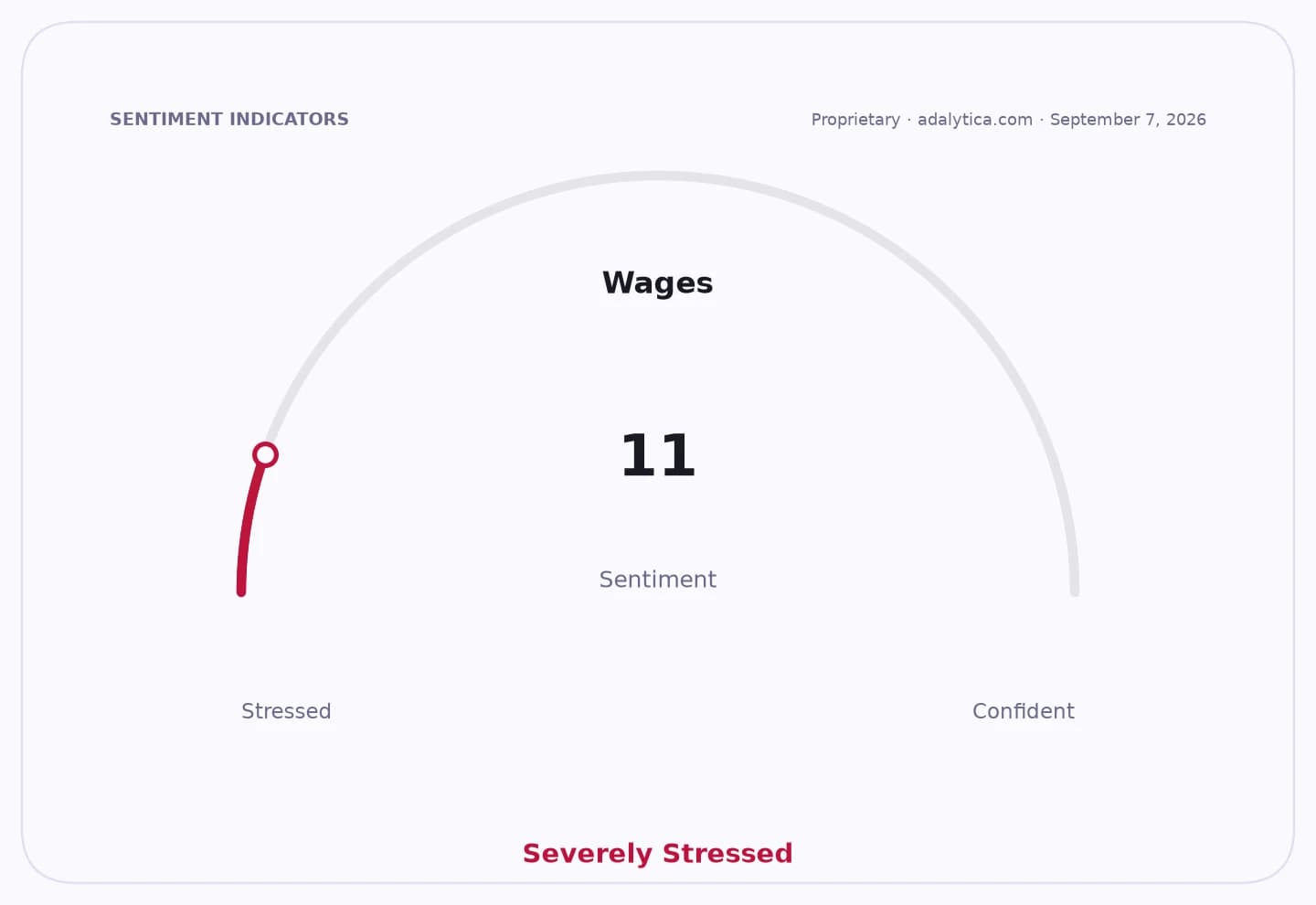
Sentiment IndicatorsⓘProprietary · adalytica.com · September 4, 2026
This is a snapshot — live sentiment, awareness and momentum for 130+ markets update continuously in the dashboard.Open AlphaPulse
Fed Governor Christopher Waller said recent data were finally showing signs of cooling inflation and that the central bank would not need to rush rate increases if that trend continued. That helped push U.S. Treasury yields lower at the margin and weakened the dollar broadly, with the New York yen rally sending the currency to its firmest point since the period immediately after the Japan-U.S. coordinated intervention in early August.
The dollar’s retreat was enough to lift Wall Street as well, with the Dow Jones Industrial Average closing up 624.16 points. U.S. rate expectations are still elevated by historical standards, but the market is now more sensitive to any hint that the Fed has peaked, especially after months in which the policy divergence with Japan was the key driver of the yen’s slide.
For Japan, a stronger currency is a double-edged development. It can ease pressure on households and firms facing imported inflation, but it also complicates the outlook for exporters and corporate profits that benefited from a weak yen. Japanese officials have already signaled that they are ready to intervene again if speculative moves become disorderly, which keeps traders wary of chasing the currency too aggressively lower.
Technical trading indicators point to a market still correcting rather than reversing outright. The yen dollar pair had been trending above its 50-day moving average, but the latest drop brought it back toward a more contested zone, while momentum readings have cooled from overbought levels. That suggests the latest move is being driven less by a clean policy shift than by a combination of easing U.S. yields, intervention risk and positioning pressure.
The key investor question is whether this is the start of a more durable yen recovery or just another violent squeeze in a market that has repeatedly punished one-sided bets. A sustained move below the 155 area would strengthen the case that the era of relentless yen weakness is becoming harder to defend; failure to hold the gains would leave the currency vulnerable again if the Fed stays restrictive longer than traders now expect.
| Entity | Gains | Losses |
|---|---|---|
| Yen bulls | ▲Higher currency value | ▼Short-yen carry trades |
| Japanese importers | ▲Lower import costs | ▼Exporters’ overseas earnings |
| BOJ hawks / intervention watchers | ▲More policy flexibility | ▼Speculative yen sellers |
| Dollar bulls | ▲Softer U.S. rate expectations hurt | ▼Broad dollar strength strategy |