YouTube’s decision to flag songs created primarily with generative AI is the clearest sign yet that artificial music is moving from novelty to platform risk, and that matters because it could reshape how streaming revenue is policed, how listeners trust playlists and how fast fake tracks can be monetized.
YouTube Adds AI Music Labels on YouTube Music

The labels, rolling out first in YouTube Music and expanding to the main YouTube app, will identify tracks where AI played a significant role in composition or vocals and let users tap through for more detail. For major platforms, that is not just a transparency feature. It is a defensive move against a fast-growing abuse vector that has already drawn criminal scrutiny: a man was recently sentenced in an $8 million fraud case involving AI-generated music streamed on platforms including YouTube Music.
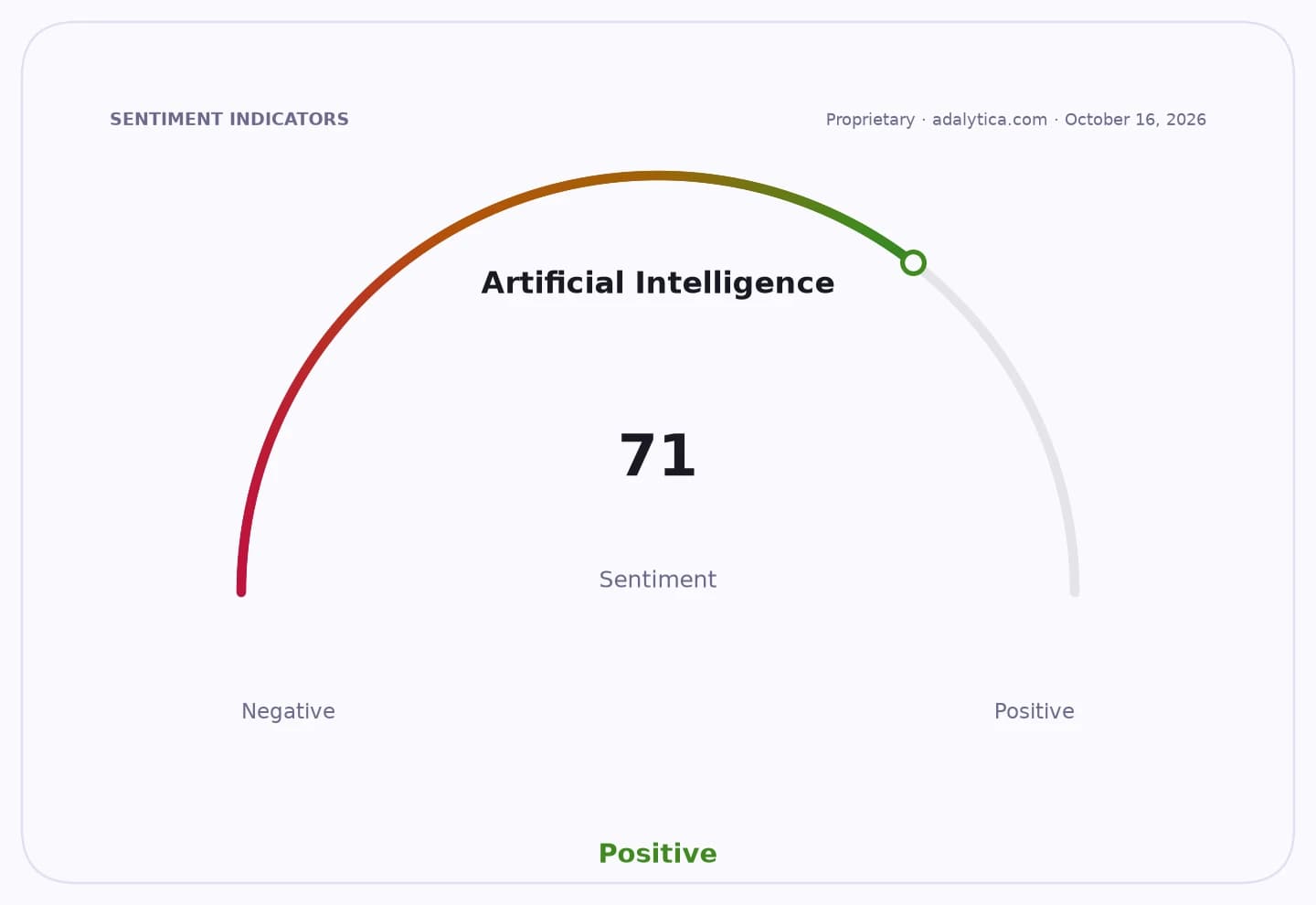
Sentiment IndicatorsⓘProprietary · adalytica.com · October 16, 2026
This is a snapshot — live sentiment, awareness and momentum for 130+ markets update continuously in the dashboard.Open AlphaPulse
That makes the announcement economically important for the entire digital audio ecosystem. Streaming services are paid largely by usage, and any system that can flood platforms with low-cost synthetic content risks siphoning revenue away from legitimate artists, distorting recommendation systems and inflating engagement with content that has little creative value. The label is a signal that platform operators now see generative AI music as a quality-control and fraud-prevention issue, not just a catalog-management problem.
For YouTube parent Alphabet, the move also shows how quickly AI governance is becoming part of product design. YouTube said it will rely on partner declarations, DDEX metadata and its own detection signals, and can label content even when creators do not disclose AI use. That combination should help blunt the worst abuses, but it also raises the compliance bar for music rights holders, distributors and independent uploaders that rely on frictionless delivery. In practice, the market is moving toward a world where AI provenance becomes a required attribute, not an optional disclosure.
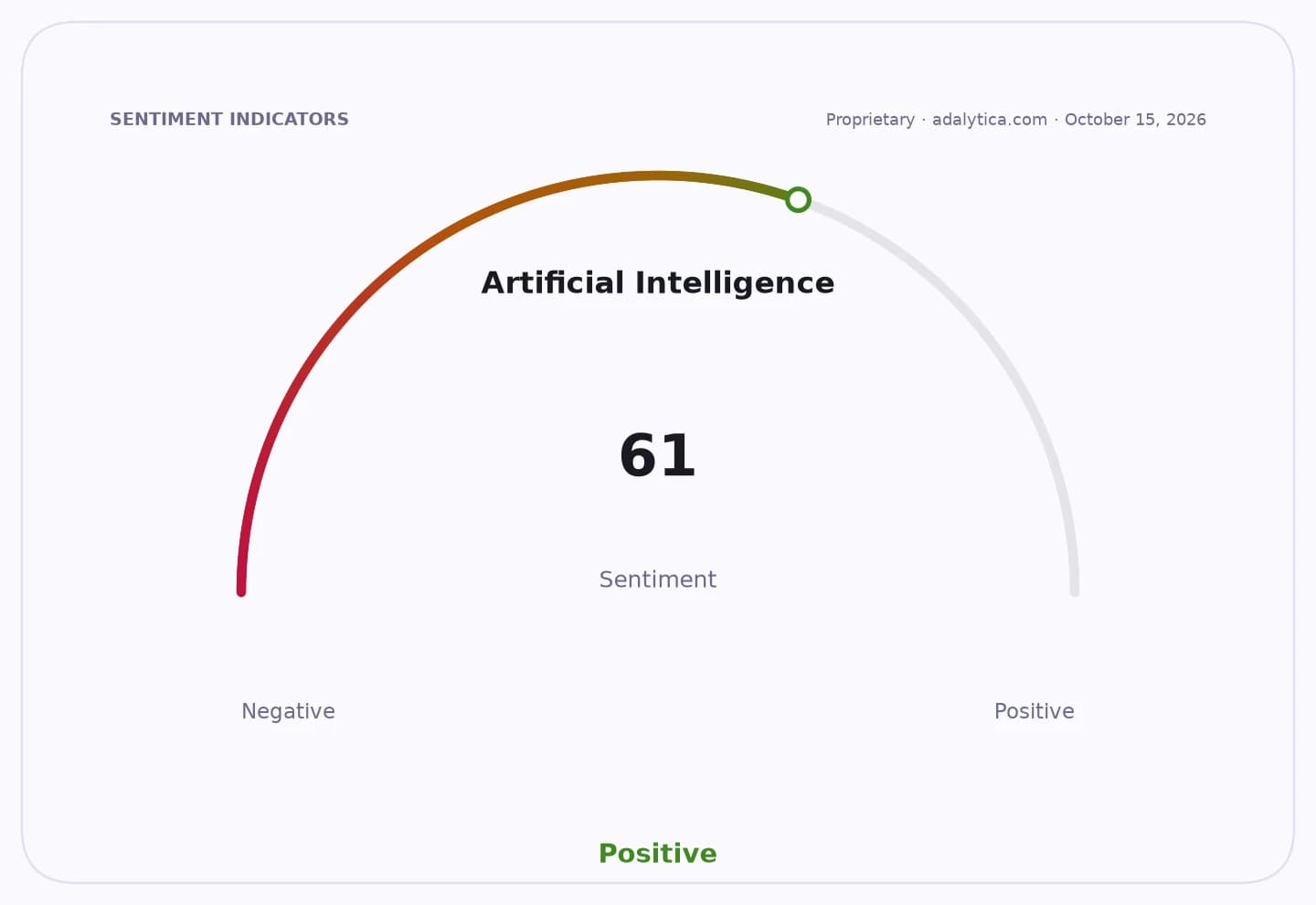
Artificial Intelligence — 30-day sentimentadalytica.com
Explore this data interactively — full history, time series and cross-market comparisons.Open AlphaPulse
Investors should care because the winners and losers are starting to separate. The platforms that can detect synthetic content without degrading user experience should gain credibility with users and regulators, while those that remain porous to spam and fraud face higher moderation costs and weaker trust. Spotify, which has already leaned heavily on AI for recommendations and personalization, is exposed to the same industry-wide problem even if it is not the one making this specific change. If synthetic audio continues to scale, the value shifts toward curation, verification and trusted distribution — the toll roads of streaming, not the open floodgates.
There is a second-order investment angle here too: generative AI is no longer confined to text, images and video. Music is becoming a test case for how digital platforms monetize AI while containing its abuse. That favors firms with large data sets, strong identity systems and the ability to cross-check metadata against internal detection tools. It also puts pressure on smaller content networks that depend on scale more than trust.
YouTube’s new labels will not solve fraud on their own, but they mark an inflection point. The market underestimates how quickly AI provenance is becoming a core infrastructure layer for media platforms — and the companies that can authenticate content at scale may end up with a durable competitive advantage. For investors, that means looking past the hype around AI-generated music and toward the businesses that control distribution, verification and monetization.
| Entity | Gains | Losses |
|---|---|---|
| YouTube / Alphabet | ▲stronger trust, better fraud controls | ▼higher moderation burden |
| Spotify | ▲push for better content integrity | ▼exposure to synthetic-stream abuse |
| Legitimate artists | ▲clearer attribution | ▼revenue dilution from fake tracks |
| AI music scammers | ▲less room to monetize | ▼detection and labeling risks |