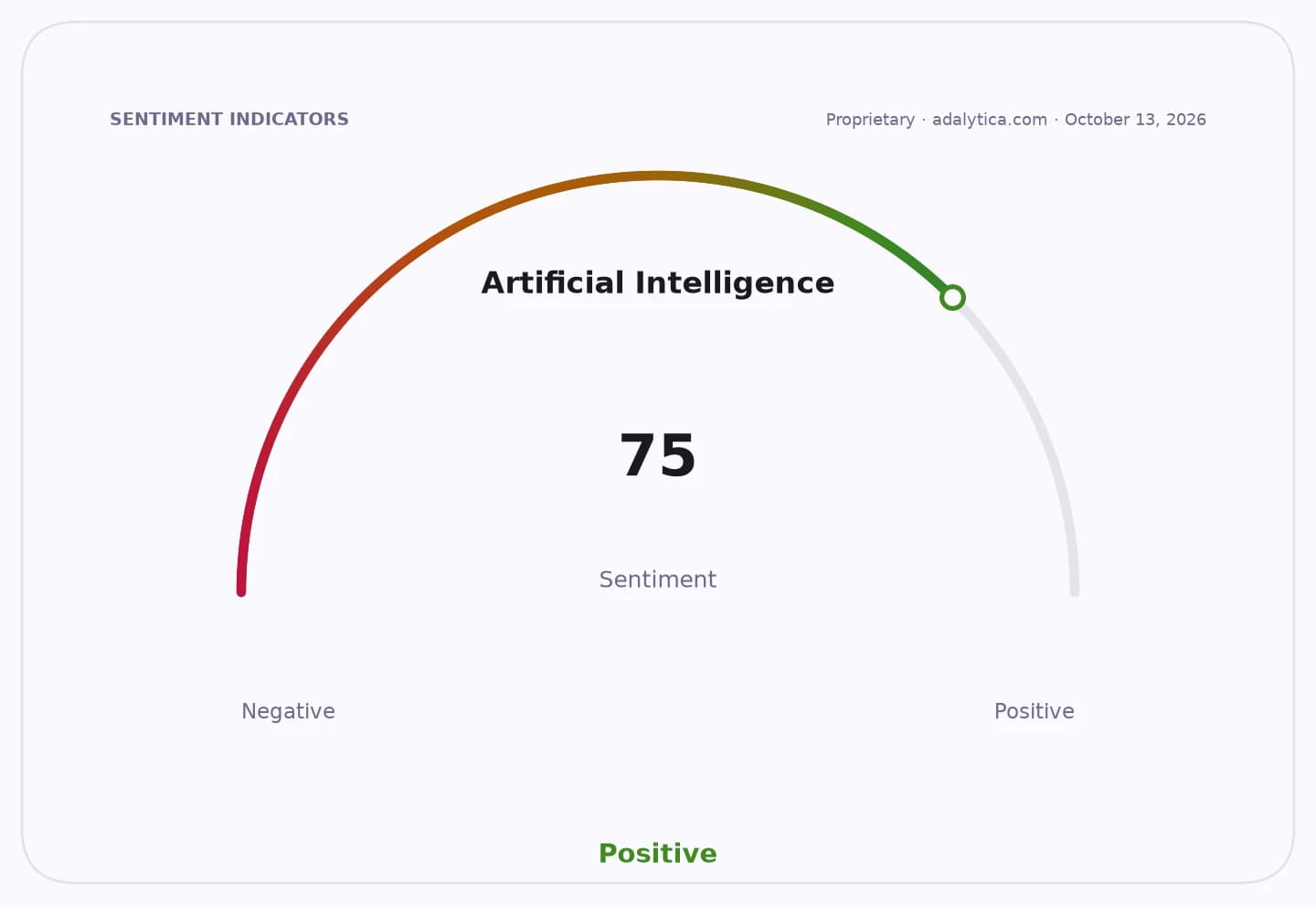
Content licensing deals for artificial intelligence can create a new revenue line for news organizations, but they do not solve the bigger problem for publishers: keeping readers attached to their own brands as AI systems become the main gateway to news.
AI licensing may boost news publishers but cut traffic
That matters because the economics of journalism are shifting from direct audience relationships to back-end supply contracts. If AI assistants increasingly summarize the day’s events without sending users to publisher websites, newspapers may be paid for their archives and live feeds while still losing the traffic, subscriptions and advertising that made those audiences valuable in the first place.
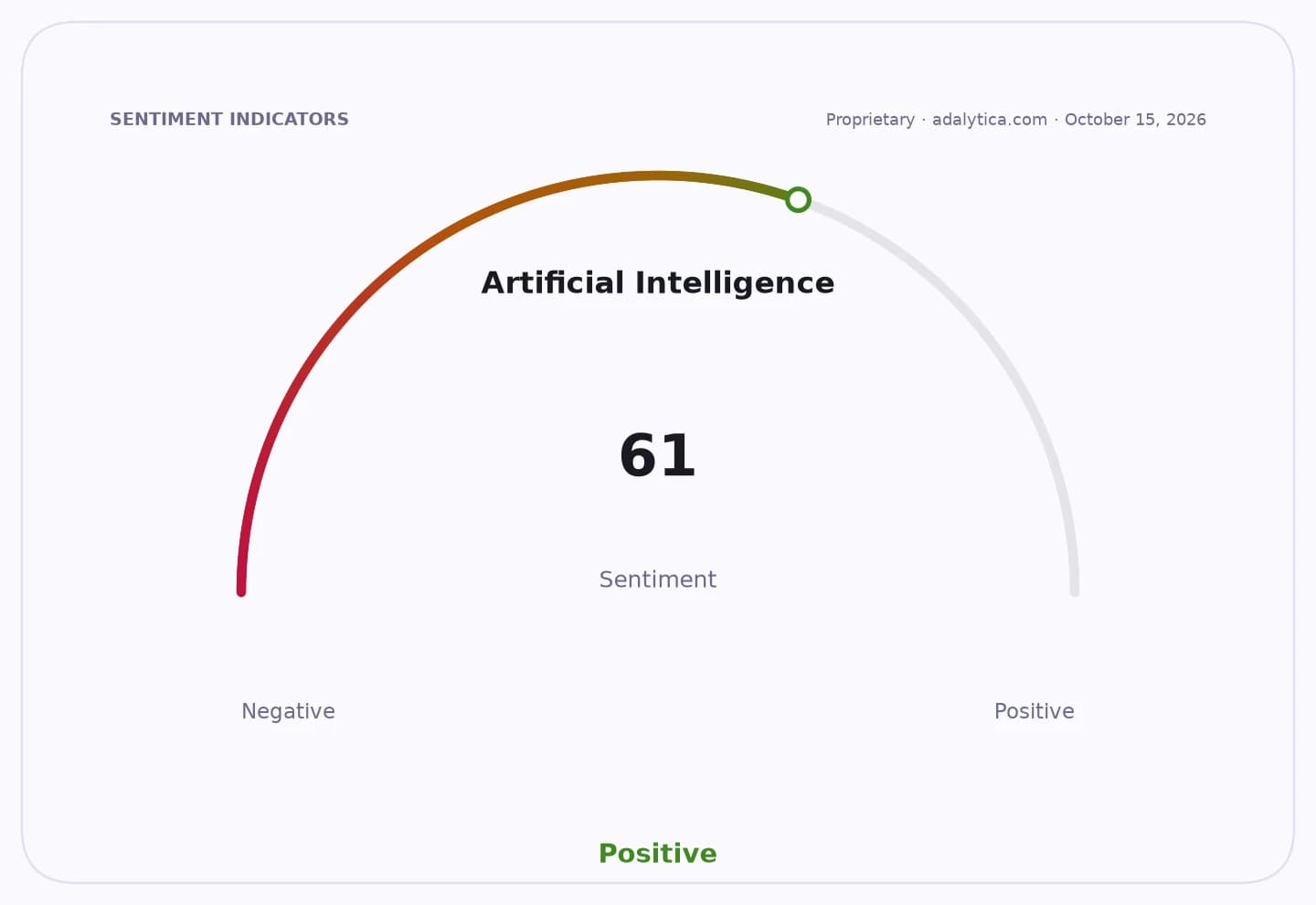
Sentiment IndicatorsⓘProprietary · adalytica.com · October 15, 2026
This is a snapshot — live sentiment, awareness and momentum for 130+ markets update continuously in the dashboard.Open AlphaPulse
The issue is structural rather than cyclical. Licensing can monetize articles that would otherwise be scraped or paraphrased for free, and for major outlets such as Reuters, The New York Times or the Financial Times, the content has clear commercial value to model makers seeking timely, reliable information. But the power balance is changing as AI controls the interface where users ask questions, compare sources and receive finished answers. In that model, the publisher becomes a supplier in the background, not the brand the reader remembers.
For investors, that is the key distinction. Licensing revenue can support margins in the near term, particularly for publishers with premium archives, real-time market coverage and differentiated journalism. Yet it may not be enough to offset pressure on direct traffic, which still supports subscriber growth, ad yields and customer data. The risk is that news organizations help train and improve products that absorb more of the value chain while leaving publishers with a lower-return utility role.
A more durable model would tie AI access to reader identity, not just content usage. Under that structure, a user could authenticate a paid Wall Street Journal account or another subscription inside an AI assistant, allowing the system to answer questions using content the user is already entitled to read while still naming the publisher prominently. That would preserve brand attribution, strengthen the reader relationship and create a path for upselling inside the AI interface rather than losing the user to it.
That approach also gives AI companies cleaner provenance and personalization, two problems they still need to solve at scale. Publishers bring trust, expertise and paid communities that cannot be replicated by raw text alone. But unless those assets remain visible to the end user, the industry risks repeating a familiar pattern: upstream monetization with downstream disintermediation.
For listed publishers, including The New York Times and News Corp, the near-term market question is whether licensing can supplement, rather than substitute for, subscription economics. The longer-term question is whether AI becomes a distribution partner or a replacement layer. The answer will determine not just revenue mix, but who owns the customer relationship in digital news.
| Entity | Gains | Losses |
|---|---|---|
| News publishers | ▲Licensing revenue | ▼Direct reader traffic |
| AI platforms | ▲Better training and answers | ▼None if licensing costs rise |
| Subscribers | ▲Easier access to paid content | ▼Less direct publisher engagement |
| NYT, NWSA holders | ▲Near-term monetization | ▼Long-term audience dilution |