Housing prices in Yucatán are set to rise as much as 4.5% as builders pass through higher material costs, even as the region’s residential market remains supported by steady demand from local buyers and a large share of out-of-state purchasers.
Yucatán Home Prices Seen Rising 4.5% on Costs
The increase matters because housing is one of the clearest transmission channels for inflation into the real economy: when construction inputs become more expensive, developers either squeeze margins or lift selling prices, affecting affordability, transaction volumes and the pace of new supply. In Yucatán, Mauricio Morales Greene, head of the local housing industry group Canadevi, said the market remains “healthy,” but acknowledged that inflation is still feeding through to home prices.
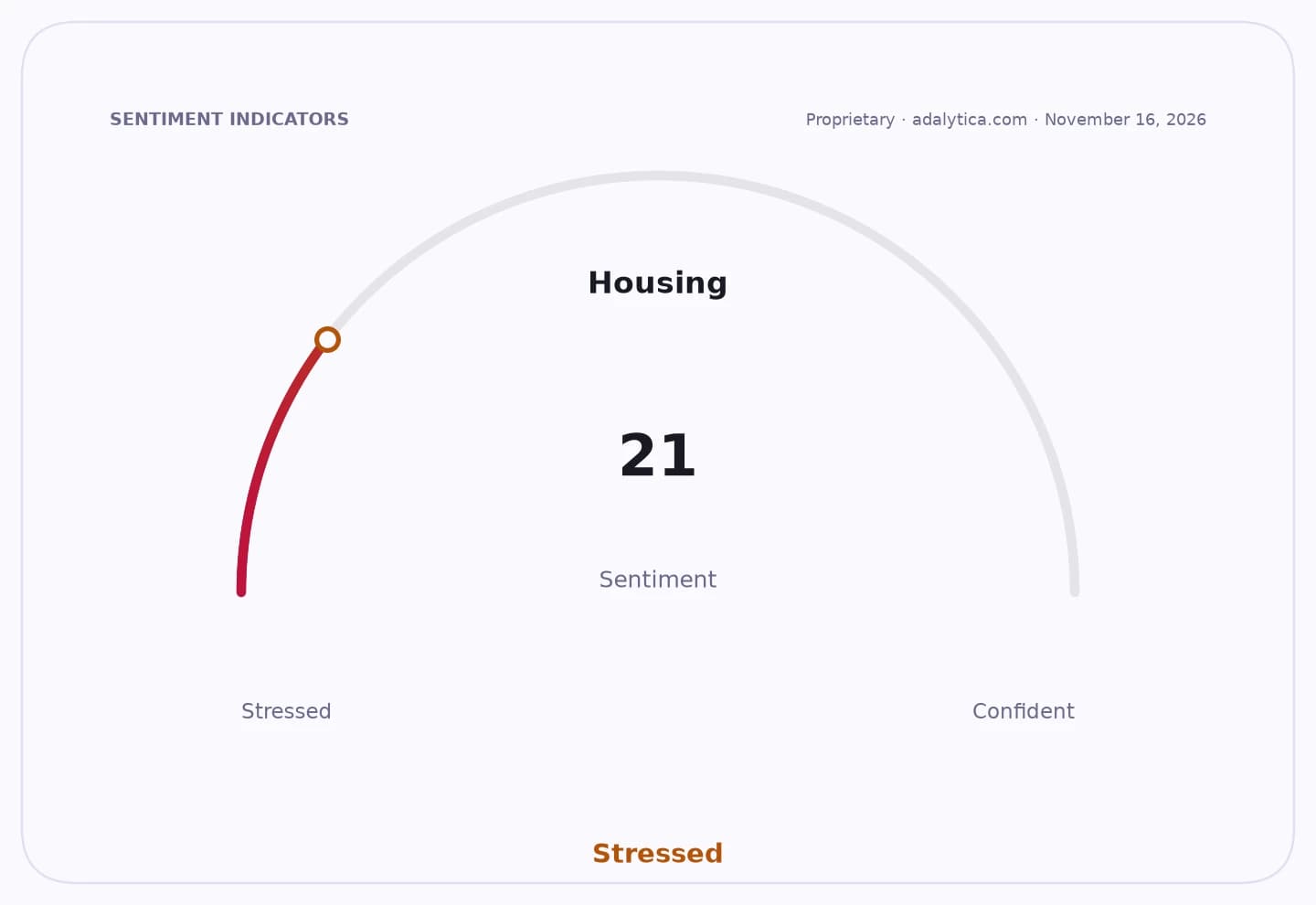
Sentiment Indicators
Morales Greene said the increase would be driven mainly by construction materials, adding that local sourcing has helped limit some of the pressure. He said prices have so far stayed within projected ranges, but that a 4% to 4.5% rise now looks likely. He also flagged a more complicated operating backdrop tied to global disruptions and weather-related uncertainty, which he said could ease only if conditions stabilize next year.
For investors, the message is twofold. On the one hand, modest price growth suggests builders may still have enough pricing power to preserve revenue even as costs rise. On the other, Yucatán’s housing market is not immune to affordability limits, especially in vertical residential projects, which Morales Greene said are selling more slowly than other formats. That could push capital toward lower-priced housing, horizontal developments and projects aligned with government housing programs rather than premium apartments.
The broader market structure also matters. Morales Greene said about 35% of buyers in Mérida come from other Mexican states or abroad, underscoring how migration, second-home demand and rental interest continue to support the market. He said the state sold about 7,000 economic homes this year at an average price of 640,000 pesos in Kanasín and Umán, while another wave of government-backed housing is expected to add supply in coming years. That should help absorb demand, but also raises the risk of a sharper re-pricing if supply expands faster than purchasing power.
Flooding and site selection are becoming a bigger part of the housing story as well. Morales Greene said developers are already including drainage, connectivity and green areas in new projects, while warning buyers to check permits, flood exposure and infrastructure before purchasing land, especially on speculative lots near the coast where fraud can be an issue. In a state where climate risk is increasingly visible, those factors may begin to influence valuations and development costs as much as inflation does.
For now, the Yucatán housing market still looks resilient, but the next leg of growth is likely to be defined less by a shortage of demand than by how well developers manage costs, infrastructure requirements and the rising risks tied to flooding and land speculation.
| Entity | Gains | Losses |
|---|---|---|
| Homebuilders in Yucatán | ▲Pass through higher costs | ▼Margin pressure from inflation |
| Buyers from other states | ▲Access to active market | ▼Higher entry prices |
| Lower-cost housing segment | ▲Policy support and demand | ▼Less upside in premium units |
| Speculative land sellers | ▲More interest in scarce plots | ▼Greater scrutiny of permits and flood risk |