A slowdown in Indonesia’s Rp 1.5 billion to Rp 3 billion housing segment is emerging as the clearest sign yet that higher prices and weaker consumer confidence are squeezing the middle- and upper-middle-class property market.
Indonesia housing sales slow in Rp1.5B+ segment
The immediate economic significance is that the housing market is no longer being held back only by financing conditions or construction costs. It is now being constrained by demand itself. Sulihin Widjaja, secretary general of the Indonesian Real Estate Broker Association, said sales of homes above Rp 1.5 billion had slowed sharply, with the steepest weakness coming from buyers who typically depend on larger discretionary budgets and investment income. He said transactions in the segment were “very slow,” and that overall property sales in 2026 could fall 30% to 40% from 2025.
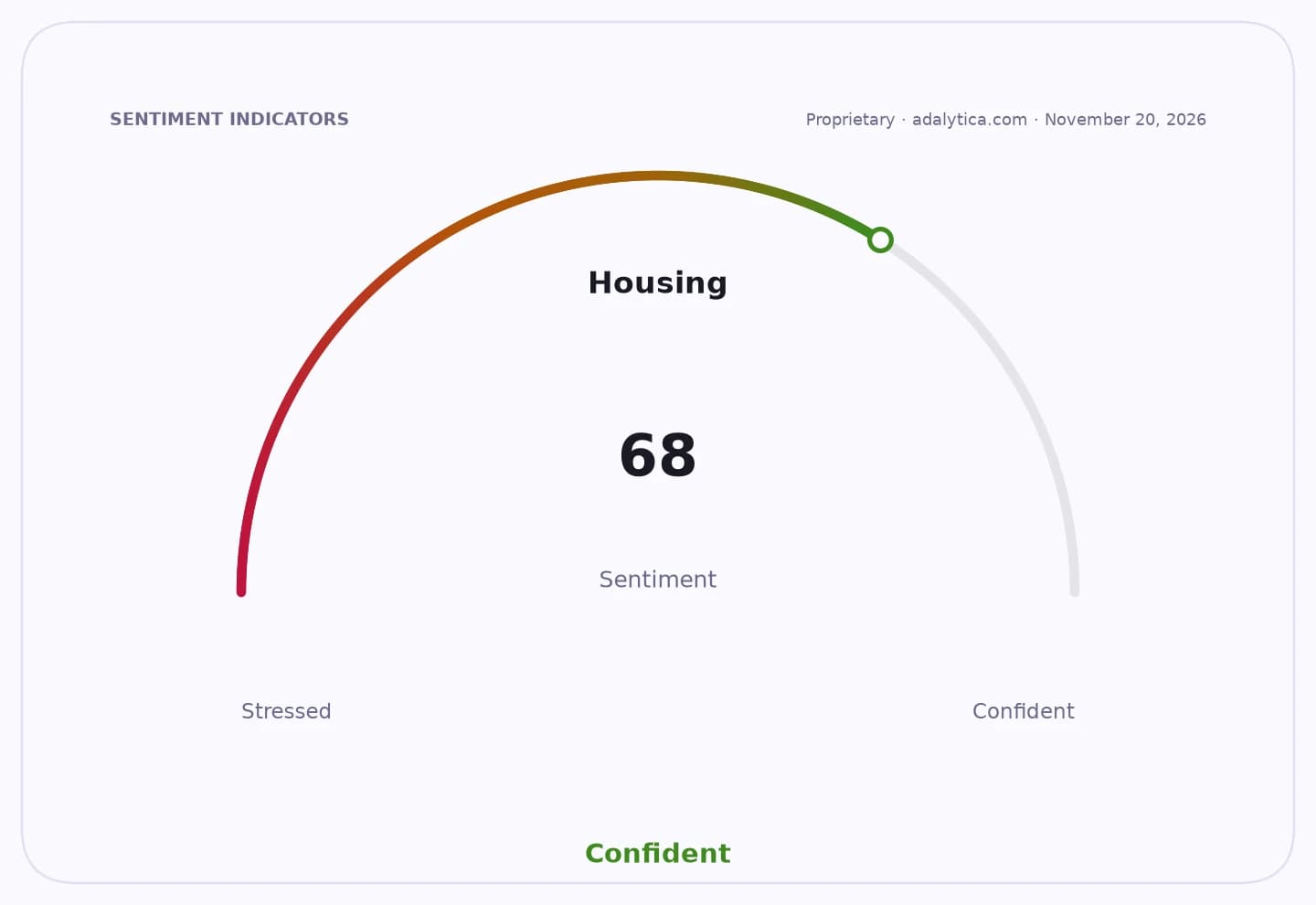
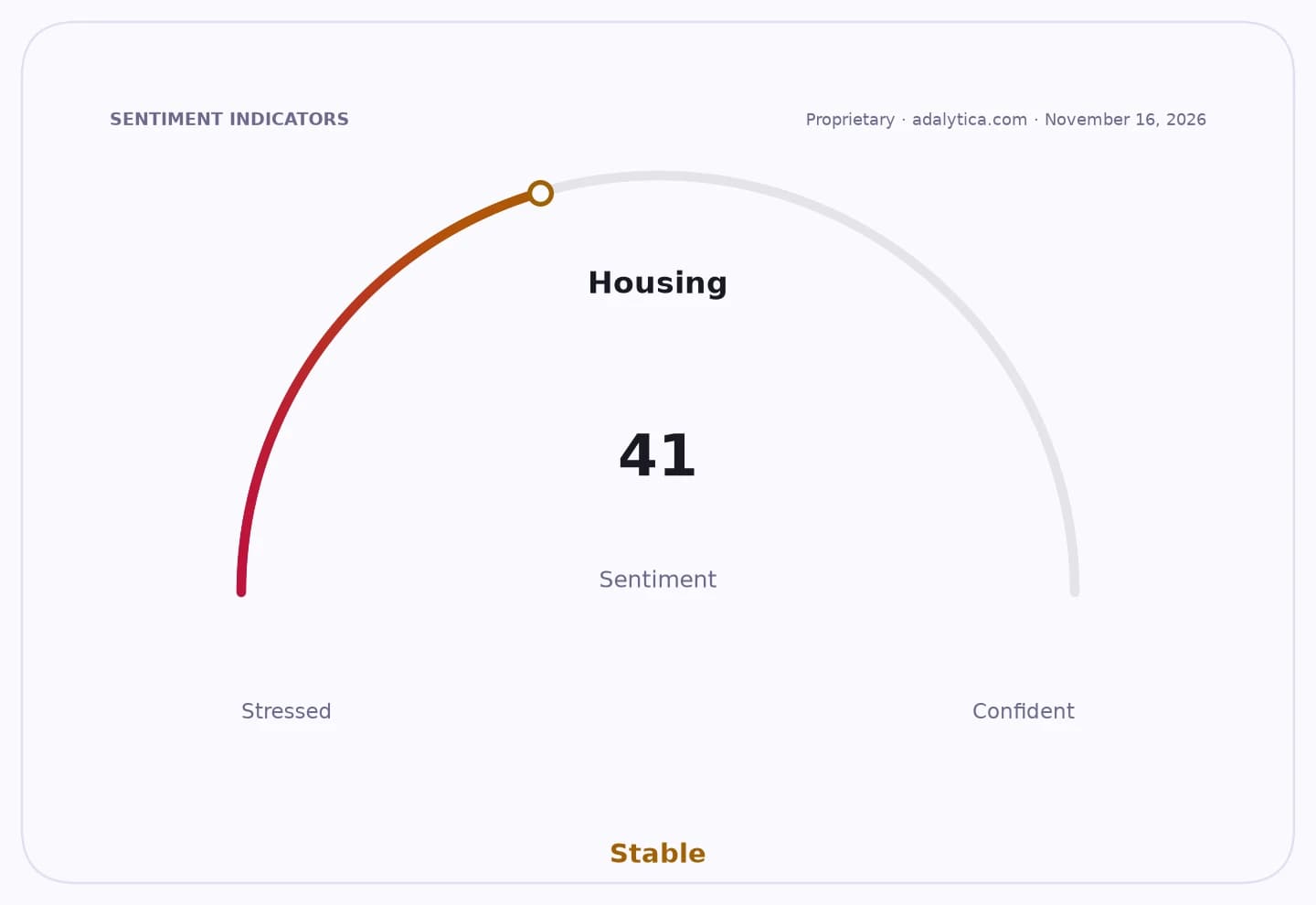
Sentiment Indicators
That matters because this price band has historically been a key profit pool for developers and brokers. Homes below Rp 500 million are still moving, helped by first-time buyers and state-backed mortgage programs such as FLPP, but the market above that level is far more sensitive to sentiment, wealth effects and the willingness of households to commit to big-ticket purchases. When that part of the market slows, it usually signals more than a temporary lull: it suggests a widening gap between headline economic activity and consumers’ actual capacity to spend.
The pressure is also consistent with broader conditions in the economy. Rising construction costs have pushed new home prices higher, while uncertainty around the outlook is making both buyers and investors more cautious. For households in the middle and upper-middle brackets, buying a home is often one of the largest balance-sheet decisions they make. If they delay, the impact ripples through developers, mortgage providers, brokers, furniture sellers and building-material suppliers.
For investors, the split in the market is as important as the decline itself. Affordable housing still has support from government policy and basic shelter demand, but the higher-end mass market is more exposed to cyclical weakness. That raises questions about which developers can defend volumes and margins. Companies with heavier exposure to homes priced above Rp 1.5 billion may face slower absorption, longer inventory turnover and more pricing pressure, while those concentrated in subsidized or lower-ticket housing may prove more resilient.
The market backdrop suggests the weakness is not simply seasonal. Technical indicators on housing-related stocks also point to a softer tone. RHP, a housing-related ticker in the supplied data, has retreated from recent highs, with its close slipping to 133.44 on Nov. 19 from 136.40 two days earlier, while LND fell to 2.83 from 3.36 over the same stretch. On conventional technical measures, RHP’s RSI has eased to 50.5, down from overbought levels earlier in the year, while LND’s RSI has dropped to 33.9, indicating a weaker short-term trend. That does not prove a fundamental downturn, but it does show investor caution is growing around the sector.
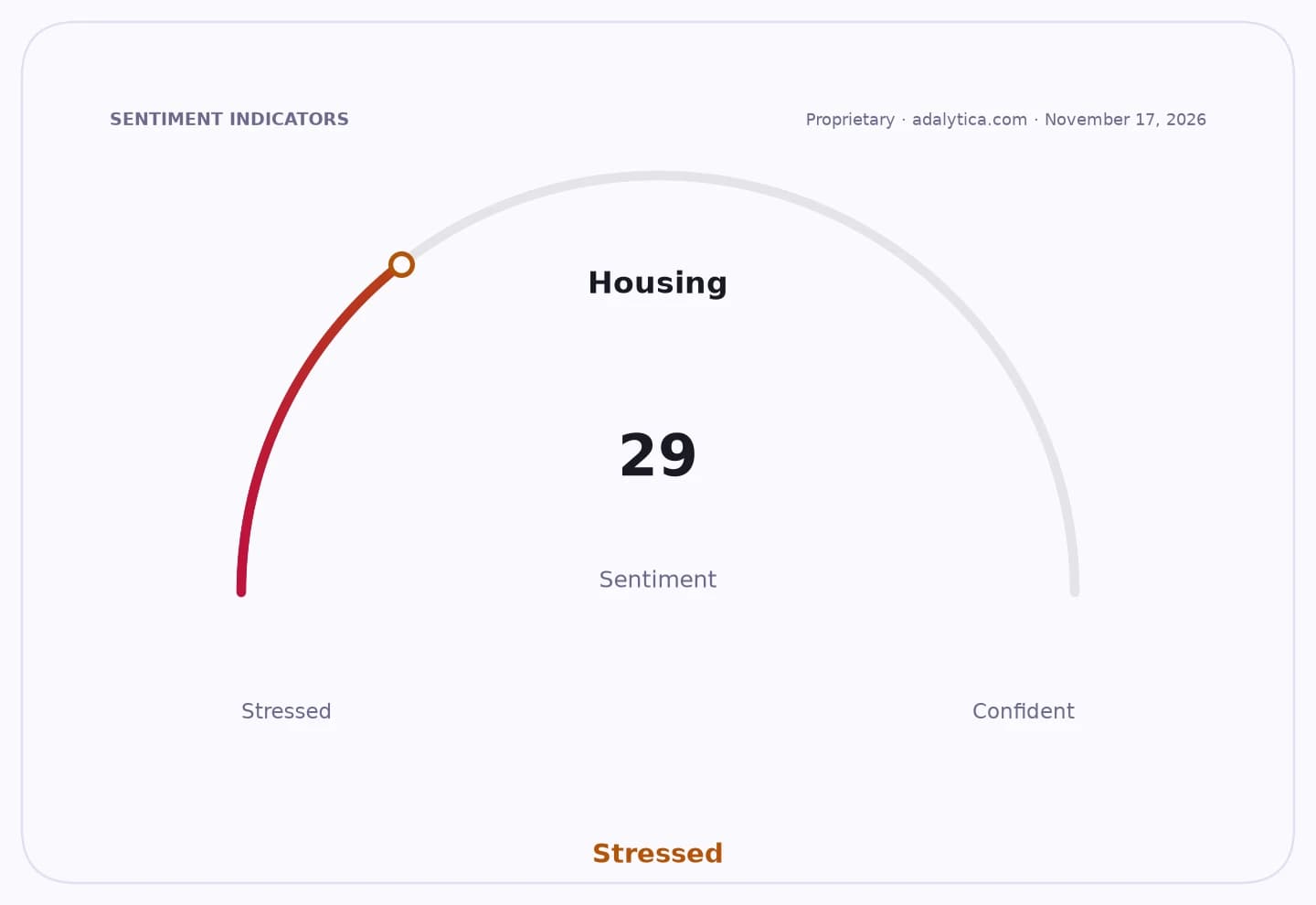
Adalytica’s Housing and Rent Inflation sentiment snapshot is still neutral, but the weaker seven-day trend and the more negative tone in CPI-related signals suggest the macro environment is not offering much relief. A weak dollar signal also matters for imported materials and pricing assumptions, even if that effect is indirect.
The key question now is whether the slowdown remains confined to the Rp 1.5 billion-plus segment or starts to spill into broader housing demand. If higher-end sales continue to weaken while lower-priced homes stay supported by policy, the market will become increasingly bifurcated. That would favor developers with affordable product pipelines and punish those reliant on affluent buyers, leaving the sector more dependent on government incentives than on organic demand recovery.
| Entity | Gains | Losses |
|---|---|---|
| Affordable housing buyers | ▲Lower-price inventory support | ▼Limited upside in premium segments |
| Developers focused on subsidized homes | ▲Stable demand base | ▼Margin expansion |
| Premium-home developers | ▲None | ▼Slower sales, longer inventory days |
| Brokers and agents | ▲Transaction flow in low-end market | ▼Commission income from Rp 1.5B+ homes |