Ukraine’s buyers are emerging as a meaningful force in Portugal’s property market, even as housing sentiment in the broader sector has collapsed to extreme fear and U.S. listed residential landlords trade on mixed technical footing. The shift matters because it shows how cross-border demand can keep selected resort and coastal markets supported even when local affordability, financing costs and policy uncertainty are weakening the wider housing cycle.
Ukraine Buyers Support Portugal Property Market
Housing
The headline change is not that housing is cheap — it is that foreign demand is still finding pockets of relative value in a market that remains structurally tight. For investors and developers, that can mean resilience in prime resort locations, but also a widening split between internationally marketed assets and the rest of the housing stock. For policymakers, it underscores how immigration, wealth preservation and mobility can reshape local prices even when domestic first-time buyer demand is under pressure.
Sentiment Indicators
In Australia, first-home buyer applications have fallen by more than a third as rate hikes and tax uncertainty erode affordability, highlighting the broader strain across housing markets when financing costs rise. That stands in contrast to the resilience seen in certain foreign-buyer corridors, where lifestyle demand, residency considerations and capital preservation can outweigh macro headwinds. The divergence is important: housing is no longer behaving as a single national market, but as a series of local asset classes with different buyers, price points and catalysts.
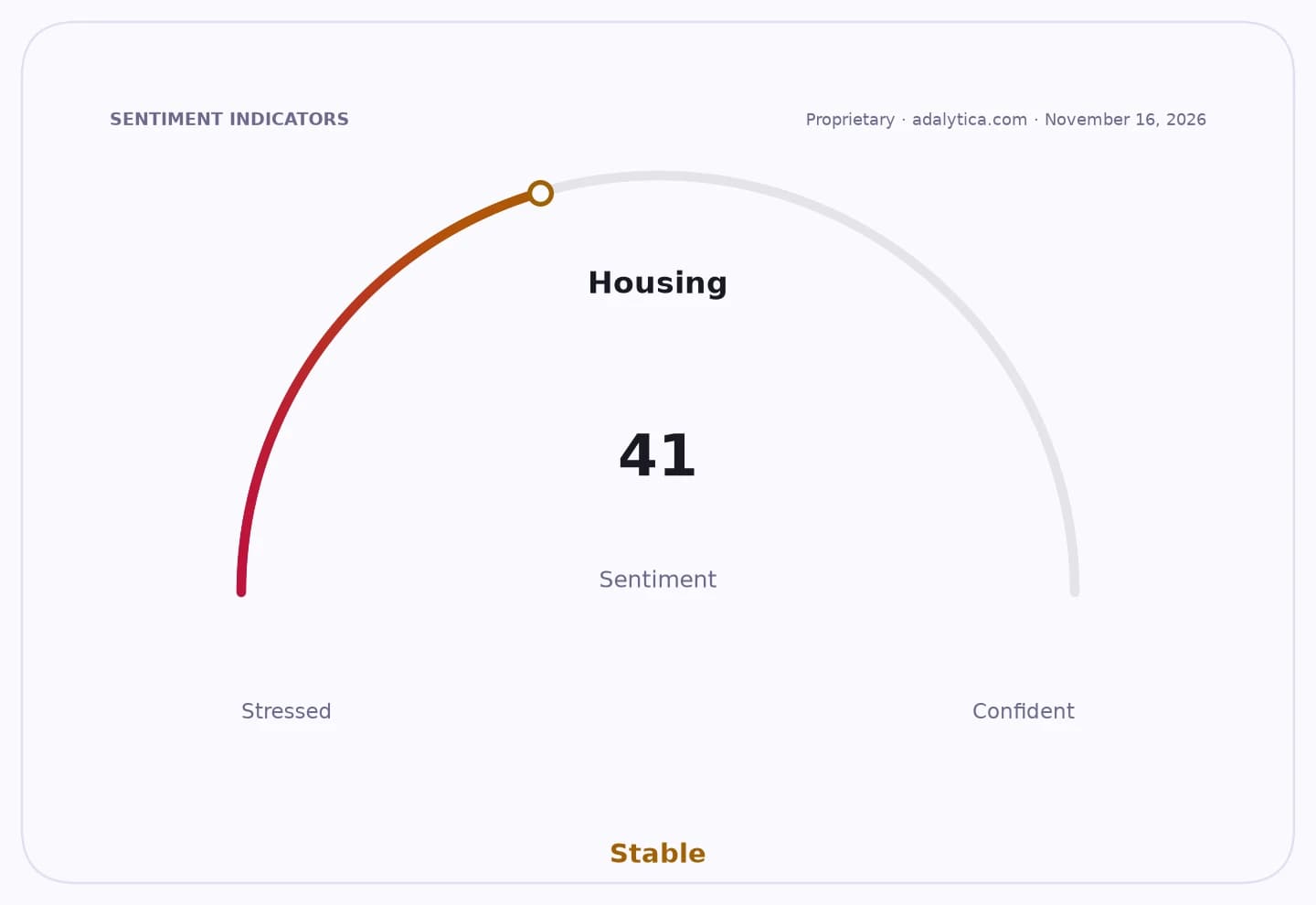
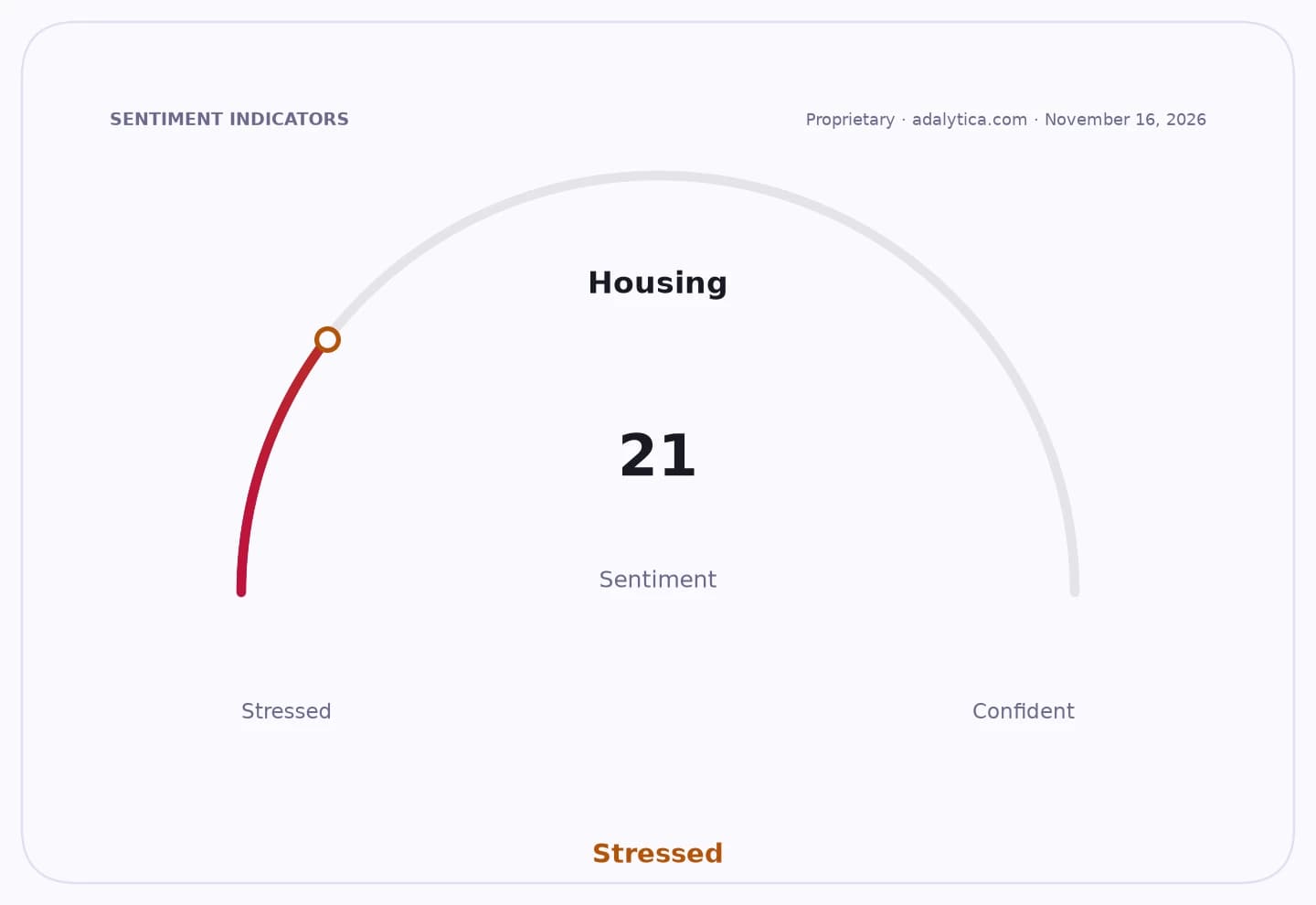
Adalytica’s Housing Fear & Greed Index has plunged to 4, or “Extreme Fear,” from 46 two days earlier, while its housing-and-rent inflation gauge sits at 68, suggesting that stress around affordability is still elevated even where transaction interest persists. That combination typically points to cautious buyers, slower turnover and greater price sensitivity in mass-market housing, but it can also sharpen demand for scarce resort properties that are insulated from local wage conditions.
In the U.S. listed single-family rental space, American Homes 4 Rent and Invitation Homes have both held above long-term moving averages at times this year, but their latest trading shows investors are less certain about the durability of rental growth and housing demand. AMH is trading slightly below its 50-day moving average and around its 200-day average, while INVH is still below both, reflecting a market that is pricing in moderation rather than a fresh housing boom. That is consistent with a sector where affordability remains stretched and capital is selectively chasing the strongest geographies.
For investors, the key question is whether foreign buying is a temporary offset to weakness or a durable source of support. Bullish read-through: resort-country housing, especially in established destinations with residency appeal, can hold pricing power even in a softer global environment. Bear case: if local governments tighten rules, transaction volumes can still fall sharply, leaving prices vulnerable once speculative or migration-driven demand fades.
The broader narrative is one of housing bifurcation. Domestic buyers in many markets are being squeezed by borrowing costs and affordability, while overseas purchasers continue to target asset-rich resort locations as a store of value. That split can sustain prices at the top end, but it also risks aggravating local affordability and political pressure. The next catalyst will be whether foreign demand broadens beyond the prime segment or remains concentrated in a narrow band of coastal and tourist markets.
| Entity | Gains | Losses |
|---|---|---|
| Foreign buyers, including Ukrainians | ▲Access to hard-currency assets | ▼Less negotiating leverage |
| Resort-market homeowners | ▲Higher prices, stronger demand | ▼Greater policy scrutiny |
| Local first-home buyers | ▲— | ▼More competition, weaker affordability |
| Developers and brokers in prime areas | ▲Faster sales, premium pricing | ▼Mass-market sellers |