Foreign buyers are set to account for more than a quarter of Portugal’s home purchases in 2025, underscoring how overseas demand is still amplifying one of Europe’s hottest housing markets even as prices surge and public anger over affordability spills into the streets.
Portugal Home Purchases by Foreign Buyers Rise in 2025
The most important investment takeaway is that Portugal’s housing market is no longer just a domestic affordability story — it is a capital-flows story. Foreign buyers purchased about 41,000 homes in 2025, according to the national statistics office, with Brazilian buyers alone responsible for almost 10,000 transactions. That kept foreigners at 27.6% of all home purchases, a slight decline in share but still a powerful footprint in a market where nearly 170,000 homes changed hands.
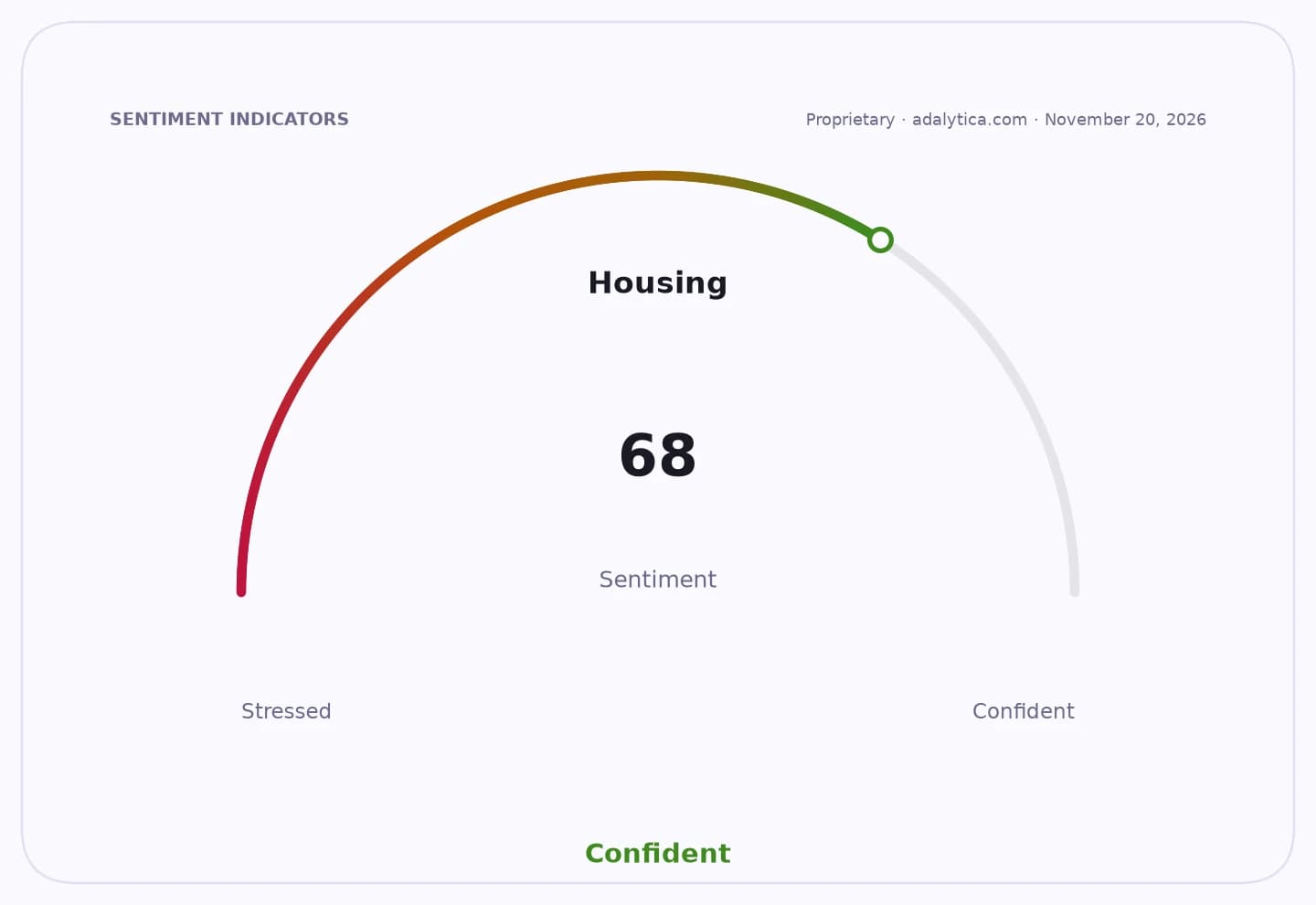
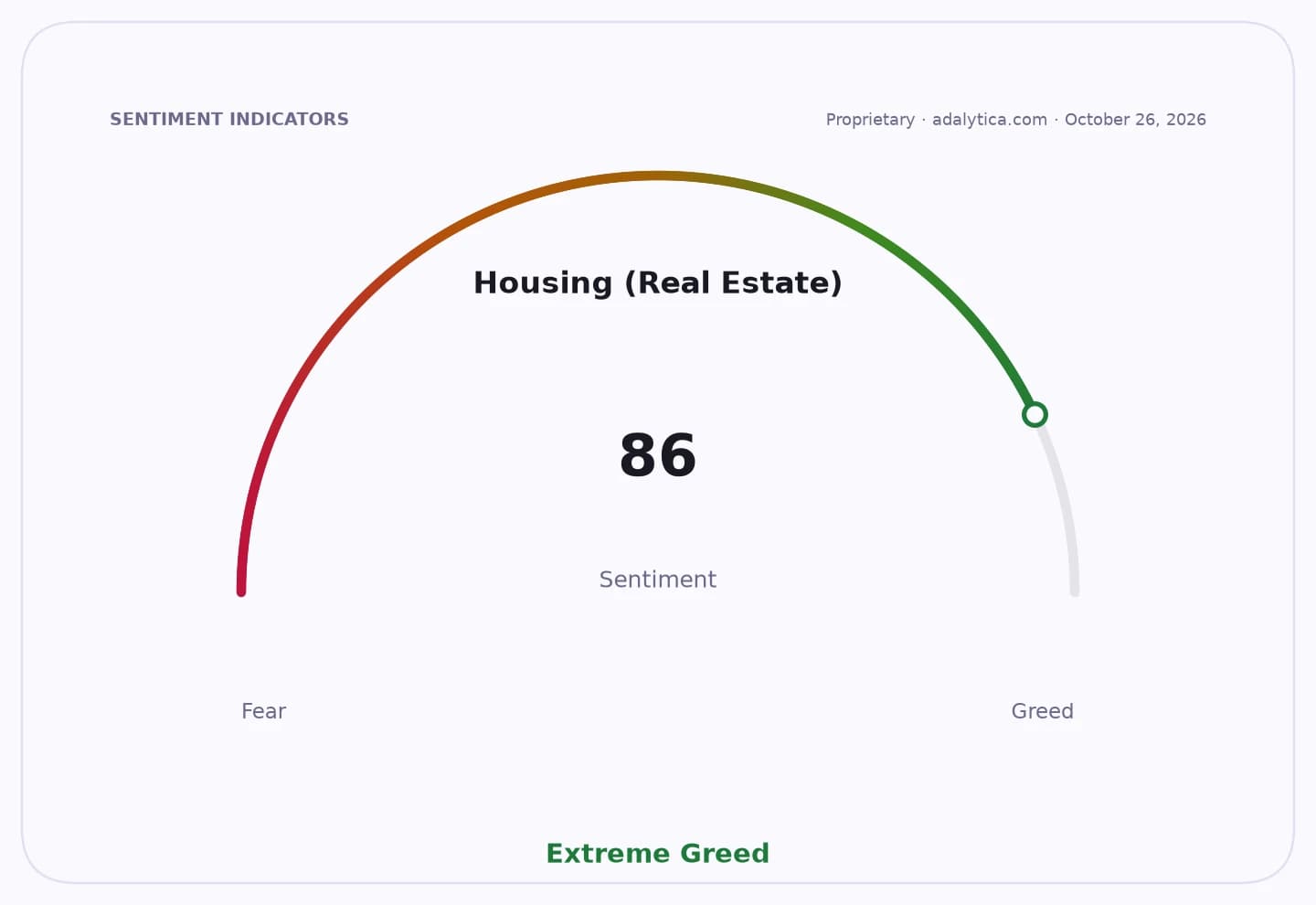
Sentiment Indicators
That matters because foreign demand is helping sustain pricing power in a country already under severe supply strain. Home prices rose 17.6% in 2025, the fastest pace since 2009, and foreign buyers continued to pay up for more expensive properties than local households. The result is a market where affordability is being eroded faster than policy can respond, raising the risk that housing remains a persistent inflationary pressure point.
The credit channel is widening the effect. Data from Banco de Portugal show foreigners accounted for more than 13% of housing loans, suggesting overseas demand is not only cash-led but increasingly levered into the banking system. That is important for lenders, developers and housing-linked businesses because it points to sustained transaction flow even if domestic buyers are squeezed out.
The geography of demand also tells a broader story about Portugal’s appeal as a European property destination. Brazil, Angola and France were the biggest buyer groups, highlighting how migration, capital preservation and lifestyle demand are intersecting in a market that has benefited from years of foreign interest. For investors, that supports the thesis that Portuguese housing remains a relative winner inside Europe’s real-estate complex, particularly in prime urban and coastal areas.
At the same time, the politics are getting louder. Thousands of protesters have taken to the streets across Portugal over soaring rents and a housing squeeze, increasing the odds of intervention from policymakers. Any move to cool demand, tighten tax treatment or expand supply would hit the segment most exposed to foreign capital first.
For investors, the setup is clear: Portugal’s housing market remains a durable pricing and transaction story, but the upside is increasingly hostage to regulation. Builders, lenders and real-estate operators may keep benefiting from the foreign-buyer bid in the near term, but the market is also telegraphing a higher probability of policy risk and social backlash. In a market this tight, that combination can move fast.
| Entity | Gains | Losses |
|---|---|---|
| Foreign buyers | ▲Access to scarce supply | ▼Higher entry prices |
| Portuguese sellers | ▲Strong pricing power | ▼Political backlash |
| Banks / lenders | ▲More mortgage volume | ▼Housing-policy tightening |
| Local households | ▲— | ▼Affordability, purchasing power |