Cheaper mortgage rates did not make Russian homes more affordable because state subsidies pushed apartment prices up far faster than wages, forcing the Central Bank to conclude that its era of mass preferential lending is over.
Russia Central Bank Ends Mass Mortgage Subsidies
Central Bank adviser Kirill Tremasov said at the Ural Real Estate Forum that broad subsidy programs, designed to widen access to housing, instead helped drive the cost of a square meter almost twofold over a short period. That increase outpaced real incomes, effectively wiping out the benefit of lower borrowing costs for most buyers.
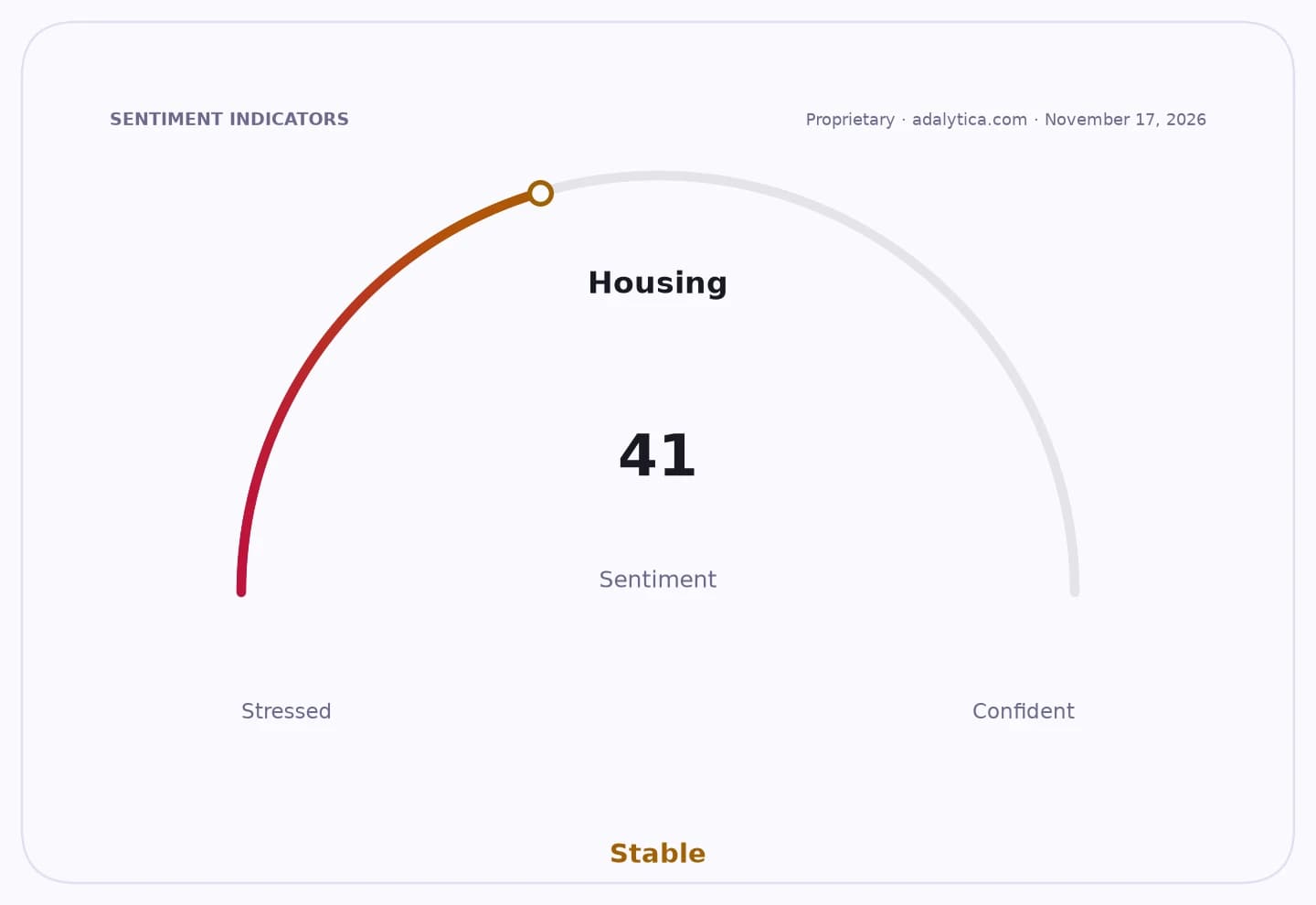
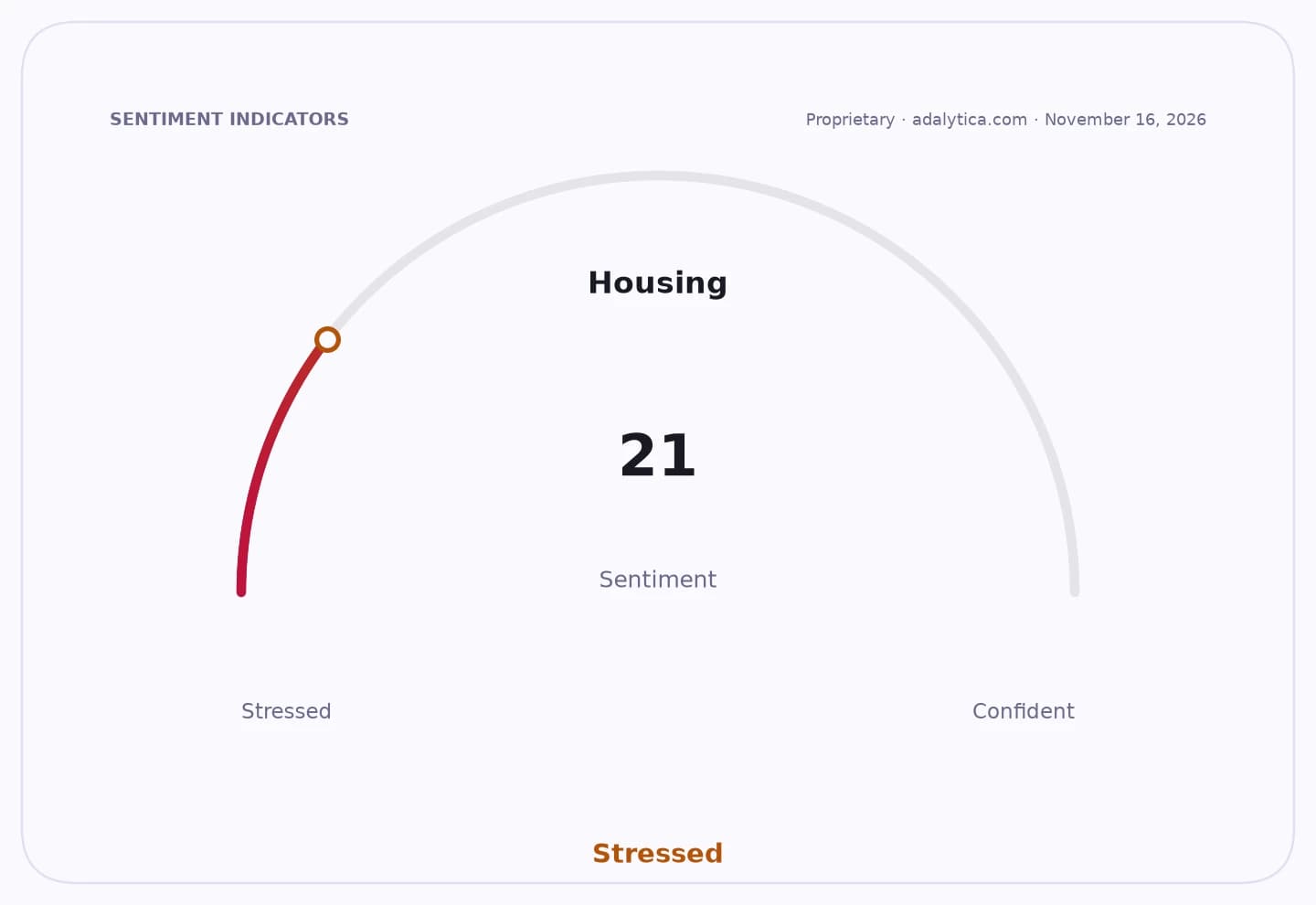
Sentiment Indicators
The message matters because it marks a policy pivot away from demand stimulus and toward selective support. For years, Russia used mass preferential mortgages to prop up housing demand and construction activity. The result, according to the regulator, was a distorted market in which the nominally cheap loan produced more expensive apartments, especially in larger cities and markets with tight supply.
The Central Bank now says it considers the experience with large-scale subsidy schemes finished. That leaves a narrower toolkit: targeted aid for specific households rather than universal-rate discounts that can inflate prices across the entire market. The goal is to support those most in need without reigniting the imbalance that helped push prices higher in the first place.
The shift is already visible in the data. After the main 8% subsidized mortgage program ended in July 2024, new lending volumes fell by almost half, underscoring how dependent demand had become on artificial rate support. The market is now moving into a colder phase in which buyers must qualify based on real affordability rather than cheap financing.
For developers, that is a material change. Homebuilders that benefited from subsidy-fueled demand will face a more selective buyer base, weaker conversion and greater pressure to adjust pricing, product mix and incentives. For households, the policy shift may slow transaction activity but could eventually help restrain further price inflation if supply and financing return to more normal market signals.
Investors should read the change as a sign that Russia is prioritizing financial stability over housing volume. That may weigh on short-term construction activity, but it also reduces the risk of another subsidy-driven bubble in which buyers are offered cheap credit while the asset itself becomes more expensive.
| Entity | Gains | Losses |
|---|---|---|
| Central Bank of Russia | ▲More stable housing market | ▼Less support for loan-driven demand |
| Targeted homebuyers | ▲Focused subsidies | ▼Fewer broad mortgage discounts |
| Developers | ▲Clearer pricing signals | ▼Weaker sales volumes |
| Apartment buyers | ▲Potentially slower price growth | ▼Higher effective affordability burden |