Aragon’s housing market is losing momentum, and that matters because Spain’s affordability squeeze is beginning to bite demand even as supply remains too thin to trigger a full correction. Home sales in the region fell 6.8% in the July-to-September quarter from the previous three months to 4,363 transactions, the worst quarter in two years, while price gains are already starting to “moderate,” according to a new report from the University of Zaragoza’s real estate chair.
Aragon housing sales fall as prices moderate
That combination is the key investable signal: volumes are weakening before prices do. In housing markets, a drop in turnover usually arrives first when buyers are stretched by higher borrowing costs, faster inflation and wages that are failing to keep pace. The experts behind the report said inflation is still rising faster than salaries, which means household purchasing power is being squeezed just as mortgage affordability remains tight.
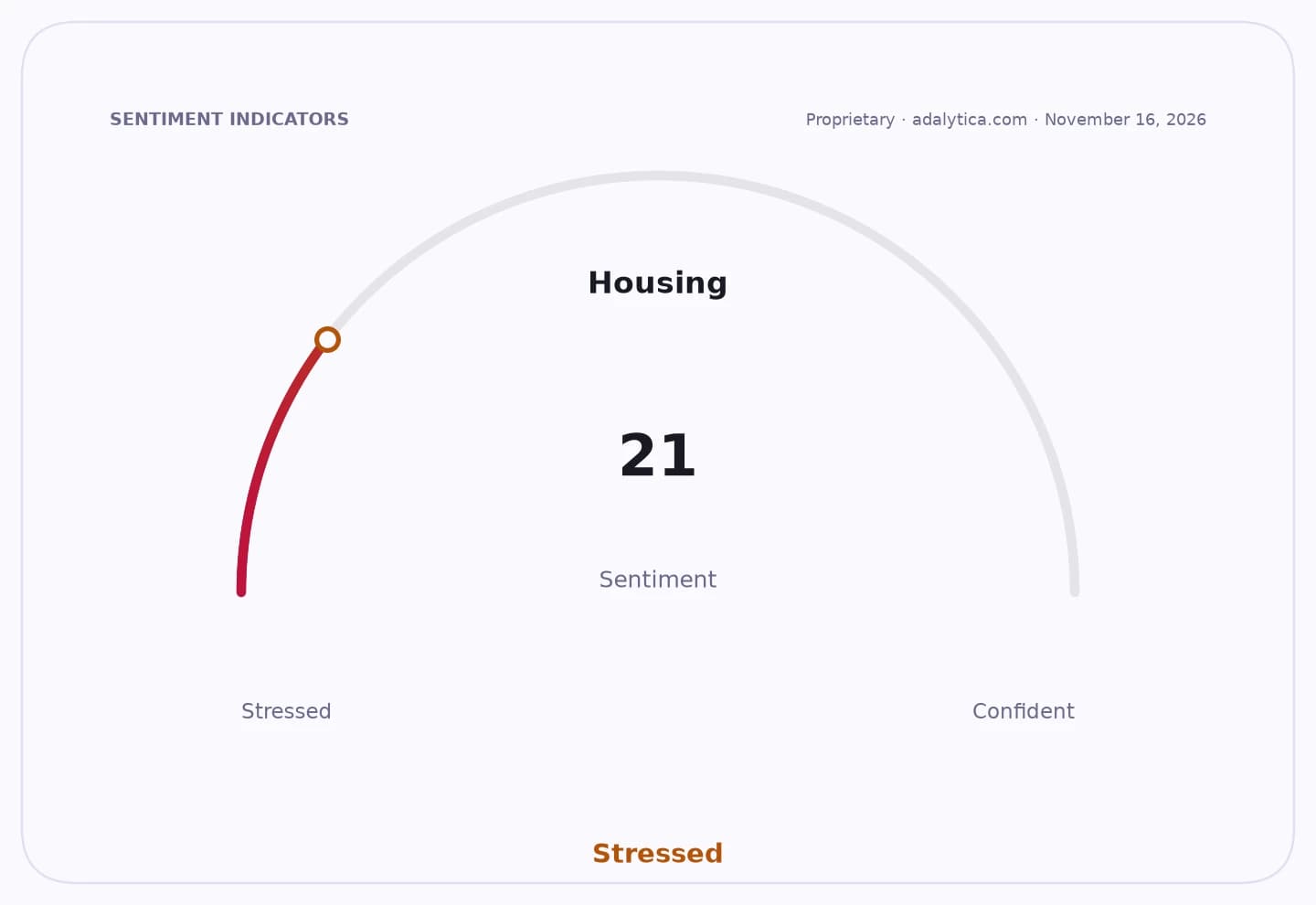
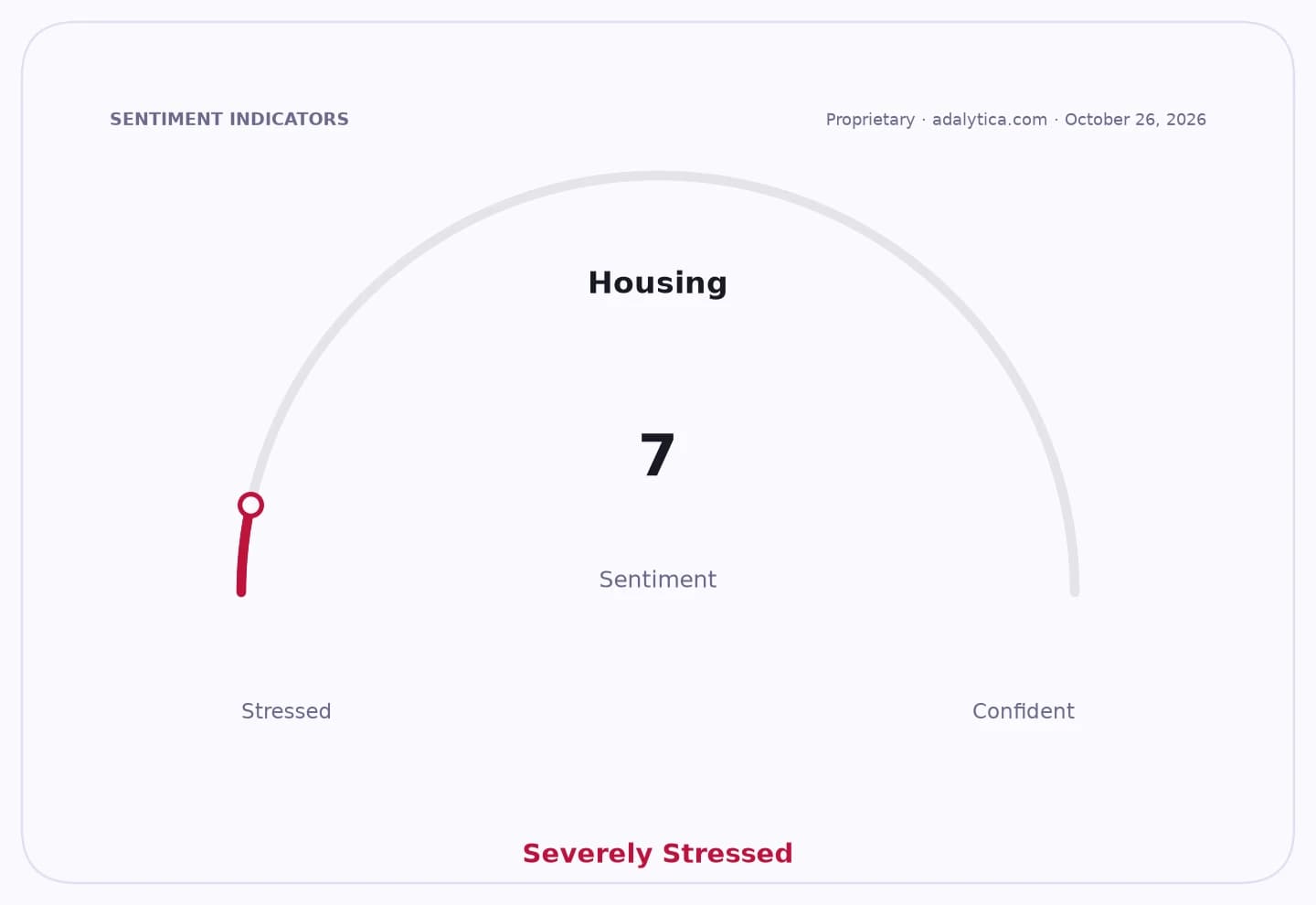
Sentiment Indicators
For investors, the significance goes beyond one region in northeastern Spain. Aragon is another data point in a broader European housing story where demand is being capped by affordability, but supply is not yet abundant enough to produce a clean buyer’s market. That keeps the market divided between sellers who still have pricing power in scarce inventory and buyers who are increasingly forced to wait, negotiate harder or step back entirely.
The report’s message is that Spain’s housing boom is transitioning from runaway price growth to a slower, more selective phase. The cooling is not a crash; it is a moderation driven by arithmetic. When wages lag inflation and financing stays expensive, transactions typically soften before headline prices do, especially in markets where listings remain scarce.
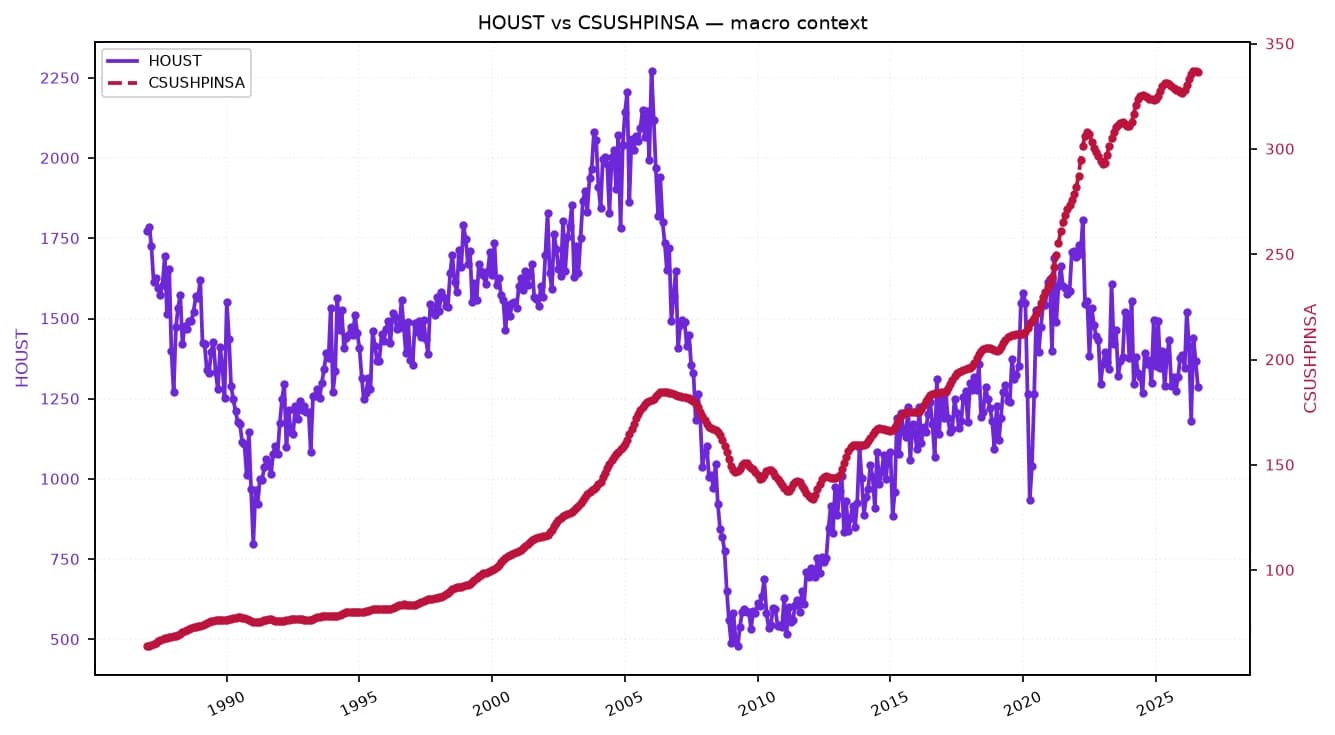
HOUST vs CSUSHPINSA — macro contextadalytica.com
Explore this data interactively — full history, time series and cross-market comparisons.
That matters for the parts of the market exposed to housing turnover. Homebuilders, brokers, lenders and landlords all face a more uneven backdrop if activity continues to slow. At the same time, the shortage itself should keep a floor under long-term prices, which means the best opportunities may sit in supply-constrained rental assets, affordable housing, and firms tied to renovation, efficiency upgrades and new-build bottlenecks rather than broad exposure to overheated resale markets.
The bigger takeaway is that Aragon looks like an early warning sign, not an isolated blip. If inflation keeps outrunning wages and mortgage conditions stay restrictive, Spain’s housing market may continue to shift from volume growth to price moderation. For investors, that is exactly when capital starts to rotate toward the scarce, the affordable and the infrastructure that helps unlock supply.
| Entity | Gains | Losses |
|---|---|---|
| Buyers | ▲Better negotiating power | ▼Waiting longer for a deal |
| Sellers | ▲Scarcity supports prices | ▼Fewer transactions |
| Homebuilders | ▲Long-term supply gap | ▼Slower resale market |
| Lenders/Brokers | ▲Selective refinancing demand | ▼Lower deal flow |