Ukraine’s ability to defend its energy system and prosecute the war is being constrained by Washington’s demands, President Volodymyr Zelenski said, even as Russia seeks to re-enter the center of great-power diplomacy and widen pressure on Europe.
Zelenski Says U.S. Limits Hurt Ukraine Defense

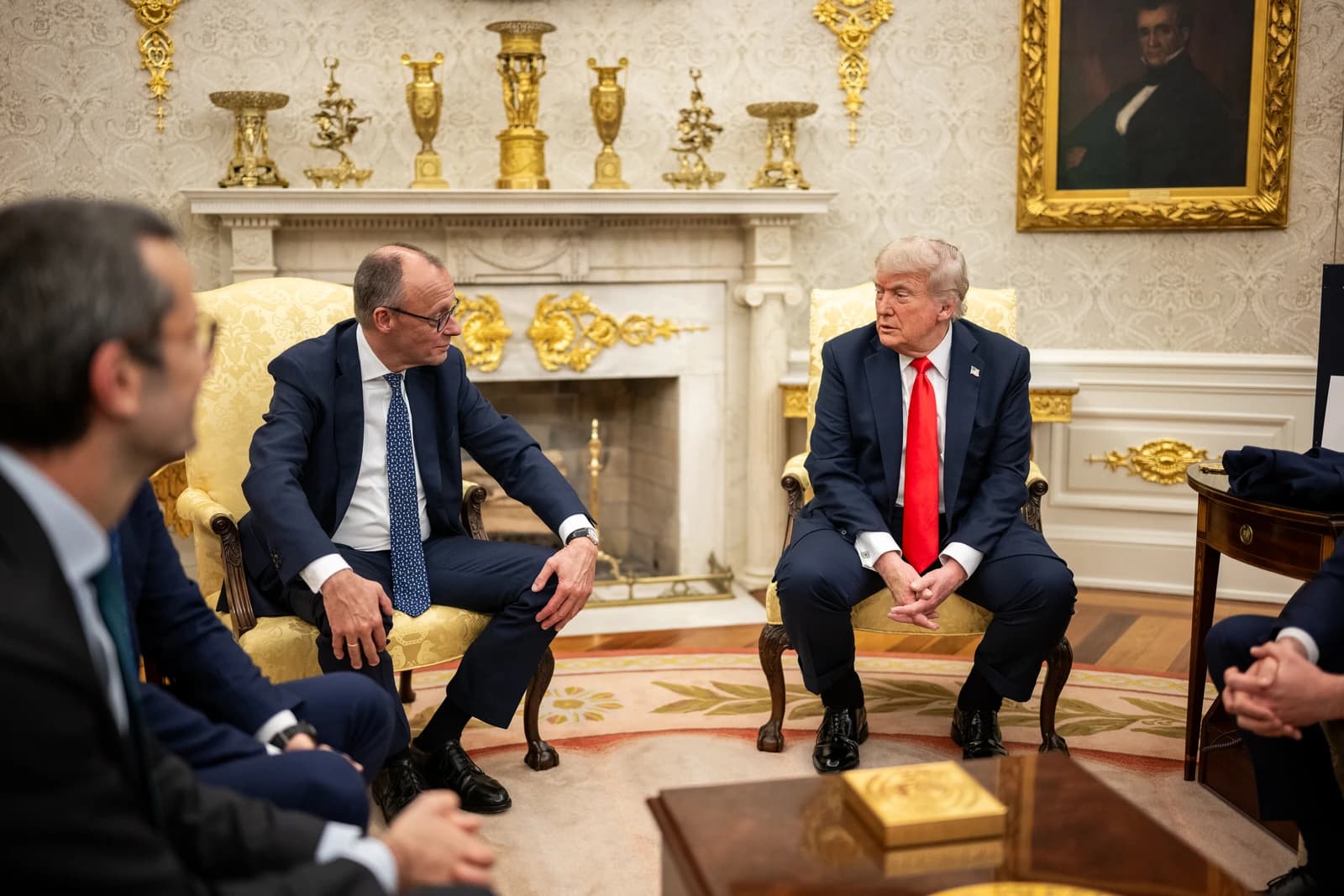
In an interview with an Italian newspaper, Zelenski said U.S. restrictions on striking certain Russian targets have become more than rhetorical warnings, arguing that Kyiv is now being asked to hold back while Moscow keeps attacking power stations, transformers and other critical infrastructure. He said he had proposed a trade-off to Donald Trump: if Washington does not want Ukraine hitting Russian territory, then it should provide enough air-defense missiles to protect the grid. Instead, he said, Kyiv got tighter limits on intelligence sharing and slower Starlink service.
The remarks matter because they go to the core of Ukraine’s warfighting capacity heading into winter. Moscow has repeatedly used missile and drone strikes against the energy system to create humanitarian strain, force blackouts and raise the cost of sustaining the front line. Zelenski’s complaint suggests the balance of support is no longer just about money or weapons volumes, but about the operational latitude Ukraine has to respond. For investors and governments in Europe, that raises the risk that any winter escalation could increase demand for air-defense systems, emergency financing and refugee support.
Ukraine is asking European partners for an additional 70 billion euros for 2027 and 300 interceptors for Patriot systems, underscoring how quickly air defense has become the most valuable scarce asset in the war. Zelenski framed that request as a European security issue, not only a Ukrainian one, saying a stronger umbrella over Ukraine would help prevent a new wave of displaced people and reduce the spillover into neighboring states.
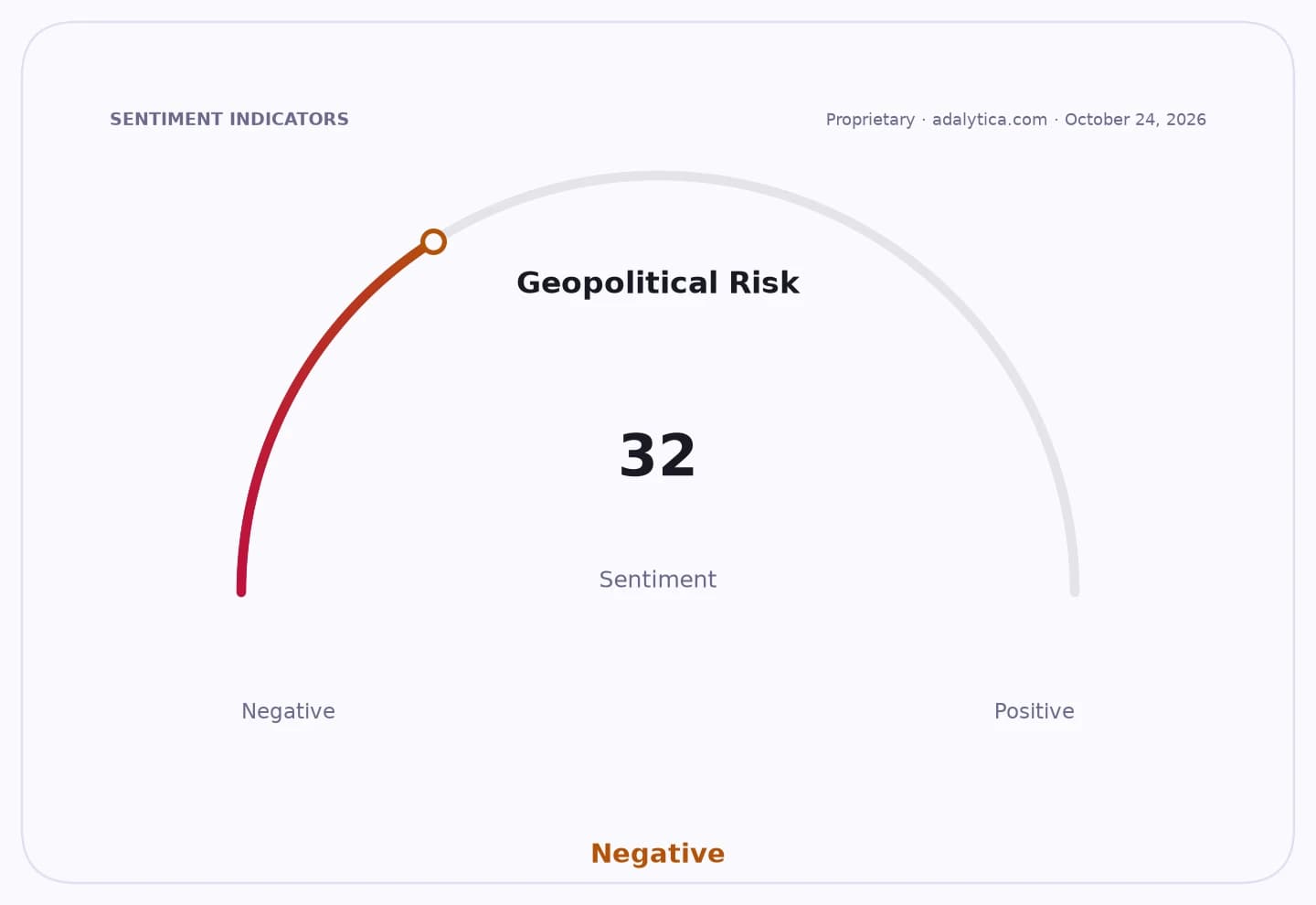
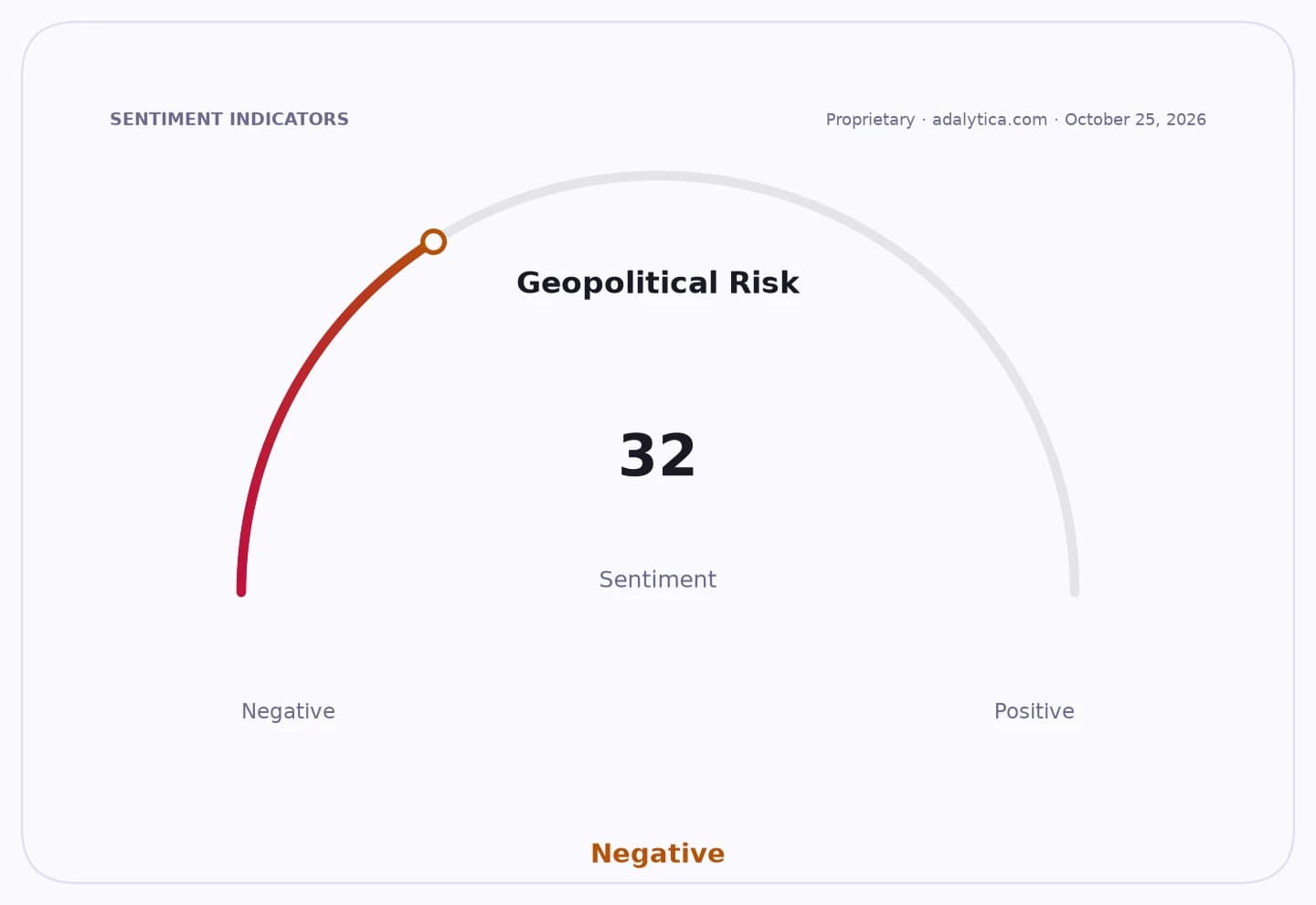
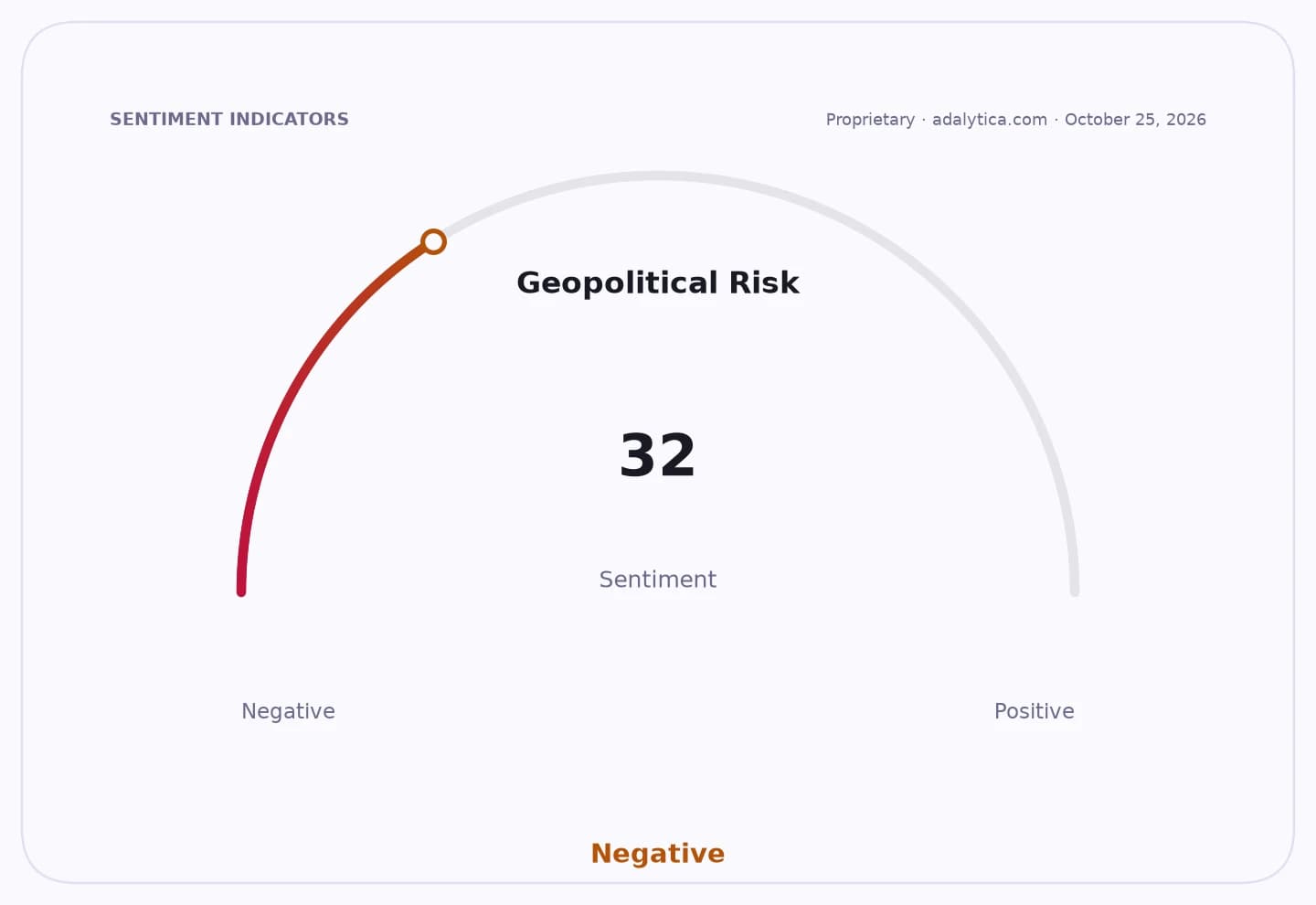
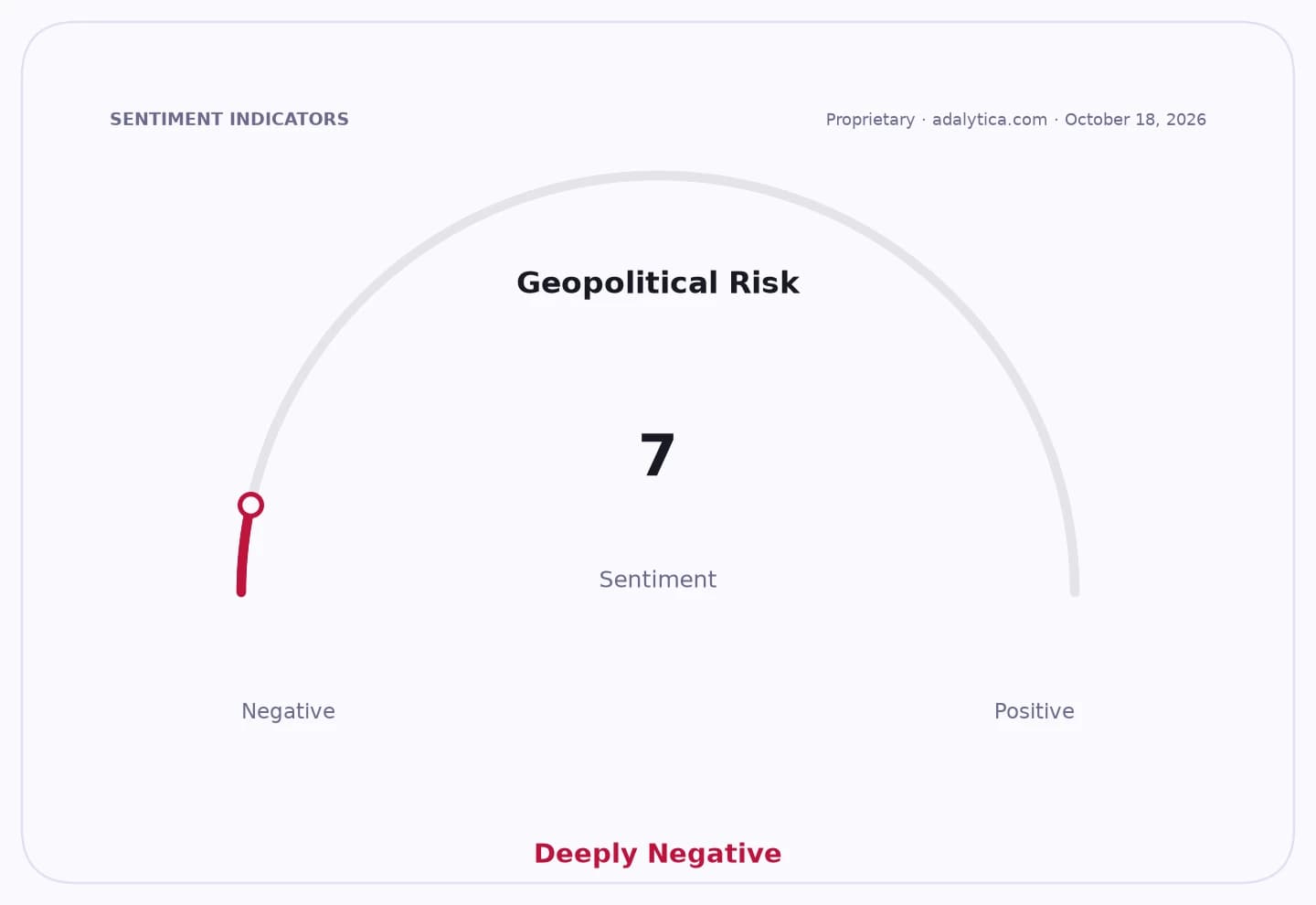
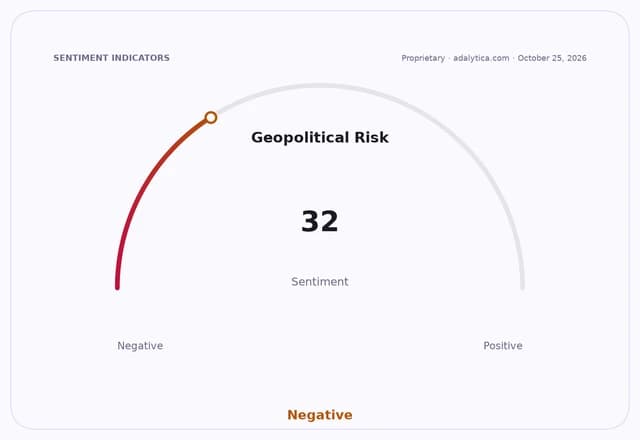
Geopolitical Risk — 30-day sentimentadalytica.com
Explore this data interactively — full history, time series and cross-market comparisons.Open AlphaPulse
The interview also highlights a widening political fault line between Kyiv and Washington. Zelenski said he was surprised that American officials have pressed the issue of elections during wartime, when voting would be logistically and legally difficult under daily missile fire. He said Russia wants political instability in Ukraine because a leadership change could weaken resistance, and he warned against any arrangement that would leave Ukrainians with promises that are not enforceable if Moscow attacks again.
At the same time, he portrayed Russian President Vladimir Putin as making progress toward one of his strategic aims: ending isolation on the world stage. Zelenski said a proposed trilateral meeting involving Trump, Chinese President Xi Jinping and Putin, but not Ukraine, would be another sign that Moscow is regaining access to top-tier diplomacy after years of sanctions and diplomatic exclusion. That is significant well beyond the war itself, because it would give the Kremlin a platform to shape postwar terms while keeping the invaded country outside the room.
That narrative dovetails with broader European security fears. Zelenski accused Russia of conducting hybrid warfare across Europe through propaganda, online manipulation and pressure points such as migration, religion and gender issues, naming Italy, France, Germany and Britain. If that assessment is right, the conflict is no longer confined to the battlefield in Ukraine; it is also a contest over public opinion and political cohesion inside the EU and NATO.
For markets, the immediate read-through is still centered on defense, energy and risk appetite. Any sign that the war is becoming more prolonged, more constrained for Kyiv, or more diplomatically advantageous for Moscow tends to support demand expectations for missile defense, surveillance and battlefield systems, while keeping European utilities and gas markets sensitive to winter supply shocks. It also keeps geopolitical risk elevated at a moment when investors were already pricing a fragile global stability backdrop.
Adalytica’s Global Stability Sentiment gauge remains in neutral territory at 32, but awareness is still in “fear,” reflecting how quickly the diplomatic tone can shift as November talks approach. The more important question for investors is whether the coming round of U.S.-Russia-Ukraine contacts produces a real de-escalation or simply formalizes a tougher operating environment for Kyiv.
For now, Zelenski is signaling that Ukraine will keep negotiating, but on harsher terms: fewer freedoms on offense, more pressure to defend, and a growing need for Europe to underwrite the war materially if Washington’s line hardens further.
| Entity | Gains | Losses |
|---|---|---|
| Russia | ▲Diplomatic leverage | ▼International isolation |
| Ukraine | ▲European sympathy | ▼Offensive freedom |
| Europe | ▲Demand for defense spending | ▼Winter security risk |
| U.S. hawks on Ukraine aid | ▲Harder justification for restraint | ▼Influence over Kyiv |