Young engineers may be the scarcest asset in aerospace now, and that matters more for long-term investors than the next quarter’s delivery schedule.
Aerospace Talent War Threatens Long-Term Execution
The industry’s battle for recruits has become a strategic issue because commercial and defense aerospace both depend on deep benches of software, systems, materials and manufacturing talent. If artificial intelligence and other tech-heavy industries keep siphoning off younger workers, Boeing, RTX and Lockheed Martin could face a slower reset of their production lines, product development pipelines and supplier networks. For investors, that means the story is not just about labor costs — it is about whether these companies can sustain the kind of execution needed to compound earnings over years.
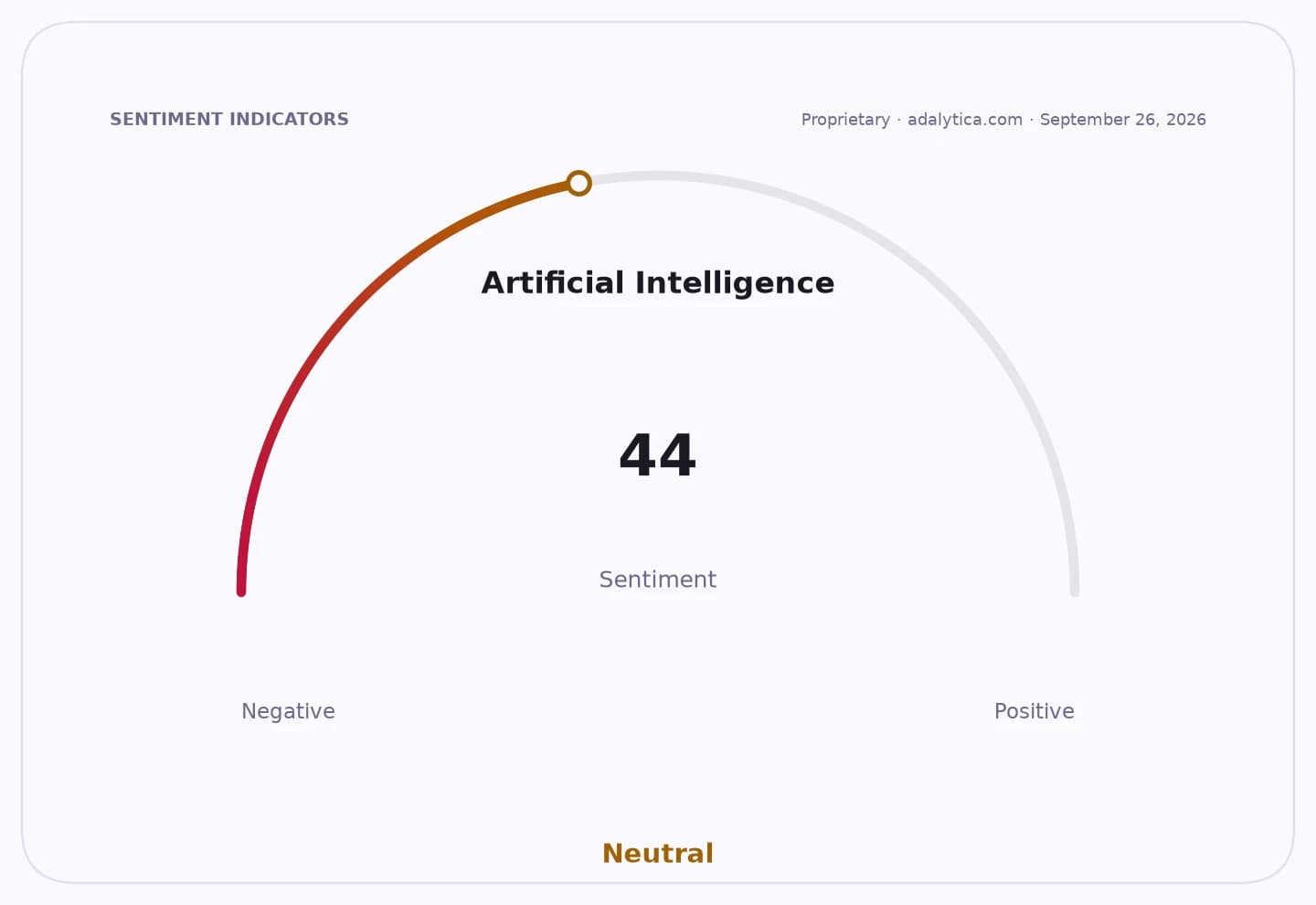
Sentiment IndicatorsⓘProprietary · adalytica.com · July 24, 2026
This is a snapshot — live sentiment, awareness and momentum for 130+ markets update continuously in the dashboard.Open AlphaPulse
That’s why the latest share action in the group is worth watching. Boeing’s stock has been volatile and is still trading around $210, well below its recent 50-day average near $220, a sign the market is still discounting a bumpy operational recovery. RTX, by contrast, has pushed to about $214 and is now above both its 50-day and 200-day moving averages, a healthier setup that suggests investors are rewarding its more balanced mix of defense and commercial aerospace exposure. Lockheed Martin has also rebounded sharply to about $582, though it remains below its longer-term average near $538, reflecting a stock that has recovered on sentiment but still needs cleaner fundamental proof.
The underlying economics are straightforward: aerospace is a human-capital business disguised as a hardware business. A single aircraft, missile system or avionics platform can take years to design, certify and manufacture, and the shortage of early-career engineers, technicians and program managers can ripple through production rates and margins. Boeing’s filing already warned that labor and supplier pressures have hurt productivity and cash flow, while work stoppage risk remains a concern as union contracts roll forward. That is exactly the kind of friction that can delay a turnaround and make valuation less forgiving.
The pressure is not limited to Boeing. RTX’s latest filing showed commercial aerospace and defense sales improving, but the company still relies on a highly skilled workforce to convert demand into operating leverage. Lockheed’s rebound has been helped by defense spending and stronger execution in parts of its portfolio, but its business also depends on keeping experienced engineers in place while attracting new ones. In a market where the 50-day moving average is only a snapshot, the real question is whether these companies can keep building institutional knowledge faster than it walks out the door.
For investors, the implication is bigger than one hiring cycle. Aerospace and defense can be excellent long-term holdings because they enjoy scale, government relationships and high switching costs, but those moats only work if the talent pipeline remains intact. AI is not just a threat from the customer side; it is also an alternate career path for the same graduates aerospace needs to modernize factories, automate maintenance and design the next generation of systems.
That creates a clear split for shareholders. Companies that successfully recruit and train younger workers can widen their competitive moat and protect margins. Those that cannot may keep missing on delivery targets, spending more on overtime and rework, and watching returns on capital stay stuck. In a sector built on long contracts and long production cycles, the firms that solve the labor problem are the ones most likely to reward patient investors over the next decade. For long-term portfolios, these names remain worth watching — but the talent war may prove just as important as the order book.
| Entity | Gains | Losses |
|---|---|---|
| Boeing | ▲if it rebuilds its pipeline | ▼if labor shortages persist |
| RTX | ▲diversified execution | ▼recruiting cost pressure |
| Lockheed Martin | ▲defense demand and scale | ▼aging workforce risk |
| AI sector | ▲top young talent | ▼aerospace recruiting pool |