The far-right Alternative for Germany is on course for a commanding lead in Saxony-Anhalt, with a new ZDF poll putting it at 41% just days before the state election and underscoring the risk of the party’s first-ever outright state governing role since World War Two.
AfD Leads Saxony-Anhalt Poll Ahead of Vote
That matters because Saxony-Anhalt is no longer just a regional contest. A result that strong would deepen pressure on Germany’s mainstream parties, complicate coalition math in one of the country’s politically sensitive eastern states and keep the AfD at the center of the national debate over immigration, discontent and support for the federal government. For investors, it is another sign that German politics remains fragmented at a time when Europe’s largest economy is already wrestling with weak growth, elevated fiscal demands and policy uncertainty.
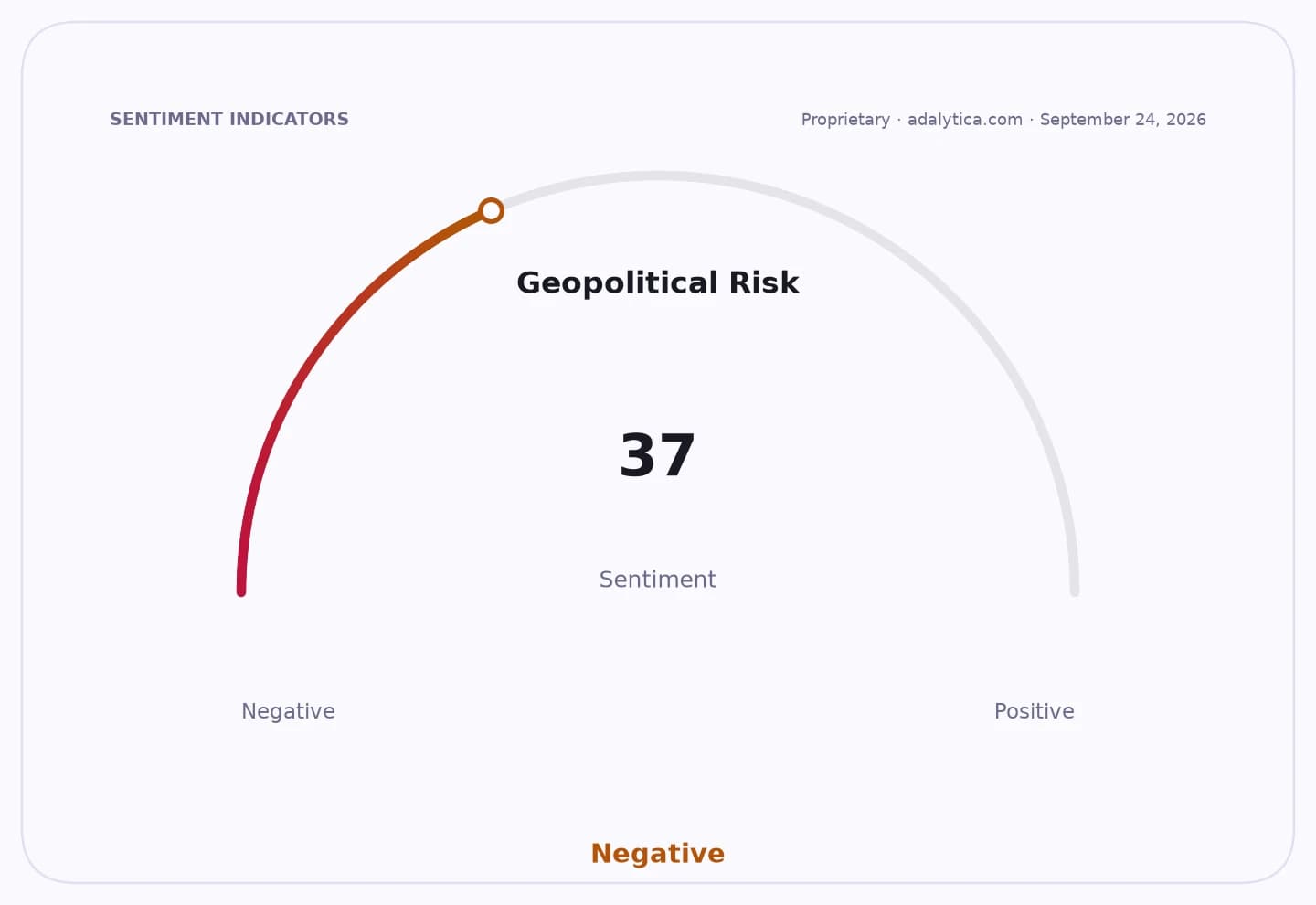
Sentiment IndicatorsⓘProprietary · adalytica.com · September 5, 2026
This is a snapshot — live sentiment, awareness and momentum for 130+ markets update continuously in the dashboard.Open AlphaPulse
The poll showed the AfD gaining 1 percentage point from the previous week to 41%, extending a lead that would leave the party close to dominance even if it still fell short of a majority. The nearest challenger, the center-right CDU, was unchanged at 23%, while the Left dropped 1.5 points to 13% and the SPD slipped to 8.5%. The Greens held 6%, the FDP 3% and Sarah Wagenknecht’s new alliance rose to 4%, still below the threshold needed to enter the state parliament.
The arithmetic is politically awkward. If the poll were reflected in the ballot box, the AfD would still need a coalition partner to govern alone, but assembling a viable anti-AfD majority would also be difficult and would require every other party that clears the threshold to cooperate. That raises the prospect of a prolonged search for workable arrangements, a familiar problem in Germany but one that becomes more destabilizing when the largest party is one the mainstream says it will not partner with.
For Berlin, the broader economic significance is less about the policy program of one state than about what the vote says on governing capacity. Persistently strong support for the AfD in the east reflects anger over migration, inflation’s aftermath, and a sense that established parties have failed to deliver growth and security. That feeds a harder political environment for the federal coalition and makes it more difficult to build consensus on defense, industrial policy and budget discipline.
Markets usually look through state elections unless they threaten national stability, but Saxony-Anhalt is being watched closely because it is part of a wider pattern in which protest politics is becoming structurally embedded. That can weigh on German assets at the margin by increasing the chance of policy drift, coalition bargaining and delayed reform. It also matters for the euro’s political risk premium, even if the currency impact is usually indirect and modest.
Technical indicators on the euro and German equity proxy EWG suggested no immediate market stress around the vote. The euro was broadly steady, with RSI readings near neutral levels and price action close to its 50-day and 200-day moving averages. EWG, the Germany-focused ETF, traded just below recent highs and remained above both its 50-day and 200-day averages, indicating that equity investors are not yet pricing in a material shock from the election.
Still, the political signal is clear: the AfD’s rise is no longer a marginal protest phenomenon in Saxony-Anhalt but a governing challenge. If Sunday’s vote confirms the poll trend, pressure will intensify on Germany’s established parties to choose between grudging local accommodation, a harder line against the AfD, or a renewed effort to address the economic grievances that keep pushing voters toward the far right.
| Entity | Gains | Losses |
|---|---|---|
| AfD | ▲Bigger vote share | ▼Coalition isolation |
| CDU | ▲Stays main rival | ▼Falls further behind |
| SPD/Greens/Left/FDP | ▲Anti-AfD bloc leverage | ▼Influence in parliament |
| German markets | ▲Stability if cordon holds | ▼Risk premium if gridlock deepens |