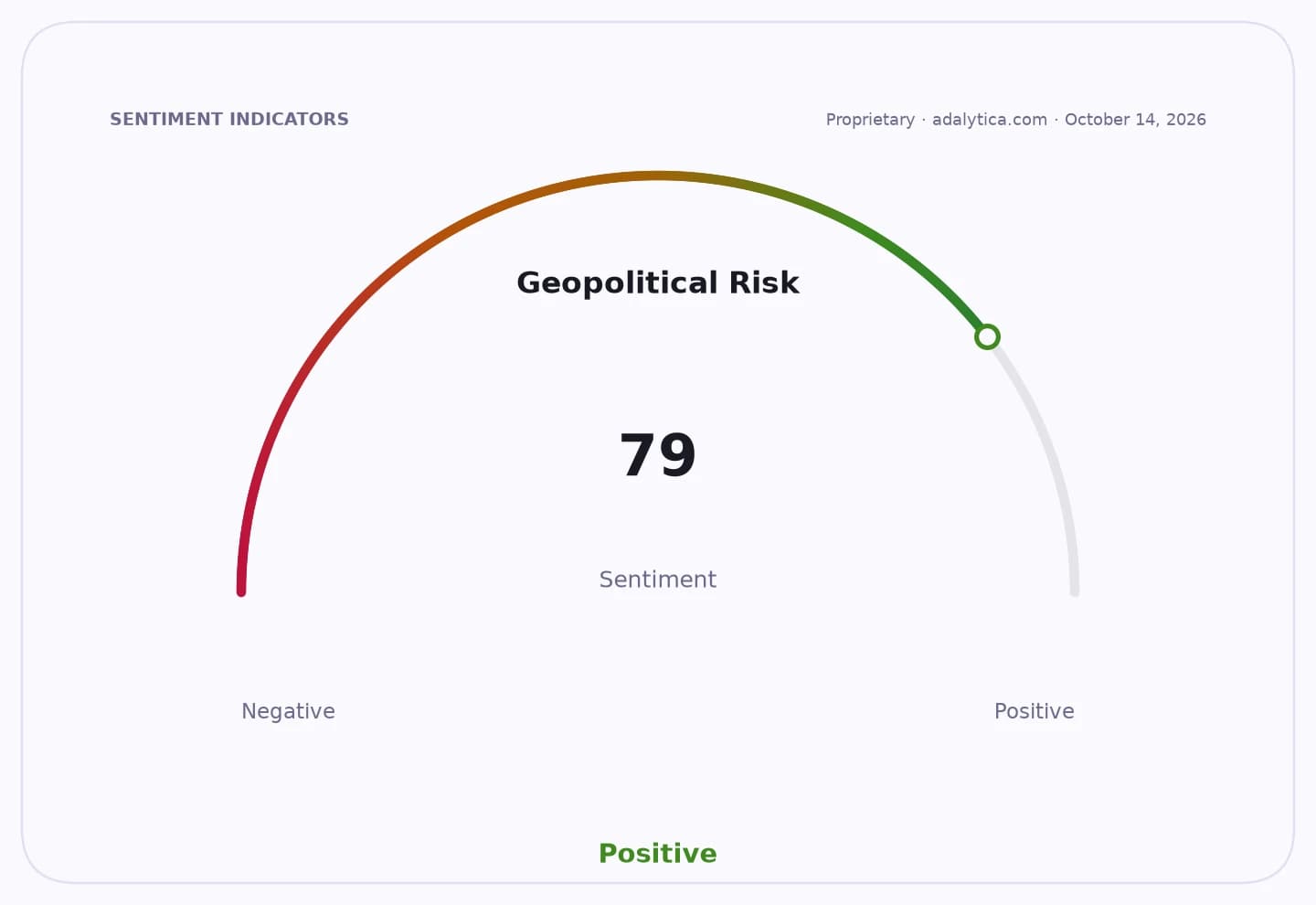
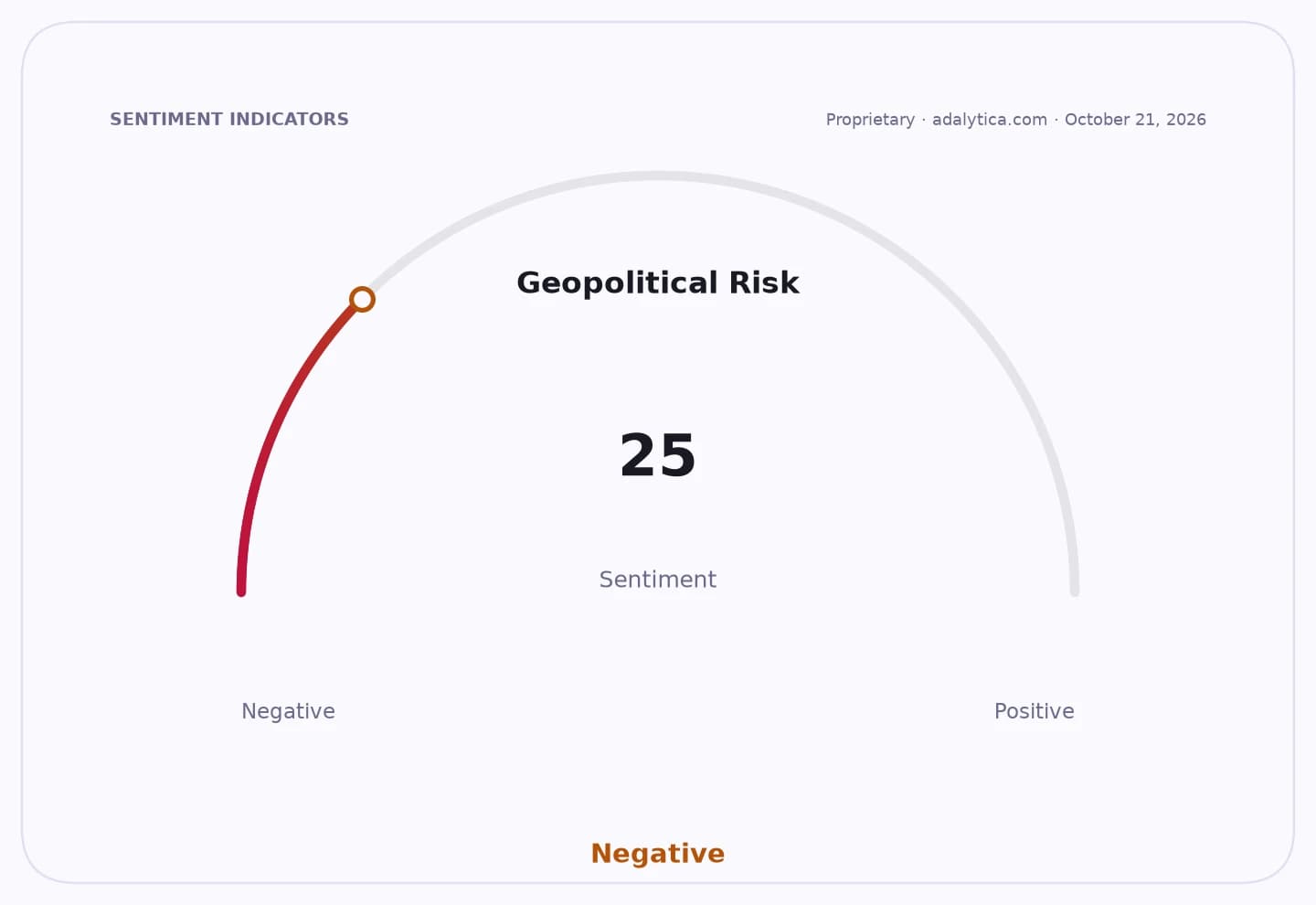
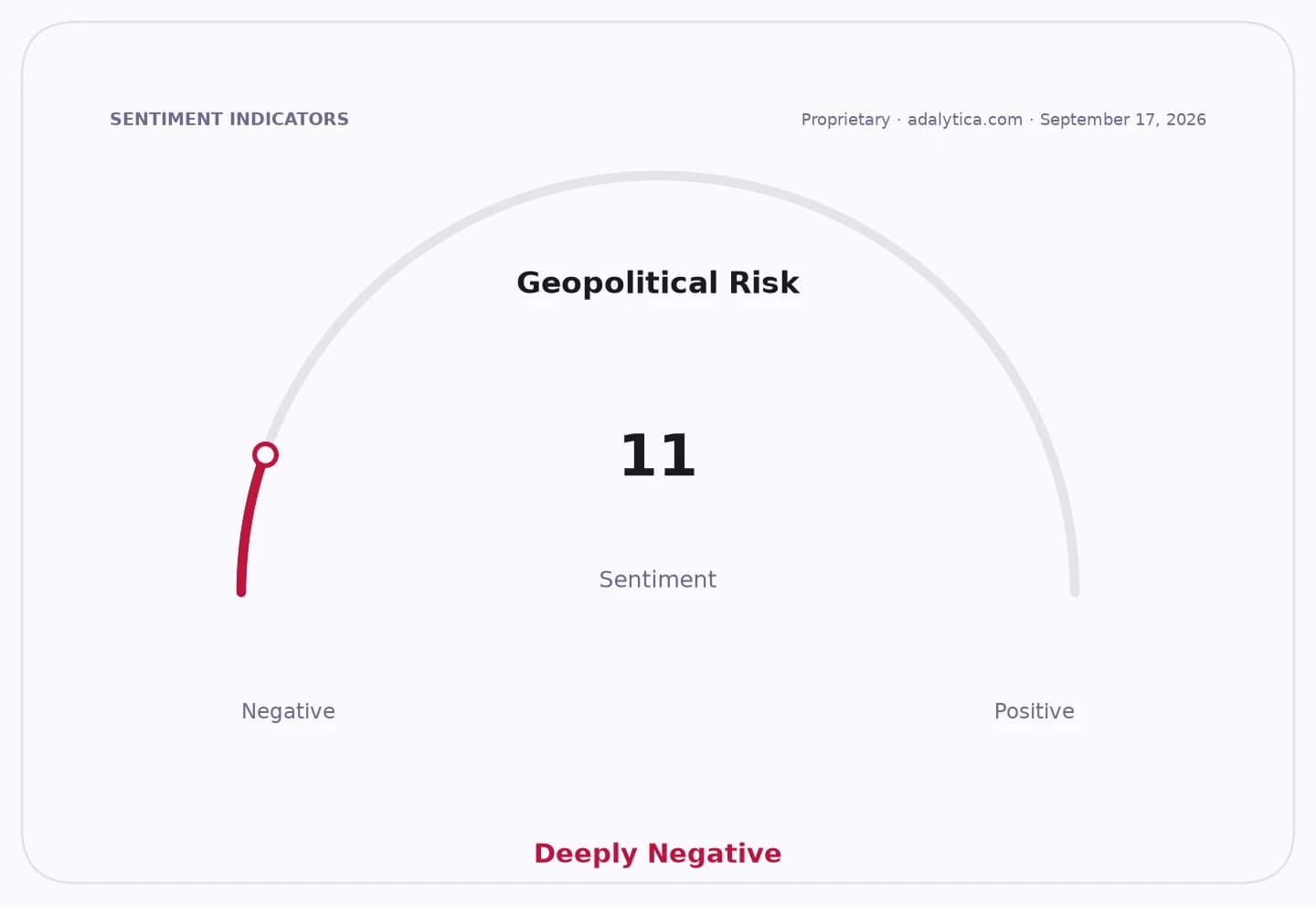
Germany’s foreign minister said a stronger AfD would leave Europe’s biggest economy weaker and more isolated, sharpening investor concern that the far-right party’s rise could complicate foreign policy, coalition math and Germany’s standing inside the EU and NATO.
AfD wins Saxony-Anhalt vote, raises Germany political risk
Johann Wadephul’s warning comes after AfD won 43.8% of the vote in Saxony-Anhalt, taking 39 of 83 seats and more than doubling its 2021 result of 20.8%. The Christian Democrats remained well behind on 17.2%, underscoring how quickly the AfD has become the dominant force in parts of eastern Germany even without an outright majority.
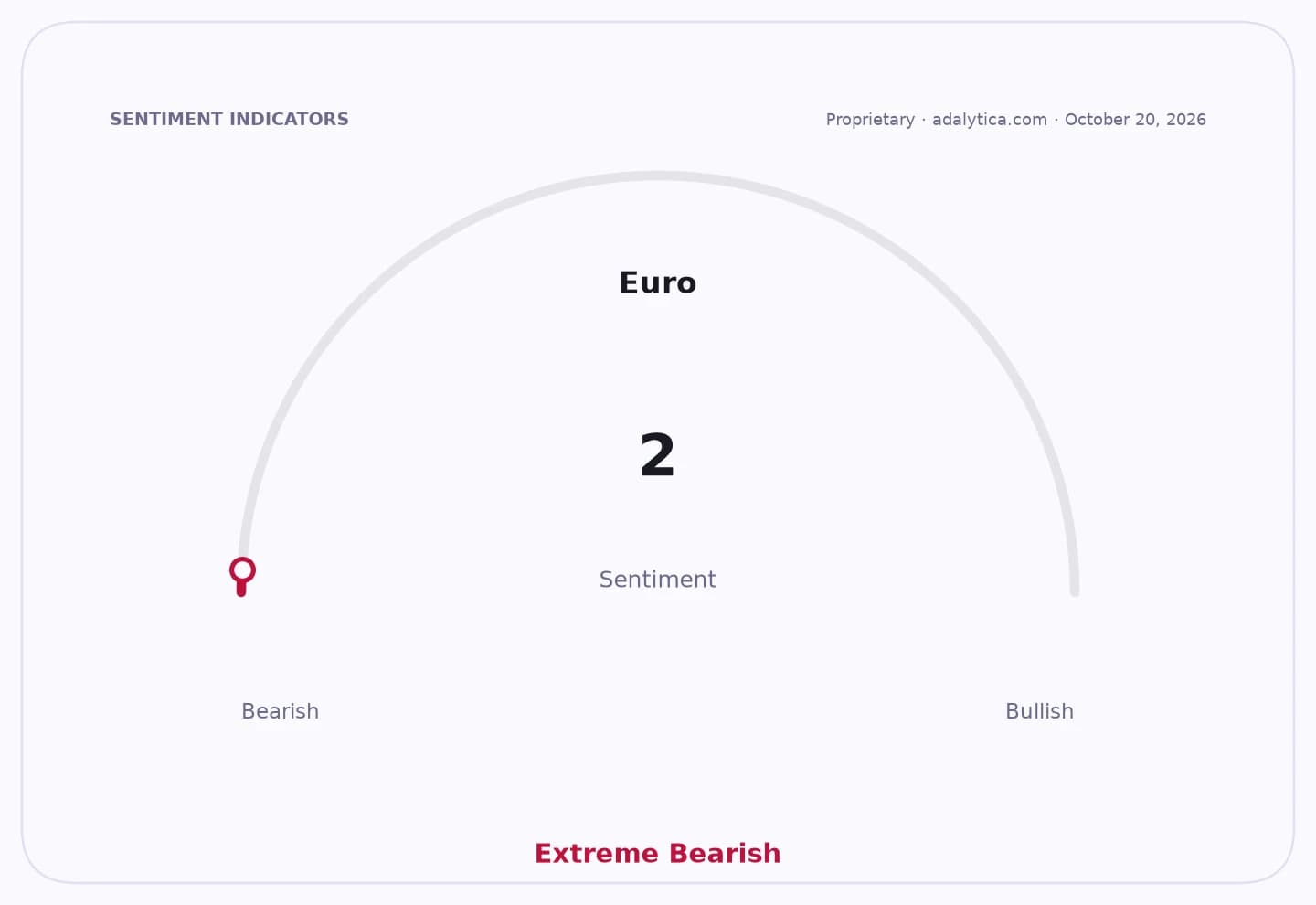
Sentiment IndicatorsⓘProprietary · adalytica.com · October 20, 2026
This is a snapshot — live sentiment, awareness and momentum for 130+ markets update continuously in the dashboard.Open AlphaPulse
The result matters economically because Germany is already under pressure from weak growth, high energy costs and fragile industrial sentiment. A political shift toward a party that questions mainstream support for Ukraine and sanctions on Russia could unsettle partners just as Berlin is trying to preserve trade ties, defense commitments and policy continuity in Europe.
Wadephul, of the CDU, said the AfD is isolated even among Europe’s right-wing populists and argued that its pro-Russia stance would “isolate Germany in Europe.” His remarks followed a Saxony-Anhalt parliament vote on Oct. 14, where AfD and Sahra Wagenknecht’s BSW pushed through a motion calling for an end to sanctions on Russia and a halt to arms deliveries to Ukraine.
Geopolitical Risk — 30-day sentimentadalytica.com
Explore this data interactively — full history, time series and cross-market comparisons.Open AlphaPulse
That motion has no legal force over federal foreign policy, but it highlights the pressure AfD can exert on the debate. For investors, the key issue is not immediate policy change in Berlin, but the risk that Germany’s export-heavy economy becomes harder to manage if foreign policy becomes more erratic and relations with European allies deteriorate.
The AfD’s advance also puts pressure on Germany’s long-standing refusal to govern with the party, raising the chance of prolonged coalition instability and sharper political fragmentation ahead of future votes. The development lands as markets remain sensitive to European political risk, with the euro and Germany-focused assets vulnerable if investors start to price in less predictable policy direction from Berlin.
Traders will watch whether the party’s eastern breakthrough spreads nationally and whether mainstream rivals harden their cordon sanitaire around it. Any sign that AfD gains translate into broader policymaking leverage would keep pressure on German and euro-area risk assets.
| Entity | Gains | Losses |
|---|---|---|
| AfD | ▲Bigger vote share, more leverage | ▼Remains politically isolated |
| CDU/coalition mainstream | ▲Can rally anti-AfD voters | ▼Faces erosion in eastern Germany |
| Germany/EU allies | ▲Short-term policy continuity | ▼Higher uncertainty over foreign policy |
| Euro-area investors | ▲Clearer anti-AfD stance from Berlin | ▼Political risk and policy volatility |