Russia’s reported plan to place ballistic missile launchers in Belarus is a fresh escalation that could widen the war’s reach and force Ukraine and its allies to divert more air-defense resources to the country’s west.
Belarus missile launcher plan raises Europe war risk
That matters economically because it raises the odds of a longer, more resource-intensive conflict on Europe’s eastern flank, with all the knock-on effects that implies for defense spending, energy security and risk appetite across European assets. It also deepens the strategic importance of Belarus as a forward operating zone, effectively shortening the launch distance to western Ukraine and making interception more complicated for Kyiv.
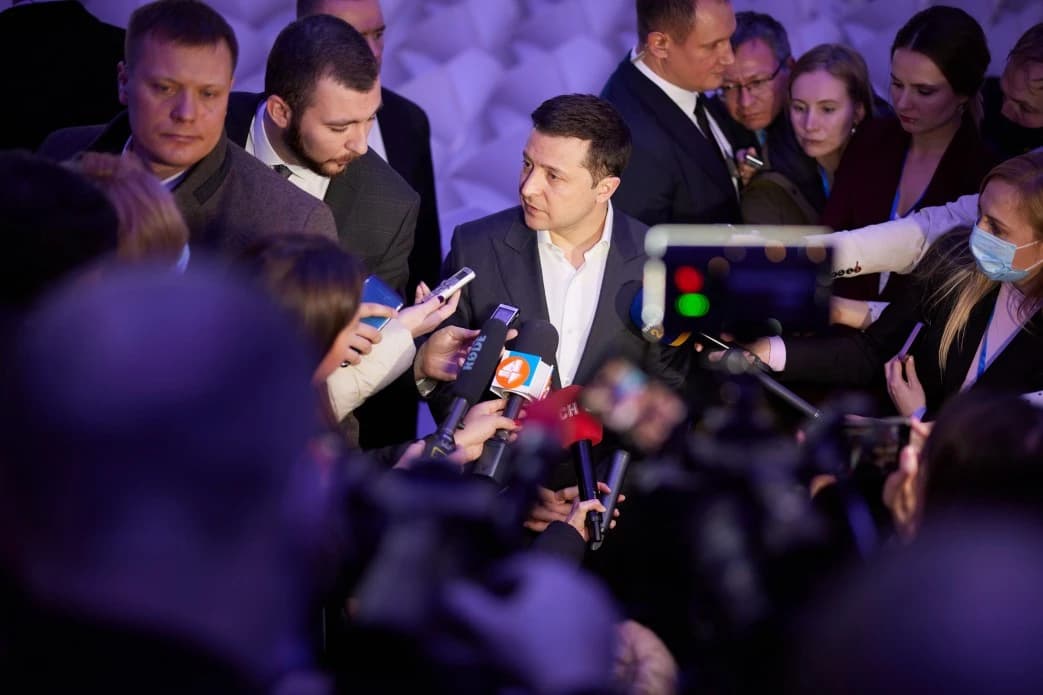
Zelensky said Moscow wants to use Belarus to host the launchers, framing the move as a direct threat to Ukraine’s western regions. For markets, the immediate effect is not a clean one-way trade, but a reminder that geopolitical risk in Europe has not gone away even as investors have rotated toward rate cuts and softer inflation narratives. The safest read-through remains higher structural demand for defense, missile defense, cyber and critical infrastructure protection.
That backdrop helps explain why European equity exposure has not broken down despite the headline risk. The Germany ETF, EWG, was last at 41.43, only modestly below its recent range and still above its 200-day moving average near 41.85, while the broad Europe fund, VGK, finished at 87.18 and remains close to its 200-day average near 86.84. Both are digesting the risk rather than pricing in a panic, which suggests investors are treating the Belarus development as an escalation premium, not a regime change.
FXY, the Japanese yen ETF, also deserves attention as a geopolitical hedge. It closed at 57.91, essentially flat on the week and near its 200-day average, after a sharp run-up in the summer. In periods of renewed war risk, the yen can attract defensive flows as investors look for liquid havens, even if the move is initially measured rather than dramatic.
The market message is straightforward: Europe’s war premium is still alive, and the most attractive trade may not be broad direction in regional equities but the companies and sectors built to profit from a longer security cycle. That means defense primes, missile interception systems, electronic warfare, satellite surveillance and energy infrastructure hardening remain the higher-conviction places to look if this escalation persists.
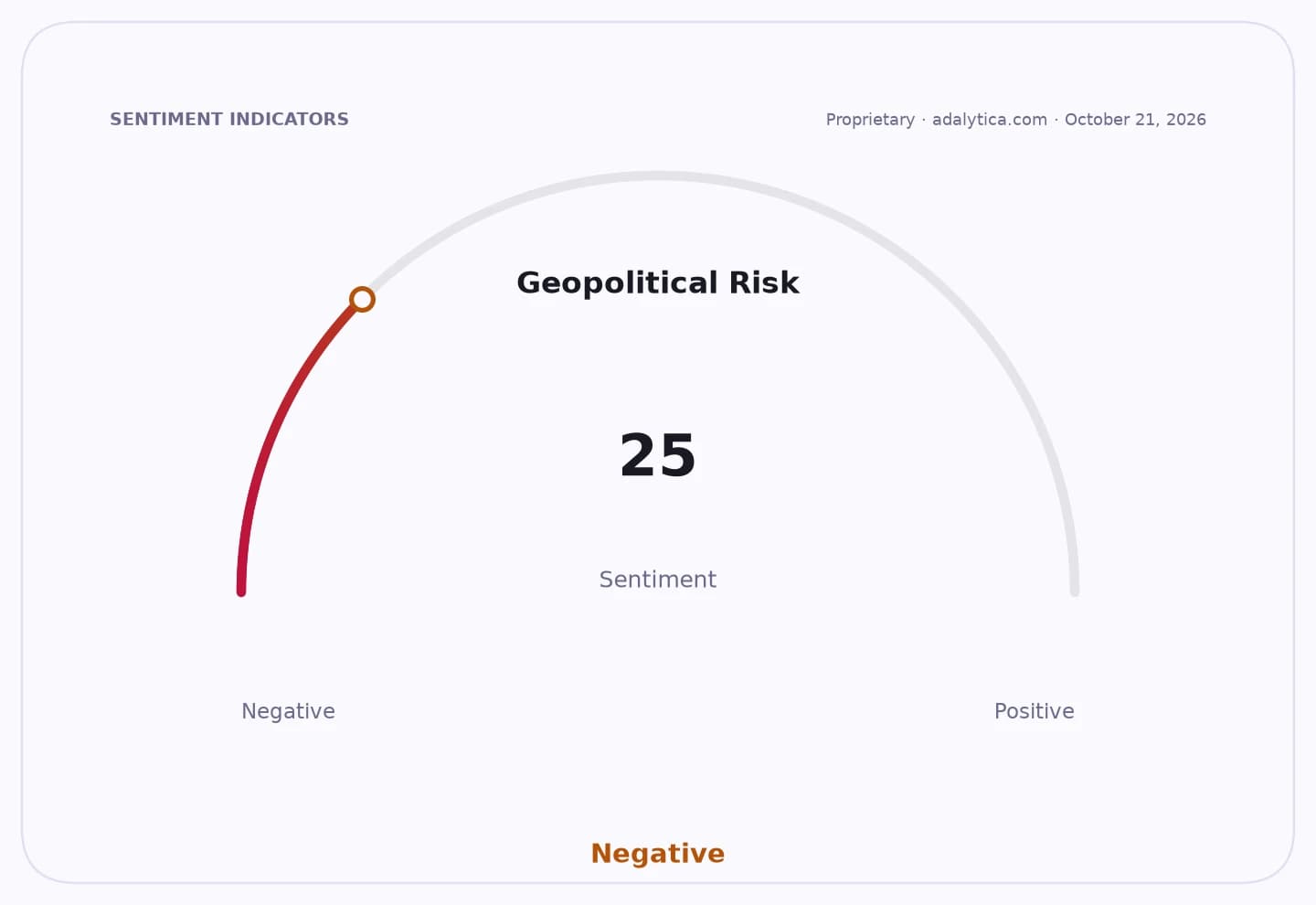
Adalytica’s Global Stability Sentiment reading at 25, labeled Fear, underscores how quickly risk perception can turn. When awareness is this low and the newsflow is this volatile, investors should expect sharp positioning swings, especially in currency havens and European defense beneficiaries. The right posture is not complacency; it is to stay overweight the security complex and underweight any assumption that this war is settling down.
| Entity | Gains | Losses |
|---|---|---|
| Defense contractors | ▲More missile-defense demand | ▼Fewer peace-dividend hopes |
| Ukrainian air defenses | ▲Higher urgency for aid | ▼Greater strain on stockpiles |
| European havens | ▲Safe-haven inflows | ▼Risk-on capital |
| Belarus | ▲Strategic leverage for Moscow | ▼Sovereignty, stability |